
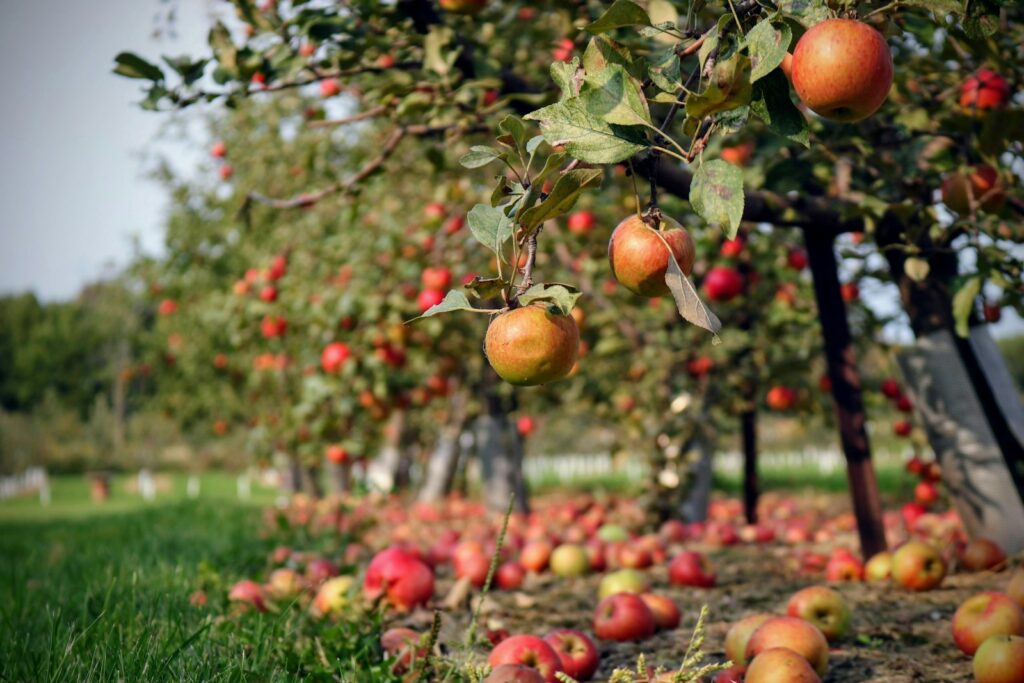
Belgian fruit growers will once again produce fewer apples and pears this year, according to estimates by sectoral organisations, based on a survey of around one hundred Belgian fruit-growing companies.
The expected harvest amounts to 166 million kilograms of apples and 364 million kilograms of pears, both below average. Poor weather conditions are the main contributing factor.
Compared to the five-year average, the expected apple harvest is 22% lower. This is mainly due to the continued reduction of the orchard area. Since the 2020-2021 season, the apple area has decreased by a quarter.
The dry, warm weather also posed challenges for fruit growers, as did the hailstorms that have affected fruit in recent months. As a result, fewer apples will be available in shops this year. Additionally, the proportion of harvested apples destined for processing in the industry will increase significantly due to hailstorms that have destroyed large parts of the crop.
Fewer (but tastier) pears
This year, fewer pears will also be harvested. Belgian fruit-growing companies expect to produce 364 million kilograms of pears, representing a 7% decline.
Belgium has 10,619 hectares of pear orchards. The dry and hot weather has made the season challenging for pear growers as well. Due to water shortages, the pears will be smaller, but they are expected to taste exceptionally good.
In apple and pear cultivation, there has been a strong focus on innovation, irrigation, hail protection, and diversifying the range with new pear varieties in recent years.
Across Europe, fewer apples and pears will be harvested in the coming weeks. According to initial harvest estimates, the European Union is expected to produce 9.5 million tonnes of apples, which is 11% below the normal harvest. The pear harvest for this season is estimated at 1.9 million tonnes, 7% lower than usual.
The main challenges for the upcoming season, besides climate change, include unpredictable developments in international markets, pressure on the use of essential crop protection products, labour availability, increasing administrative requirements for producers, the proliferation of regulations, and limited support from the European Union for the agricultural sector.
