
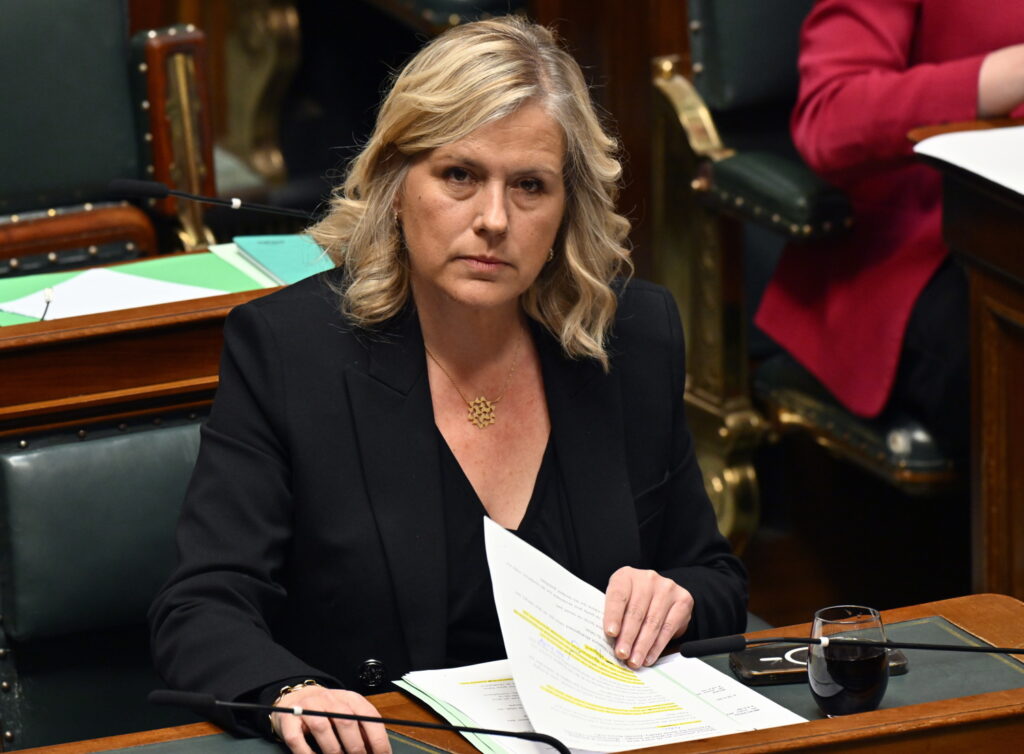
Belgium’s Digital Affairs Minister Vanessa Matz wants to introduce a temporary "digital ban" for people convicted of serious online offences, with draft legislation now being prepared.
In a statement on Wednesday, Matz (Les Engagés) said she hoped the proposed law could be debated in September. The move follows the first use of a similar measure in France.
The ban would allow offenders to be temporarily excluded from online platforms after committing criminal acts on the internet. These could include cyberbullying, sharing intimate images without consent, hate speech, violent threats and terrorist propaganda.
Speaking to La Dernière Heure, Matz said the aim was to end the sense of impunity online and help prevent repeat offending. “Cyberbullies must be able to be banned from social media,” she said.
She described the measure as an additional penalty, comparing it to the temporary withdrawal of a driving licence. Just as a judge can remove a motorist’s licence after a serious traffic offence, she said, someone who uses social media to commit a serious offence could be barred from it for a period of time.
Matz has asked the Belgian Institute for Postal Services and Telecommunications to provide advice on how such a system could work in practice. This includes examining methods of identification and enforcement while respecting fundamental rights and privacy.
The proposal is also part of a wider legislative effort to tackle malicious anonymity online. The use of pseudonyms would still be allowed, but courts would be able to lift that protection in cases involving criminal offences.
The French precedent was set on Wednesday, 5 August, when streamers Naruto and Safine were sentenced to suspended prison terms and banned for six months from the platforms involved. They were convicted over online violence and humiliation that preceded the on-air death of Jean Pormanove in 2025.
It was the first time France had applied this additional penalty, introduced under the 2024 law on securing and regulating the digital space.
