
Belgium has decided that Sunday can now be another day of shopping. That’s it, no more a shared day of rest. As an expat from a country that adopted this same line a decade ago, on the same basis of convenience, economic growth and changing lifestyles, this breaks my heart.
From experience, I can say that a country does not necessarily become more vibrant, or people's lives better, just because everything is conveniently available seven days a week. I think it just blurs the line between leisure and consumption; and, in a blink, our free time becomes yet another opportunity to open our wallets.
Which is why some countries, including Austria, Germany, Slovenia, Norway and Poland, are still holding the fort, imposing significant limits on Sunday trading. Actually, Germany goes one step further with its concept of 'Sunday rest' Sonntagsruhe (pronounced zon-tahgs-roo-uh). In fact, the idea of Sunday as a protected period of rest is so deeply rooted en Allemagne that that its protection is actually written into the German constitution.
As I have said I am very melancholic and wistful about this and I know it is probably too late for Belgium now, but perhaps it won’t do us any harm to ponder whether there might be a health argument for preserving a collective day of pause? At what point does convenience start coming at the expense of wellbeing?
To do? Slow down
Let’s take a close look at our Brussels lifestyles. Up till now, with most shops closed on Sundays, we could not really run errands, make spontaneous purchases or structure the day around ticking things off our 'to-do' list. And, importantly, everyone else in Brussels was experiencing the same constraint.
On Sundays, the whole community slowed down. In fact, without any need for willpower on our part, we automatically slowed down too. Closed shops were effectively a signpost saying: ‘‘Nowhere to shop. What will you do instead?"
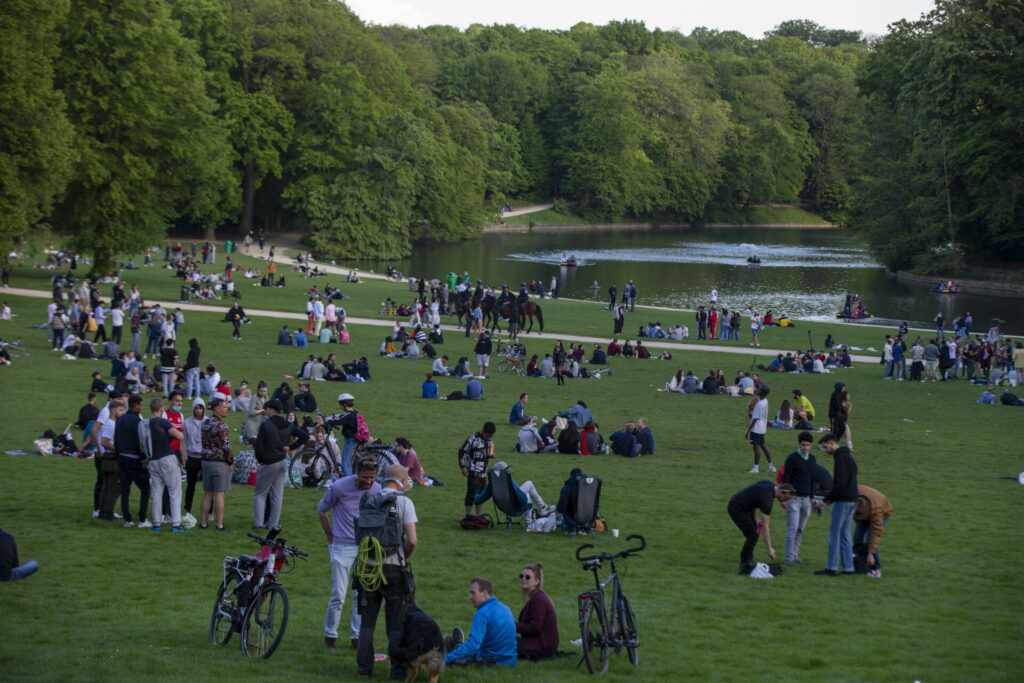
It’s amazing how this creates a different rhythm to the day. Sundays in Brussels were for walking, cooking, eating together, chatting and being outdoors in the park when the sun shone brightly enough.
It’s going to be a totally different story now. Sunday commercial activity gives the day a whole different vibe. Yes, you might decide you are going to take it easy and spend Sunday walking, cooking lunch and seeing friends, but if everyone else is shopping, working and running errands, you can start to feel that you ought to dig out your 'to do' list.
Your day of rest suddenly requires you to swim against the current, and gradually, Sunday’s rhythm becomes errands, shopping, and more errands.
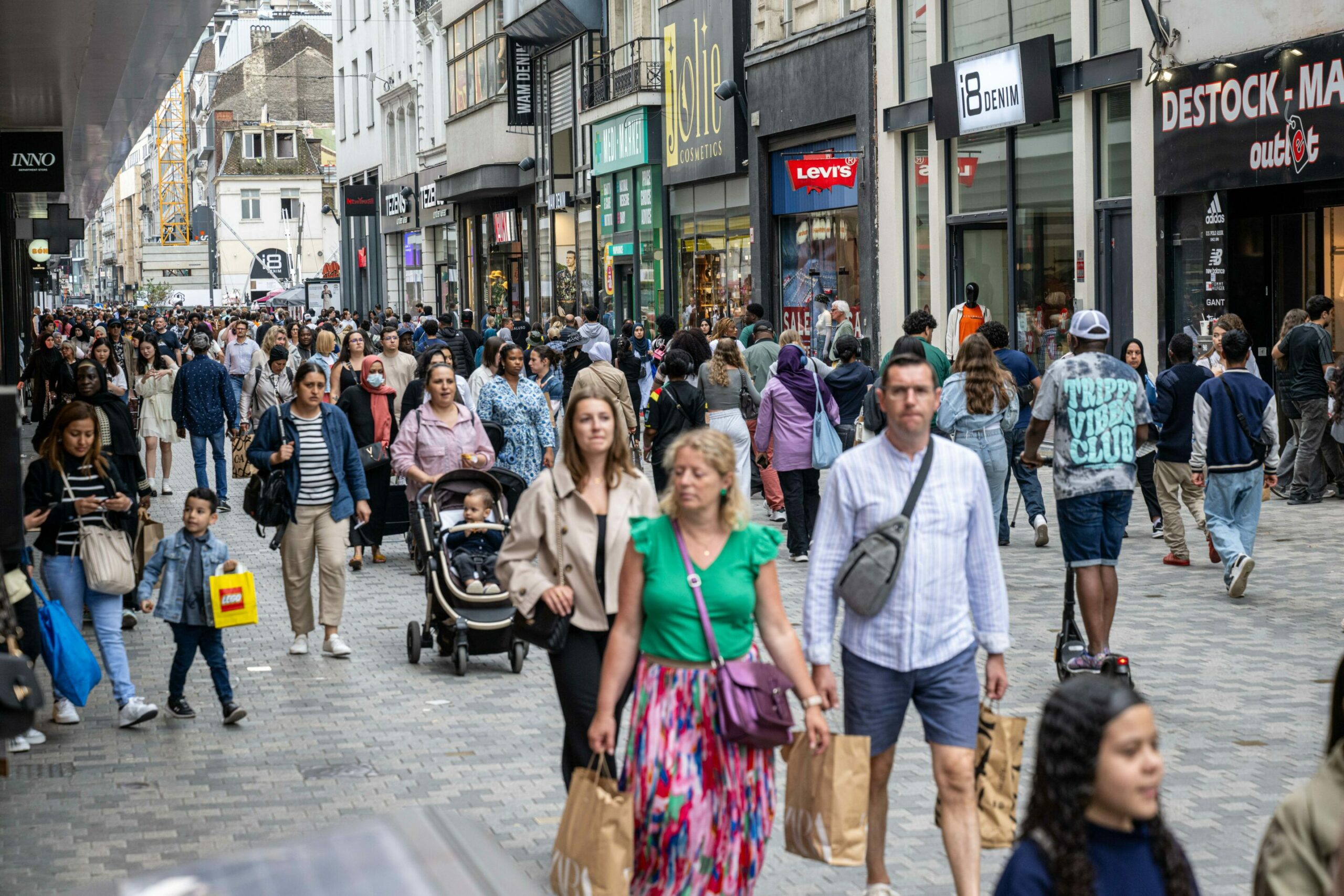
People are seen in a shopping street during the official start of the summer sales, Monday 01 July 2024 in Rue Neuve, Brussels. Credit: Belga
Of course, there is nothing inherently wrong with shopping (except perhaps for the state of our wallets). So perhaps what matters more than the closed shops is the collective element: the fact that everyone knew that the shops were closed.
Needless to say, it becomes a touch more exasperating if you have children. When there is always somewhere to go and something to buy, children's leisure can become increasingly consumption-based: Where are we going? What are we buying? What are we doing? The old-fashioned art of children making their own fun after getting bored is being edged out.
For grown-ups, there is also a psychological cost to having so much available at all times: the exhaustion of endless choice. Having a rest day can reduce decision fatigue, while having everything available all the time makes us forget that there is actually pleasure in things being unavailable. Remember when you had to wait a whole week for the next episode of X-Files? The anticipation was half the fun.
The thing about Sunday shopping is that it adds to a permanently 'on' environment. From an evolutionary perspective, humans did not evolve for constant availability.
Sonntagsruhe
Our hunter-gatherer ancestors did not have Sundays. Well, they did not have Tuesdays or Wednesdays either, but they did have rhythms. There were constraints on when and where things could happen: daylight, seasons, weather, distance, food availability and the rhythms of the group.
There was no 24/7 retail, instant food delivery or endless Netflix series. Our biology evolved within these patterns of sometimes-activity and sometimes-rest, yet modern life keeps snuffing out the resting points. We now live in an environment with almost no natural pauses.
Of course, I’m not saying that hunter-gatherer life is all hunky dory (if the hunting expedition came up short, there was no popping to Carrefour for a rotisserie chicken). But our biology has not changed as quickly as our commercial environment, so I very much suspect an evolutionary mismatch here between our biology and the world we have created.
I suppose we had it good while it lasted. For the five years I have been here, I have enjoyed the deliberately dialled-down Sundays; Sundays with fewer demands, Sundays that left us with chunks of space for family, friends, long lunches, and nature. Perhaps what we may be losing is not Sunday, but having a day when nobody expects very much of anyone.
May Belgium eventually rediscover the joys of Sonntagsruhe.
Kristina Chetcuti is a registered health coach (UKIHCA) specialising in behaviour change and lifestyle medicine (ELMO).
