
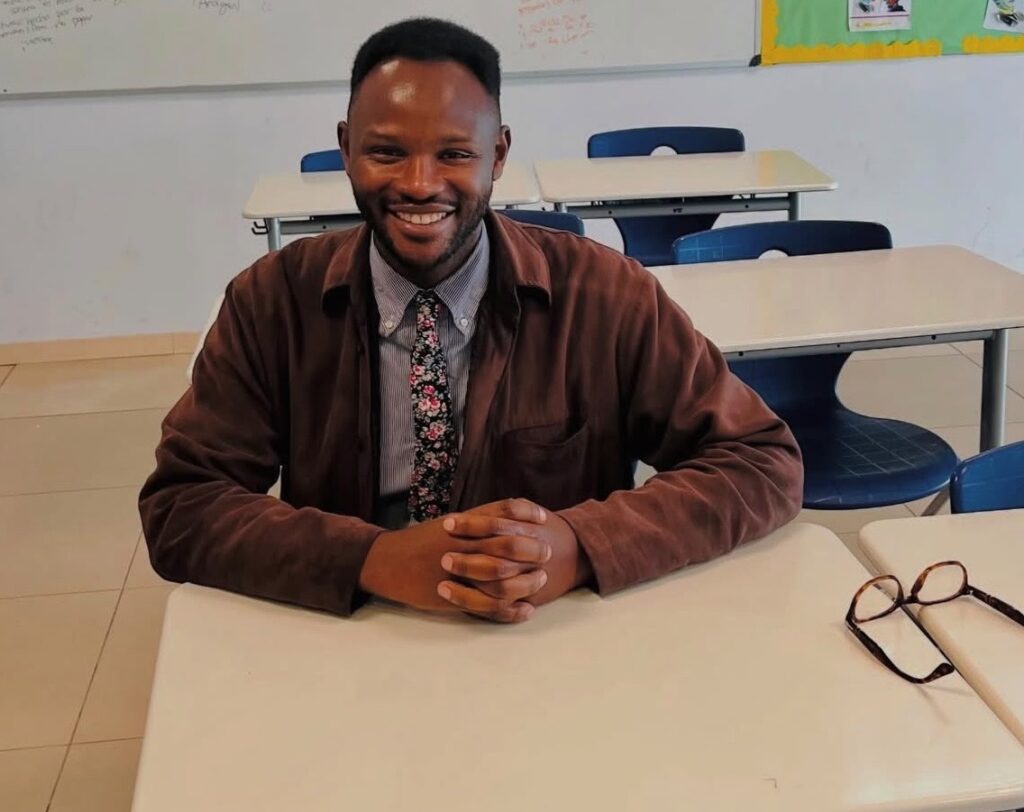
Different realities hit teachers and pupils across the capital as they usher in a new school season. One teacher who has experience both the public and international school system says he is aware of his more favourable position.
The new school year has opened against a particularly tense backdrop in Belgium's French-speaking education system, after months of protests and disputes over reforms and budget savings.
The tensions became significant enough for King Philippe to refer in his July national address to the "enormous pressure" facing the French Community's (also known as Fédération Wallonie-Bruxelles (FWB)) school system and the difficult months it had been through.
34-year-old Mathieu Ishimwe has taught French literature and French as a foreign language at Bogaerts International School for two years, but spent most of his career in public education.
Today, he has smaller classes, more resources and the possibility of regularly taking pupils on cultural trips and excursions. "I've been very lucky, and I think I'm privileged to work in an international school today," he tells The Brussels Times.
Ishimwe describes the French-speaking system crisis in Belgium as "worrying"; he says although he no longer works within that system, he "admires teachers in public education".
"Teaching is such an important profession for society and for social cohesion that these savings measures are simply not appropriate," he says. "It's trying to do more with less."
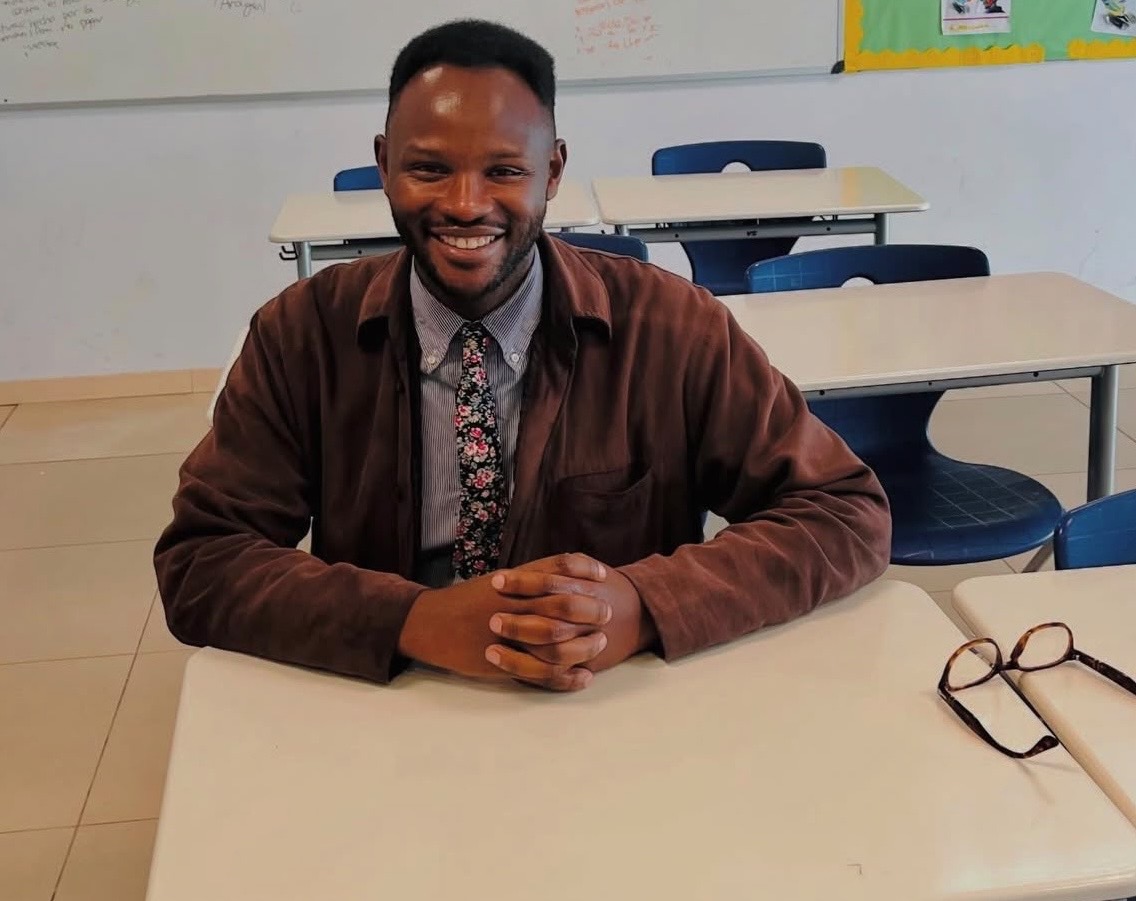
French teacher Mathieu Ishimwe in his classroom at Bogaerts International School in Brussels ahead of the new school year. Credit: Handout.
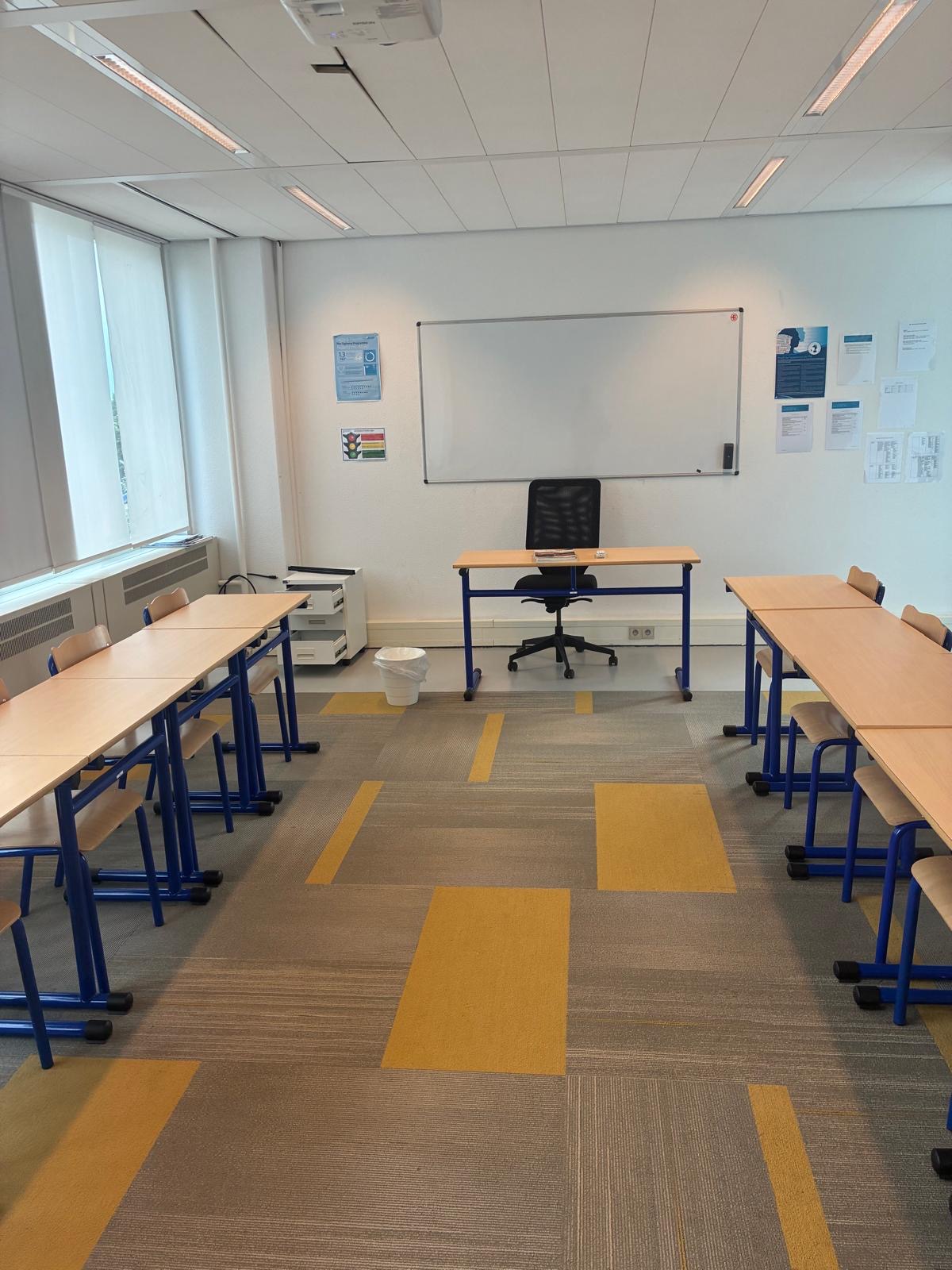
An empty classroom at Bogaerts International School in Brussels ahead of the start of the new school year. Credit: Mathieu Ishimwe.
Different kind of rentrée
"At the start of the school year, you have pupils coming from lots of different countries who find themselves in the same school, here in Brussels," he says. "Which has its own challenges."
His pupils this year have included children from Japan, India, Ukraine, Pakistan, Poland, Romania, Slovenia, France, Spain and Portugal.
Many are in Brussels because their parents have taken up jobs with EU institutions, NATO, embassies or international companies. Ishimwe say such families make up the majority of pupils at his school. "They are also getting used to a new country," he explains.
English is the common language, but conversations do not always stay in one language. Ishimwe trained in England and works with a largely British curriculum. A pupil sitting in front of him, however, might have just left a Japanese curriculum or an American international school, which requires constant adjustment.
Credit: Mathieu Ishimwe.
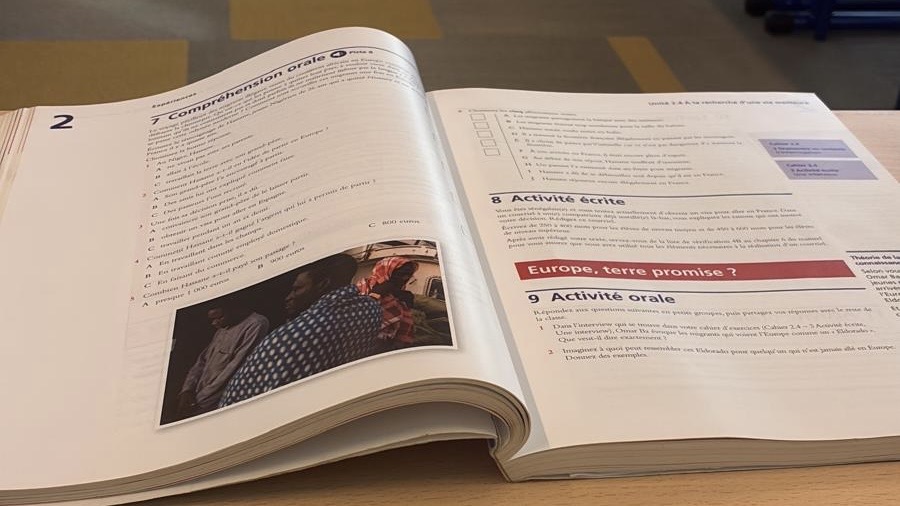
A French-language programme book used by pupils at Bogaerts International School in Brussels. Credit: Mathieu Ishimwe.
At the start of the year, pupils take a French test and are divided by level, including beginner and advanced groups. But French lessons are not merely about the language; they also teach students how to live in Brussels.
A pupil who has just landed in Brussels might need to learn how to ask for directions before they need to master French grammar.
Ishimwe, who grew up in the capital, regularly incoporates everyday situations into his lessons. Pupils practise going to a shop, ordering something, speaking at a counter or asking for help when they are lost.
The school also has an inclusion team that helps newcomers and their families understand life in Belgium, including customs and social norms they might not be aware of.
He also finds himself "teaching Belgium" alongside French. "Belgium is fries, mussels and chocolate," he says. "There are stereotypes that are still very ingrained. But Belgium is so much more than that."
Since pupils tend to come with familiarities about their new home, Ishimwe has to come up with ways to integrate his pupils into Belgian culture.
Literature, cinema, authors and comic books therefore enter the classroom. Outside it, pupils are taken to Grand-Place, the Magritte Museum, theatres and the opera, as well as on trips elsewhere in Belgium.
These opportunities also illustrate the gap he sees between his current job and his previous experience in public education. Ishimwe points to a less comfortable difference. International education can mean "another social environment", he says, where pupils have access to experiences that children from working-class or lower-middle-income families might not.
Coming and going
Teaching children whose families have built their lives around international careers has another particularity: they move.
Last year, Ishimwe had pupils joining his classes as late as February because of their parents' work. He had to help them catch up with the programme and integrate them with the others.
Classes are small, he says, meaning pupils often become close in a relatively short time. A new posting for a parent can then mean suddenly saying goodbye.
"When they have to leave, or when their parents are transferred, it's heartbreaking," Ishmwe explains.
The constant movement does not appear to stop pupils from forming relationships, even when they know their time together might be short.
It also means that the cultural mix of a classroom is constantly shifting. The school holds an international day where families share food, clothing and traditions from their countries.
Ishimwe says he also learns from his pupils, whether through what they bring into school or simply through their different perspectives that emerge in class.
"A successful international classroom is ultimately one that makes pupils' differences less important without erasing them".
