
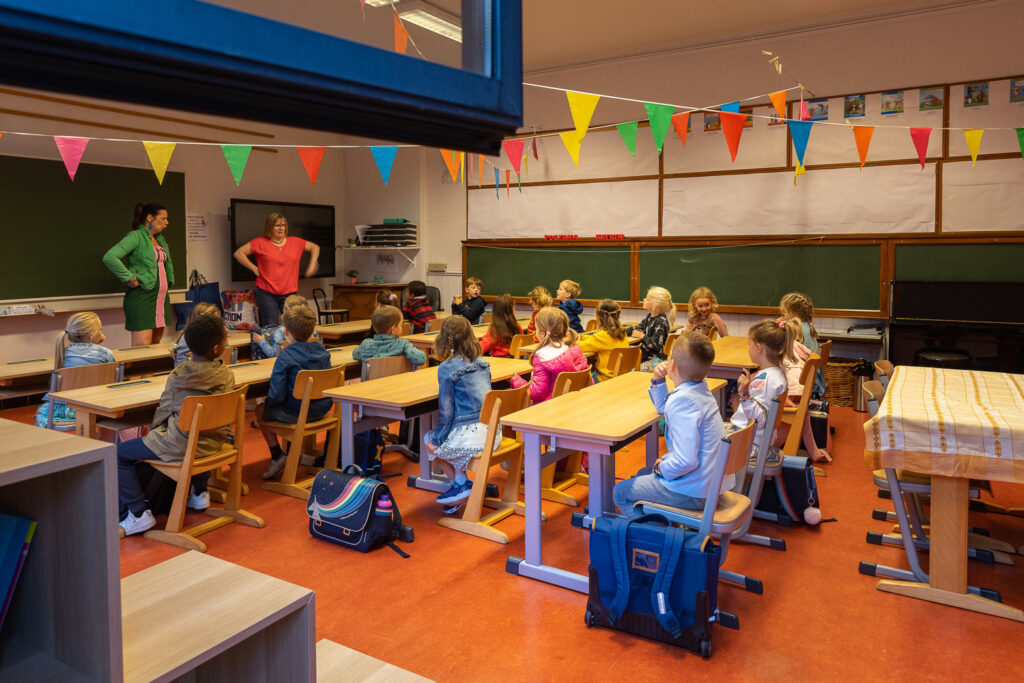
Flemish pupils will return to school next week with a new academic year marked by education reforms, including updated learning targets in primary schools and stricter rules to ensure more teaching days.
In Flemish primary education, new minimum goals will begin to be introduced gradually. They are intended to replace the final attainment targets that were set in 1997.
The reform is designed to place greater emphasis on knowledge, while making learning targets clearer and more precise.
From the start of this school year, the changes will apply to Dutch, mathematics, and science and technology classes for all pupils up to and including Year 3 of primary school.
For other year groups and subjects, the new rules are not due to take effect until the 2029-2030 school year.
Alongside this reform, the Flemish government also wants more days in the school calendar to be used for actual teaching.
Optional holiday days are therefore being abolished, while training and pedagogical days will be more tightly regulated.
Schools used as polling stations during elections will no longer be allowed to cancel classes on the day after voting.
The first and last day of the school year must also be full teaching days. In secondary education, the number of days set aside after exams for marking and class councils will be capped.
When lessons cannot take place, pupils must still be offered supervised activities with educational content.
This school year in Flanders will also see the launch of several pilot schools in mainstream and special education to test new methods of giving better support to children with learning difficulties.
