
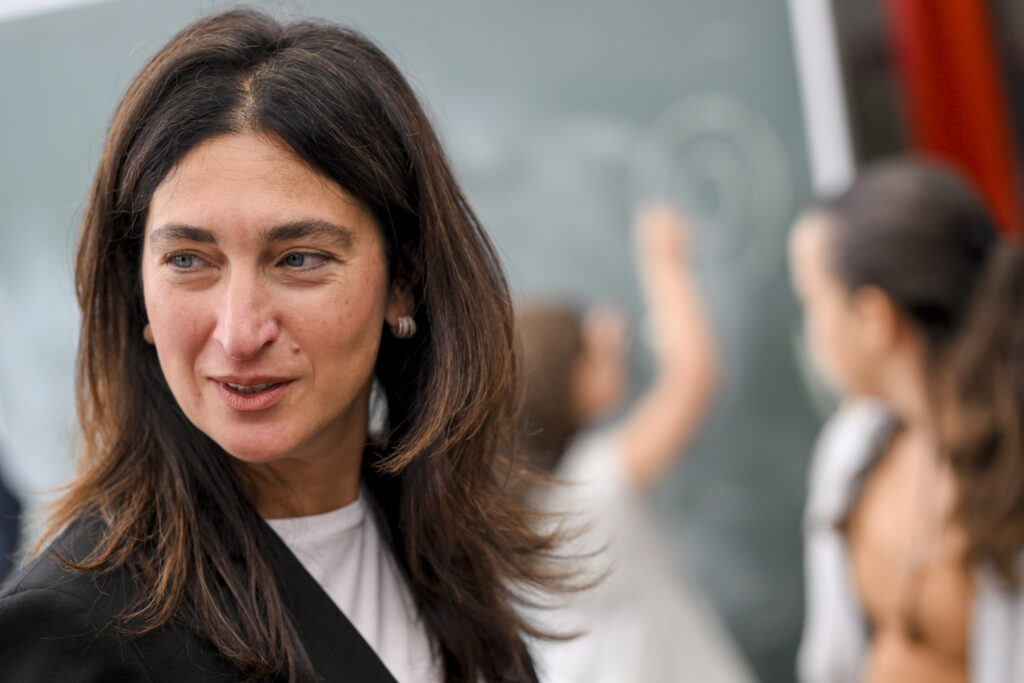
Flemish Education Minister Zuhal Demir says it could take ten to 12 years before pupil results improve, as primary schools prepare to introduce new knowledge-rich minimum attainment targets from 1 September.
The new standards, inspired by the British model, will be introduced gradually and are not due to cover every year group until 2030. Demir said she understood the criticism of her reforms but urged teachers to persevere.
Drawing on England’s experience, she said the problems in Flanders were systemic. In the vocationally oriented B stream, she noted, one in four pupils lacks basic literacy, which she blamed on past policy choices that may once have seemed understandable but can no longer be justified.
The new minimum targets for nursery and primary education are far more specific than before. Whereas in 1997 pre-school children only had to distinguish written symbols, the youngest pupils will soon be expected to know at least 15 letters.
Five-year-olds will also be expected to know they live in Belgium, to name a local river from memory and to have heard of the Nile. Demir said she took inspiration from England, where she visited several high-performing schools in March 2025 that focus on a knowledge-rich curriculum and effective teaching methods.
She pointed to England as evidence that reform can work. Educational standards there declined for years before a clear upturn appeared in 2019 in TIMSS, the international study measuring the maths and science performance of ten-year-olds.
English pupils now rank among the world’s best, while Flanders has slipped towards the bottom of the table. England introduced its new curriculum in 2014.
Demir acknowledged that her push for reform has met strong resistance. Over the past school year there were strikes, school leaders published an open letter, and an Ivox poll published on Thursday gave her a score of 2.9 out of ten among teachers.
She said a quarter of those surveyed had even given her zero. But she dismissed the idea that popularity should drive policy, saying her main concern was educational quality rather than poll ratings.
Her message to teachers is to show patience and trust. Schools will have five years to implement the new curriculum, and she said teachers had both the professionalism and the time needed to make the change.
Demir described the overhaul as the biggest reform of primary education in 30 years. She said the system had once placed more emphasis on knowledge, but that this had gradually been abandoned.
She also defended her tough style. Referring to the strictest Dutch teacher she ever had, whom she still visits today, Demir said strictness can be a form of care.
She argued that high standards are especially important for disadvantaged children. Education, she said, is about equal opportunities, and children from poorer backgrounds do not always arrive at school with the same knowledge as others.
Demir also rejected calls from education umbrella organisations to reopen negotiations on limits to pedagogical training days as part of the planned career pact. She said the debate seemed too focused on training days rather than on what children are actually being taught.
She said she was willing to discuss with the social partners how teachers can continue their professional development, but not at the expense of classroom time. In her view, it is reasonable to ask whether the current system has ever been properly evaluated and whether other tools might work better.
Demir gave few details about the wider career pact, which is due to be finalised in the autumn. She said talks are centred on three pillars: pupils’ right to learn, the attractiveness of the profession and school organisation, with headteachers asking for greater autonomy and trust.
She said the discussions were constructive but complex, and refused to offer guarantees. Previous ministers Ben Weyts, Hilde Crevits and Pascal Smet also failed to resolve the long-running issue of teachers’ employment conditions.
Demir said the stakes go far beyond her own political record. If education continues to decline, she argued, society will decline with it.
She said she wanted a top-performing Flanders, producing both “golden minds and golden hands,” from inventors to plumbers. In that effort, she added, teachers deserve far greater respect.
Artificial intelligence in the classroom is also on her agenda. Demir has asked universities to draw up Flanders-wide guidance on the age at which schools should be allowed to use AI, teacher training and the security of digital infrastructure.
Otherwise, she warned, technology companies would end up setting the rules instead. She said homework was likely to change, with essays and book discussions more often completed in class, although traditional learning such as times tables, reading, writing and arithmetic with pen and paper would remain.
Two other major issues are still unresolved. The Council of State rejected Demir’s reform of religion and ethics classes, saying it could infringe freedom of religion.
She said she would table a revised proposal in September that would go less far. It is not yet clear whether the related planned saving of €90 million can still be achieved.
Demir said she would first examine what remains legally possible and then calculate the financial impact. There was no point, she said, in dragging schools into a legal quagmire.
A separate reform of school transport, which costs €190 million a year, will not fully come under her authority until 1 September 2028. Preparations are already under way with special needs education, parents and fellow ministers responsible for welfare and mobility.
She said quick wins could be introduced as early as September 2027 if necessary. The Flemish government had previously reversed an €11 million cut, and Demir said the 50-year-old system now needed to be redesigned around the individual needs of vulnerable children.
