
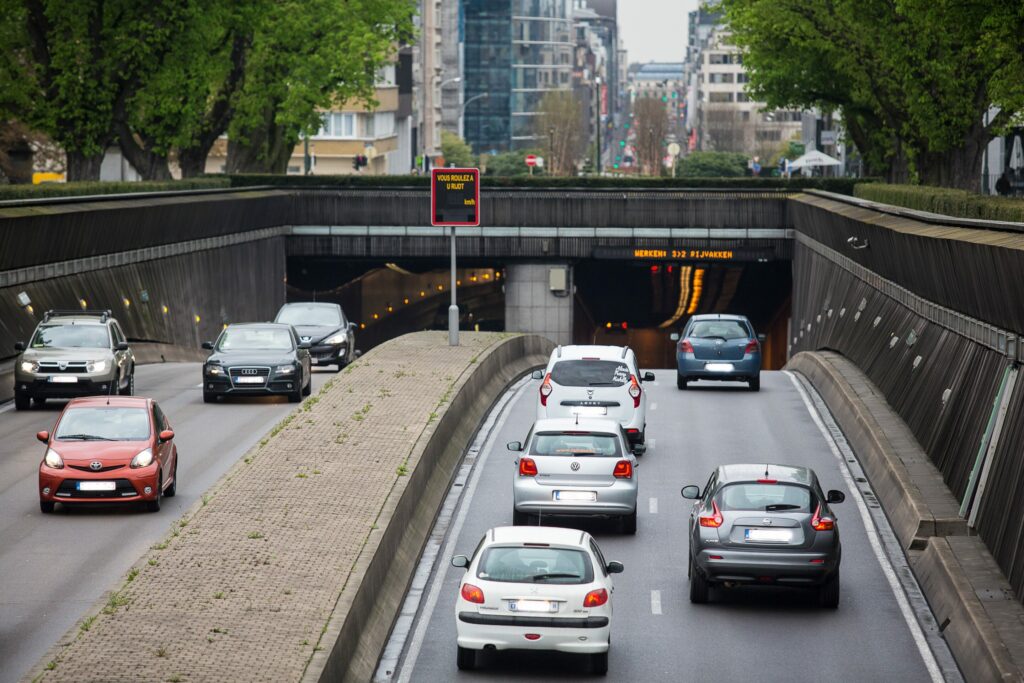
Several federal ministries have put forward proposals to cut subsidies for fossil fuels, which would result in the scrapping of company cars, as the Federal Government faces key budgetary negotiations.
Every year, the federal ministries for finance, economy, public health and policy draw up an inventory of existing subsidies for fossil fuels, with this year’s process now having been completed, De Standaard reports.
It comes as the government will need to sit down and find €10 billion to plug budgetary gaps in spite of the sweeping public spending cuts and reforms it has brought in over the last year.
The annual ministerial report has pointed to measures that could yield significant returns but have so far been considered taboo – notably a reduction in the tax benefit for company cars.
Carried out by government departments and also the Federal Planning Bureau and the Finance Inspectorate, the spending review describes the current company car scheme as "an inefficient use of public funds", with support primarily going to the middle and higher income brackets.
The scheme also encourages people to use their cars, particularly when a fuel or charging card is linked to it. The costs of the system are also set to rise in the run-up to 2030.
Gradually reducing the difference in tax treatment between company cars and ordinary wages would generate significant revenue for the Federal Government, the report advises
The annual budgetary costs for company cars could fall by €2.8 billion by 2030. For fuel and charging cards, the savings amount to €700 million. Together, that totals €3.5 billion, not including any accompanying measures to make the savings more palatable.
Credit: Belga/ Dirk Waem
The topic is particularly sensitive in Belgium, with no government having so far dared to thoroughly overhaul the company car scheme, which is intended to ease the tax burden on the middle class.
Key federal departments are now, however, highlighting the need “to strengthen public action, increase budgetary transparency, better protect vulnerable groups and prepare the economy for a (climate) transition that has become inevitable”.
It references the reforms that have already been partially implemented, such as the tax shift from electricity to gas, whereby electricity is taxed less and natural gas more.
Related News
- Chinese national arrested for spying at Belgian semiconductor company
- 'The solution is not in prison': The magistrate who helped rewrite Belgium's rules of crime and punishment
- Breathing in cancer: How Belgium's asbestos legacy still torments the country and the world
Other proposals set out in the report include a tax shift from electricity to gas for businesses could yield €450 million annually. This must be offset for businesses by bringing excise duties on electricity down to the EU minimum, as agreed in the federal coalition agreement.
Completely scrapping the excise duty refund for commercial diesel users could raise €142 million, whilst scrapping the excise duty exemption for inland waterway transport and rail transport would raise €24 million.
Government departments do realise that it is not possible to abolish subsidies overnight. They are therefore calling for a "progressive, targeted and coordinated reform" of all fossil fuel subsidies, so that these are "more focused on measures that support the energy transition".
The sums involved are enormous. In 2024, direct subsidies for fossil fuels totalled €10.4 billion. All these exemptions, refunds and preferential schemes result in a significant loss of revenue for the Federal Government.
