
In the late 1970s in Flanders, Wim* built one of the first machines in Belgium to recycle plastic. His new business required hand-sorting raw industrial garbage directly on the factory grounds. The waste arrived unsorted and, as it later appeared, was heavily contaminated with asbestos.
Despite Wim's inventiveness, times were different and sustainability was not the priority. Eventually, he took a job manufacturing various products for the country's firefighting brigades. While handling heat-resistant clothing and fire-extinguishing products, he was once again exposed to asbestos.
Decades passed quietly, but one day the breathlessness started. Doctors at a local hospital drained fluid from his lungs twice, but no root cause was found. The third visit delivered a terminal verdict: mesothelioma, cancer of the lungs' membranes.
He was told he had seven months to live and that there was no hope for a cure.
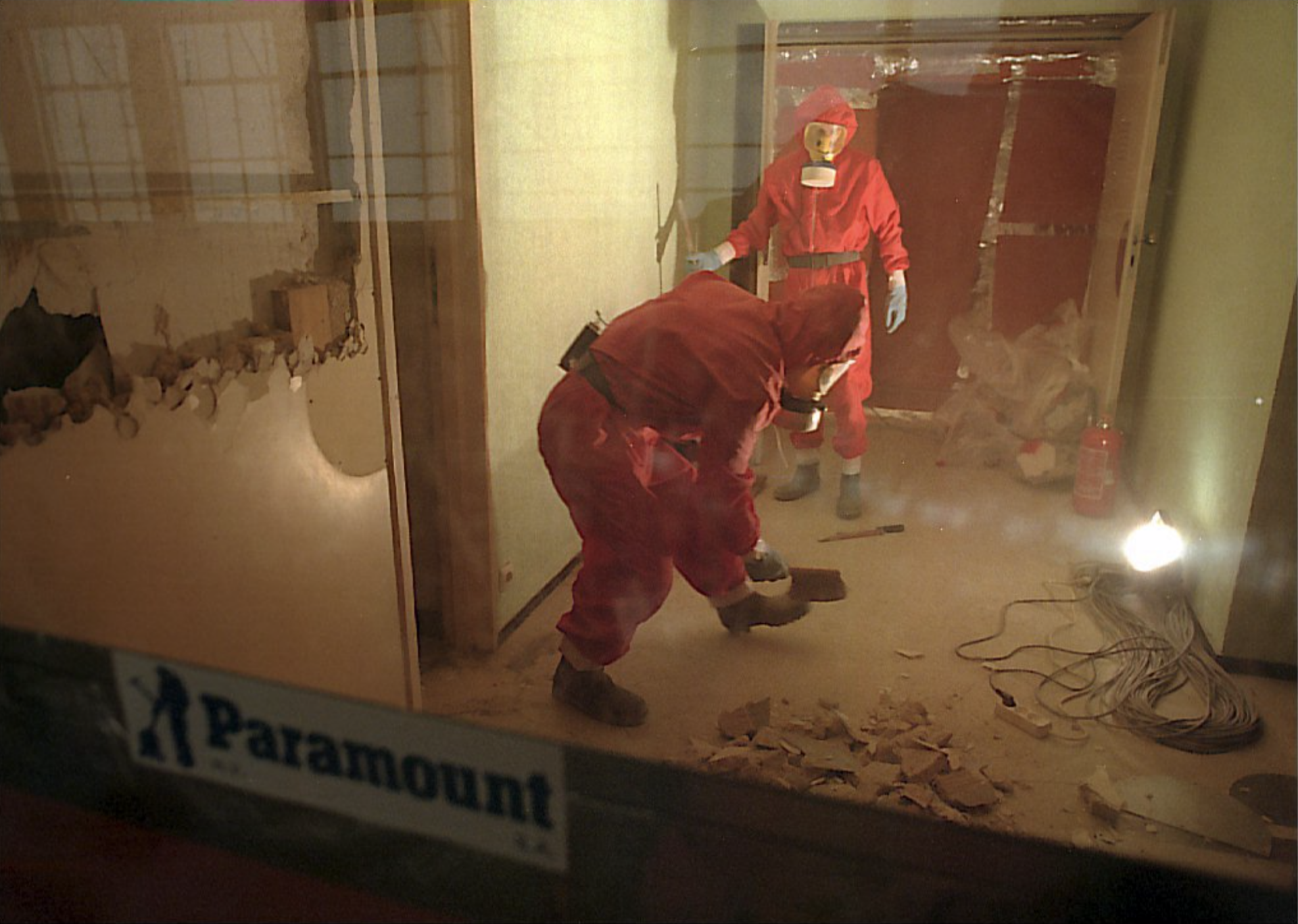
Workers with an oxygen and dust filter masks and a red overalls cleaning up asbestos. Credit: Belga
His son, Stefaan*, recalls the day he first heard the diagnosis. "Disbelief, at first," he recalls. "You can't see it, but that sentence doesn't leave any possibility to fight against it, this was immediately clear."
Wim's shock rapidly morphed into desperate anger. Nobody had warned industrial workers in the 1970s about the lethal hazards their daily environment carried.
"He really thought there would be a cure somewhere in the world, but that was his lust for life," Stefaan says. "He also said, 'Even if I can only hear or see something from my bed, that's enough, but I want to live.'"
What is asbestos?
The devastation extended far beyond factory floors.
Across Flanders, France and other parts of the world, children routinely played with deteriorating corrugated roofing sheets. They used broken pieces of the material as chalk to draw on roads, or gathered crumbling panels to build playhouses and forts in their backyards.
When people hear about deaths related to asbestos, they usually imagine artificial chemicals or toxic fungi, but this is not correct.
Asbestos is used as an umbrella term for specific fibrous rock forms of naturally occurring minerals. They are forged in the ground under extreme geological heat and pressure. For thousands of years, people used them because of their low cost, incredible durability and absolute fire resistance.
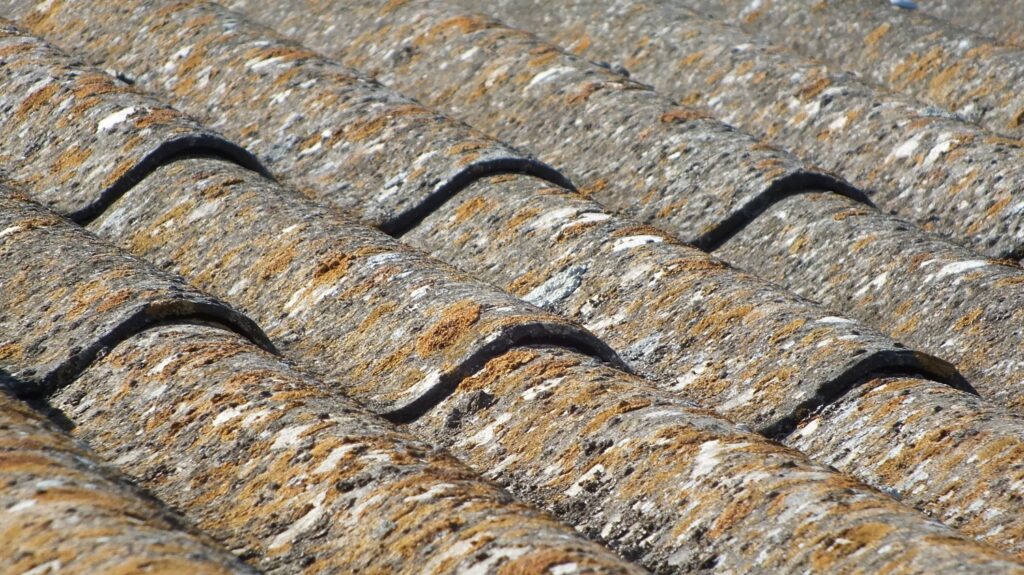
Corrugated roofing sheets are among some of the most prevalent asbestos-containing construction materials up to this day. Credit: Belga
Chrysotile, or white asbestos, accounts for roughly 95% of global use. Builders favoured it for corrugated roofs and high-pressure pipes. Other variants, like crocidolite (blue asbestos) and amosite (brown asbestos) carry even stronger carcinogenic properties.
These minerals rarely pose a threat in their solid, crystal-like states. The danger lies entirely in their physical shape: individual asbestos fibers break down into microscopic, indestructible rock-like needles.
Once inhaled, these invisible spears bypass the nose and throat. They settle deep inside the tiny air sacs where oxygen enters the bloodstream. The human immune system immediately treats them as foreign invaders.
White blood cells rush in to swallow and dissolve the particles, but the rigid structure of the fibres physically pierces the defence. Dead cells release toxic acid and the surviving asbestos fibre back into the soft lung tissue, restarting an endless cycle of microscopic destruction.
Over decades, this constant cellular warfare causes massive physical scarring. The soft lung tissue stiffens into rigid scars. This specific condition, asbestosis, slowly suffocates the victim.
"For those last months, we knew the fighting wouldn't help him get better, so he struggled against something incurable," Stefaan said, after watching his father's lungs fail. "That was my biggest problem with it, that I couldn't help him find peace."
Chemical exhaust from the dying cells simultaneously mutates surrounding DNA. Sharp fibres physically tangle with chromosomes during cell division. Malignant tumors eventually form. Smoking raises lung cancer risk up to 50 times, compared to a non-exposed individual.
With mesothelioma, the cancer type directly caused by asbestos, microscopic needles migrate completely through the spongy lung tissue. Once trapped, they scrape against the delicate outer lining of the lungs with every single breath.
Once inside, there is no way to remove the asbestos needles. It slowly destroys the host from inside out.
"Unfortunately, I had some examples in my family of normal cancer," said Stefaan. "In those cases, you start treatment. But with his problem, doctors just said they couldn't do anything."
The monopoly on death
Belgium possesses zero natural asbestos deposits. The industry began almost entirely by chance.
At the dawn of the 20th century, the entrepreneurial Emsens family owned massive supplies of sand and cement. They purchased a specific patent from an Austrian businessman Ludwig Hatschek to mix these materials with asbestos.
The resulting product was the hugely succesful Eternit, and the Emsens family expanded rapidly. They forged alliances with other European producers, primarily the French Cuvelier family, the Swiss Schmidheiny and family of the inventor of the process.
Marc Molitor, an advocate with the Association of Belgian Asbestos Victims (ABEVA), tracked this corporate history.
"It is interesting to recall that this network was also built on personal relationships, including marriages," Marc says. "It's a family affair at an international level. This consortium dominated the asbestos world."
The cartel pumped the miracle mineral into everyday domestic life. Factories produced three dozen different applications. Belgian homes utilised asbestos in heating systems, oven protection, curtains, and even toasters.
The main manufacturing installation sat in Kapelle-op-den-Bos (Flemish Brabant). Two massive factories operated there: one for cement asbestos plaques, the other for vessels and pipes.
Consumption peaked in Belgium during the 1960s and 1970s.
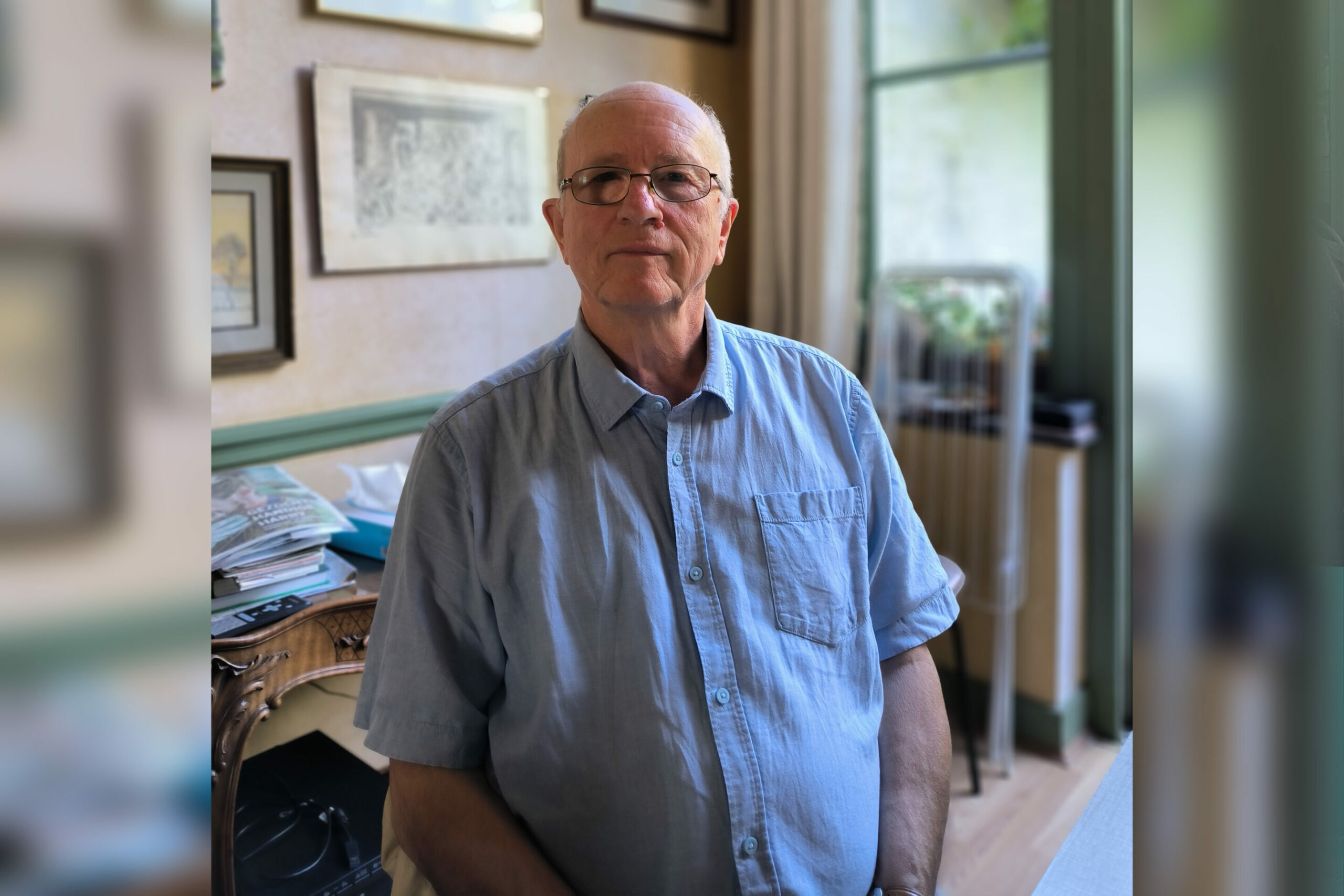
Marc Molitor, spokesperson of ABEVA. Credit: Marc Molitor / ABEVA
In 1967, a catastrophic fire at the L'Innovation department store in central Brussels killed 300 people.
Following the tragedy, the government gave way to industry pressure: authorities mandated asbestos for fire prevention in numerous new buildings. To this day, asbestos can still be found in some older social housing units in Brussels.
Strikingly, the industry was aware of the risks long before this legislative push; medical experts identified asbestosis and lung cancer in the 1930s and 1940s, while mesothelioma emerged definitively in the 1960s.
On 27 November 2023, a ruling by the Dutch-speaking Court of First Instance in Brussels proved that Eternit knew of adverse health effects of asbestos at least from early 1960s.
However, Eternit deployed a defense strategy directly mirroring cigarette manufacturers, said Marc. "In this situation, science is not always neutral because the scientists received money from the company manufacturing asbestos. It's the same scheme as tobacco."
Logo of Eternit. Credit: Belga
According to Marc, company doctors routinely minimised the link between the factory and local disease. They travelled to international medical congresses alongside other corporate physicians to cast doubt on the science. Smoking was frequently cited as the primary culprit to derail liability.
"So you have to decide: do you turn a blind eye, or do you seek the truth?" Marc said. "We have indications and proofs that this consortium played a role to minimise the risks, to contest new research... and to fund alternative research."
The corporate machine even tried to suppress the media. When investigative journalist Marie-Anne Mengeot prepared a television programme for Belgium's regional French-speaking broadcaster RTBF in the 1970s, Eternit executives entered the station to exert influence over the editorial process of the broadcast.
By this time, numerous civilian deaths were being registered. "We started seeing not only professional diseases among workers but also diseases in civilians outside the factories – neighbors and families who had never worked inside the factories but were dying of mesothelioma," Marc said.
A subsidiary Coverit factory in Mons closed around 1985. Shortly after, roughly 200 locals died of asbestos-related exposure.
The single most important case against asbestos
The turning point occurred when Françoise Van Noorbeeck-Jonckheere, the wife of Pierre Jonckheere, an Eternit factory executive who died of mesothelioma, launched a case against Eternit.
She too later and died from the disease due to secondary asbestos exposure. Three of their five children have also died from mesothelioma, with all five confirmed before to have asbestos particles inside of their lungs.
"The company offered to pay her through their internal compensation system, provided she signed a document agreeing not to go to court," Marc explained. "She refused and decided to introduce a claim against Eternit."
Françoise appeared on television in a rare three-minute interview with RTBF's Mengeot. "I hope people will do something," she told the camera.
Her plea sparked the birth of ABEVA. Facing mounting pressure, politicians, spearheaded by the Greens, negotiated a compromise with trade unions and corporate bosses. They established the Asbestos Fund.
The state financed half the fund, while companies would finance the rest. At this moment, it pays a €12,400 lump sum immediately upon a mesothelioma diagnosis, covers medical costs and gives victims a monthly allowance of €2,500. A €45,000 payment is issued to widow(er)s.
However, the fund contained one condition that proved very controversial: an immunity clause. Victims accepting the money automatically forfeited their right to sue the companies in civil court.
Stefaan's family encountered this bureaucratic wall firsthand. "We had to sign that paper too," Stefaan said. "My father started the procedure himself before he died. But then we had to prove again that everything he said and done was right."
ABEVA fought the immunity clause and found a singular loophole: victims proving an "intentional fault" could bypass the corporate shield and sue for full compensation.
The landmark 2023 judgment in the Jonckheere family case cleared this impossibly high bar. The court proved intentional fault, destroying the corporate defence that the dangers were unknown. Marc noted that the judgement could even have impacts on PFAS and microplastic-related pollution.
Now, Eternit's modern successor, Etex, remains an international powerhouse – without asbestos. Their factory still stands in Kapelle-op-den-bos, Marc holds them accountable through unconventional means: he purchased ten shares of the company to secure access to the General Assembly.
"I am facing owners who have 97 million shares, and I have 10," Marc said. "After the assembly, I discuss matters with some of them. When they say 'we didn't really know,' I say 'Stop, I don't want to discuss it. The judgment is there.'"
The Flemish region now holds an ambitious plan to clear all asbestos by 2040, starting with schools and public buildings.
"They need billions of euros, which they are trying to raise," Marc said. "The Flemish government even suggested that Etex should contribute, but negotiations failed, and now they are considering forcing the company by law."
Stefaan, too, seems skeptical about the feasibility of the deadline.
An exported catastrophe
While the European Union enforces a strict ban, the developing world still uses mass quantities of the material. Russia actively mines around 750,000 tons annually, and asbestos is prevalent throughout Asia, Latin America and Africa.
But Western nations are not immune either: the United States, for example, lacks a comprehensive ban entirely.
Linda Reinstein co-founded the Asbestos Disease Awareness Organization (ADAO) after her husband, Alan, received a mesothelioma diagnosis in 2003. He fought the cancer for three years, but took his last breaths beside his wife and 13-year-old daughter.
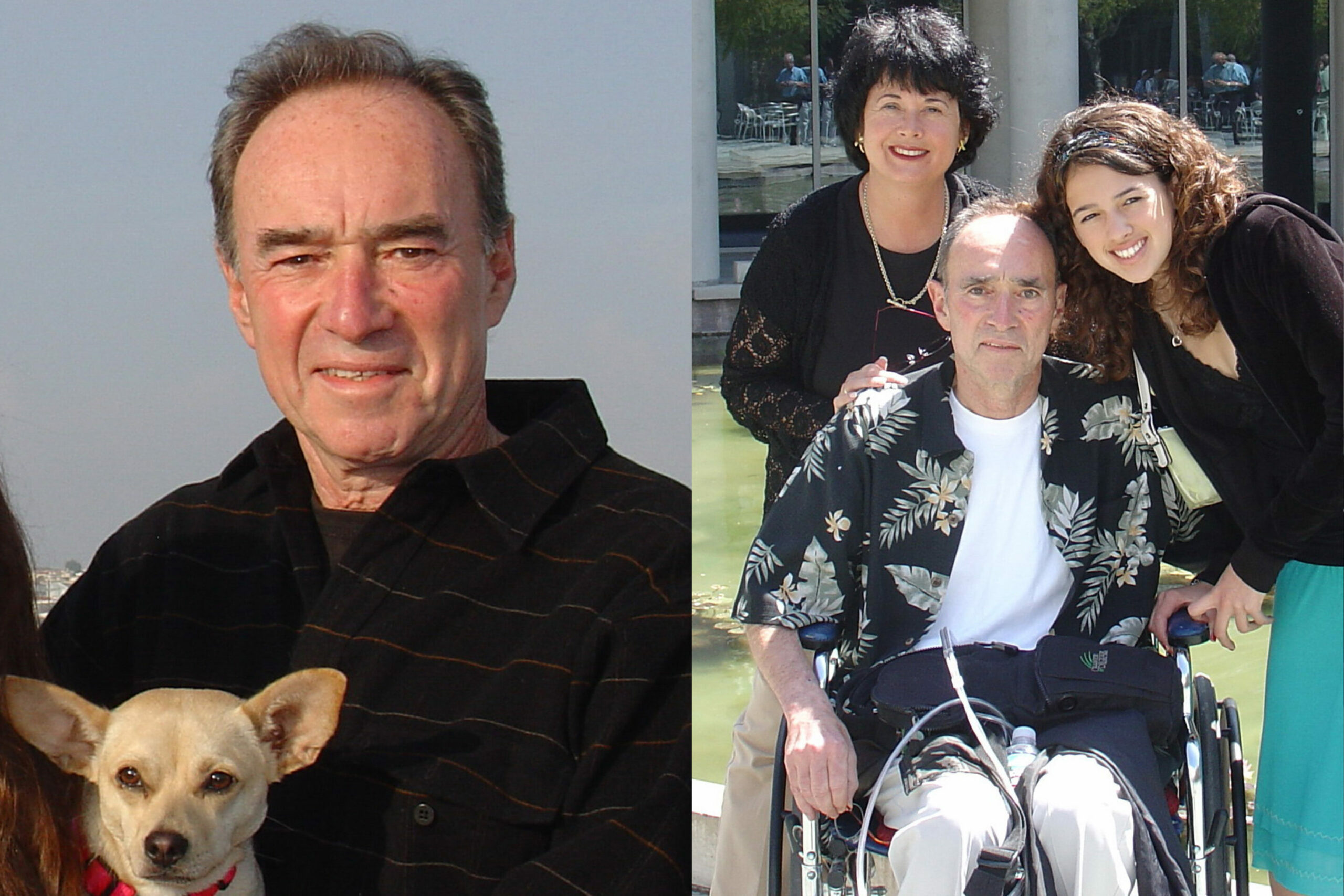
Alan with his family before and after diagnosis. Credit: Linda Reinstein
According to Linda, over 40,000 Americans die annually from preventable asbestos-caused diseases. Globally, the death toll exceeds 200,000. Reinstein argued that these statistics are exponentially higher in reality, masked by a severe lack of diagnostic infrastructure in heavy-consuming nations like India.
She witnessed the Belgian devastation firsthand while walking the streets of Kapelle-op-den-Bos with the late Eric Jonckheere. His family’s destruction highlighted the lethal triad of the industry: worker, secondary, and environmental exposure.
"With asbestos, you can't see it, touch it, taste it, smell it," Reinstein said. "So it's the perfect white-collar crime. Money, power, and politics. When those three come into play, that makes it really difficult to keep safety safe."
The crisis now centers on a new form: every flood, fire, or tornado violently releases trapped legacy fibres back into the wind.
Securing true justice requires aggressive environmental remediation and uncomfortable corporate accountability. Financial settlements operate merely as localised damage control for billionaires. "Justice doesn't equal a payout," Reinstein noted.
In Belgium, recent legal victories officially stripped the industry of its plausible deniability. "The judgment is there," Marc stated. Some families decimated by the Emsens family are demanding criminal prosecution, refusing to settle for state-funded civil stipends.
"[The Emsens family] are so rich, they are one of the most influential families in Belgium. If I would murder somebody tomorrow, I'd be in jail – but not them. The fact that they are still out in the open bothers me," Stefaan said. "They should be held responsible, their money taken and put in a fund to find a cure and compensate this crime. Because that is what it is, a crime."
*Name has been changed on request to protect his family's privacy.
