
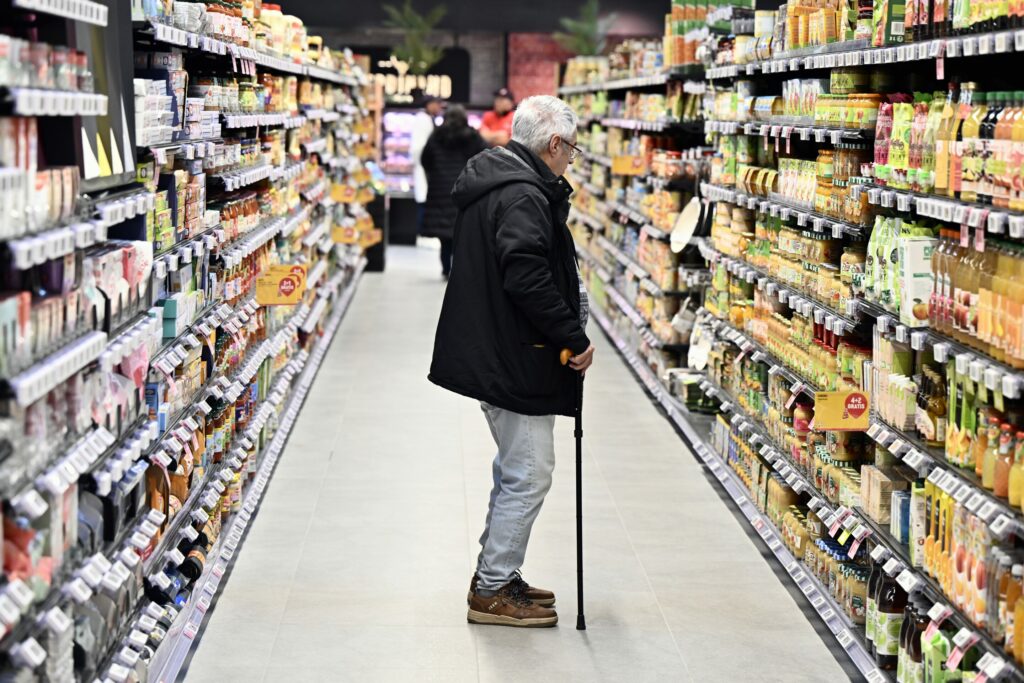
The summer months saw a decline in grocery prices in Belgium, with fruits and vegetables notably cheaper than a year ago. However, both the war in Iran and the summer heatwave could make these declines short-lived, as high energy prices are not felt in the shelves of the supermarket just yet.
Supermarket prices have been declining in Belgium for the last three months, with fruit and vegetable prices driving the fall. This is according to a basket of goods tracked by consumer organisation Testachats.
"We know high energy prices eventually lead to higher prices in the supermarket, because of the high need for energy in production and transport of food. But the price increase doesn't come directly," Laura Clays, a spokesperson with Testachats, told The Brussels Times.
First of all, this is because food still needs to go through the food production chain, she said. "But most of all because producers and retailers have contracts on prices that they cannot change easily. They are negotiated every year, mostly around the end of the year to enter into force in January."
Clays expects these contracts to be renegotiated over the coming months, with producers expected to ask for higher prices to offset the higher energy costs.
Grocery price falls will be reversed
According to the report, supermarket prices across a basket of 3,000 products fell, compared to the same time in 2025, in June (-0.41%), July (-0.63%) and August (-0.56%).
The prices are tracked across six major retailers: Albert Heijn, Carrefour, Colruyt, Delhaize, Aldi and Lidl.
The most significant fall in prices was reported for staple foods like cauliflowers (-9%), potatoes (-5%) and carrots (-5%). Other goods like ketchup (-15%), pears (-13%) and olive oil (-5%) have also moved into deflation territory.
Despite the falls, grocery prices in Belgium have been consistently high for several years, and the recent drop in prices does not make up for the increases Belgians have been experiencing at supermarket checkouts.
The Testachats basket, which the organisation has been tracking since November 2021, shows that since the war in Ukraine the average cost of a supermarket shop has increased by 30.5%.
Looking to the next 12 months, Testachats expects energy cost spikes to push grocery prices back into inflation territory.
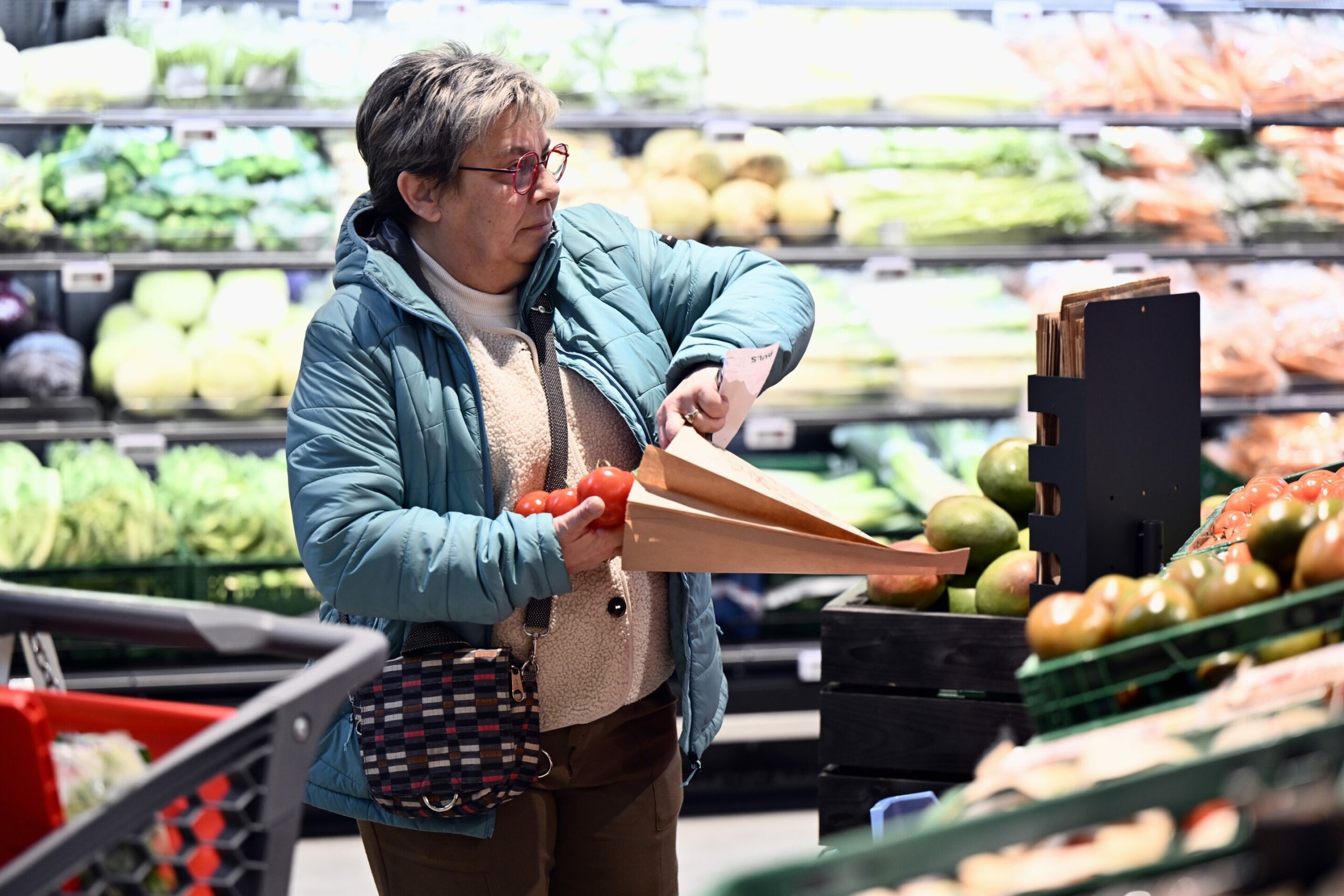
The risk of prices rising is further aggravated by the ongoing war in the Middle East. Credit: Belga/Eric Lalmand
Looking further ahead, Oxford Economics forecast in July that increases in common grocery input costs would contribute to food price inflation by between 0.5 and 0.7 percentage points in 2027.
"The fertiliser shortage due to the Strait of Hormuz blockade and the surge in prices has been less severe than anticipated, but it will impact farm yields," Senior Economist Tomas Dvorak and Lead Economist Ricardo Amaro told The Brussels Times at the time.
However, the forecasters warned that the biggest cause of a spike in prices would mostly come from the summer heatwave – driven by a strong El Niño effect, rather than in energy costs.
Overall, Oxford Economics expects prices for food, alcohol, and tobacco across the eurozone to increase by 3% in the first half of 2027 and to peak at 3.3% in the third quarter of 2027, compared to the same period in 2026.
Dvorak added that while the impact may vary by country. "The impact for Belgium should be roughly in line with the eurozone average."
