
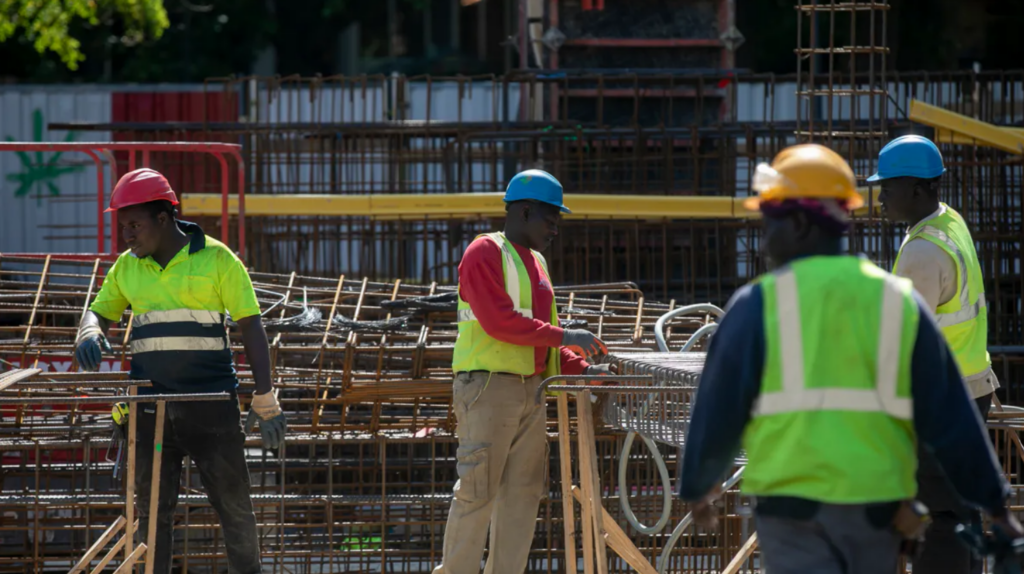
Since the start of the year, it has become harder for migrant workers to get work in Flanders. The rules that came into force in January have raised the price of hiring from outside the EU and narrowed who qualifies.
As a result, fees have risen, paperwork has grown and applications have fallen by almost 12%, according to figures obtained by De Tijd. Between January and July, employers submitted 4,125 applications, 539 fewer than in the same months of 2025.
Low-skilled workers from outside the EU are no longer eligible, except for seasonal work in sectors such as agriculture and horticulture. Medium-skilled workers, the group with the sharpest decline in applications, can now qualify only for jobs on the migration list of shortage occupations. Applications for highly skilled migrants from outside the EU have remained broadly stable.
The new rules follow the policy of Flemish Employment Minister Zuhal Demir (N-VA), which favours highly skilled migrants and workers who can fill shortage occupations, while pushing businesses to recruit locally first, especially for lower-skilled jobs.
Demir herself is pleased with early results, and her party, N-VA, noted in March that the policy was already “bearing fruit.”
"Labour migration should not be an easy loophole,” said Demir. “If we attract people from outside Europe, it must really be for jobs for which we cannot find anyone here. Think of technical profiles such as asbestos removers, or top scientists for our healthcare or the Einstein Telescope.”
Employers push back, supply doesn’t match demand
Those directly impacted by the changes see things differently. Eric Laureys, spokesperson for Flanders’ Chamber of Commerce and Industry VOKA, said that employers were already looking locally before the rules changed.
"Companies always look to the local labour market first anyway," he said. "They don't recruit outside the EU for fun or convenience." Recruiting abroad costs money, time and effort, he pointed out, while newcomers may not share the local language and need housing.
Closing one recruitment channel, however, does not make finding employees any easier, he argued. "Sometimes they simply aren't available," Laureys said of local workers. "Supply doesn't match demand."
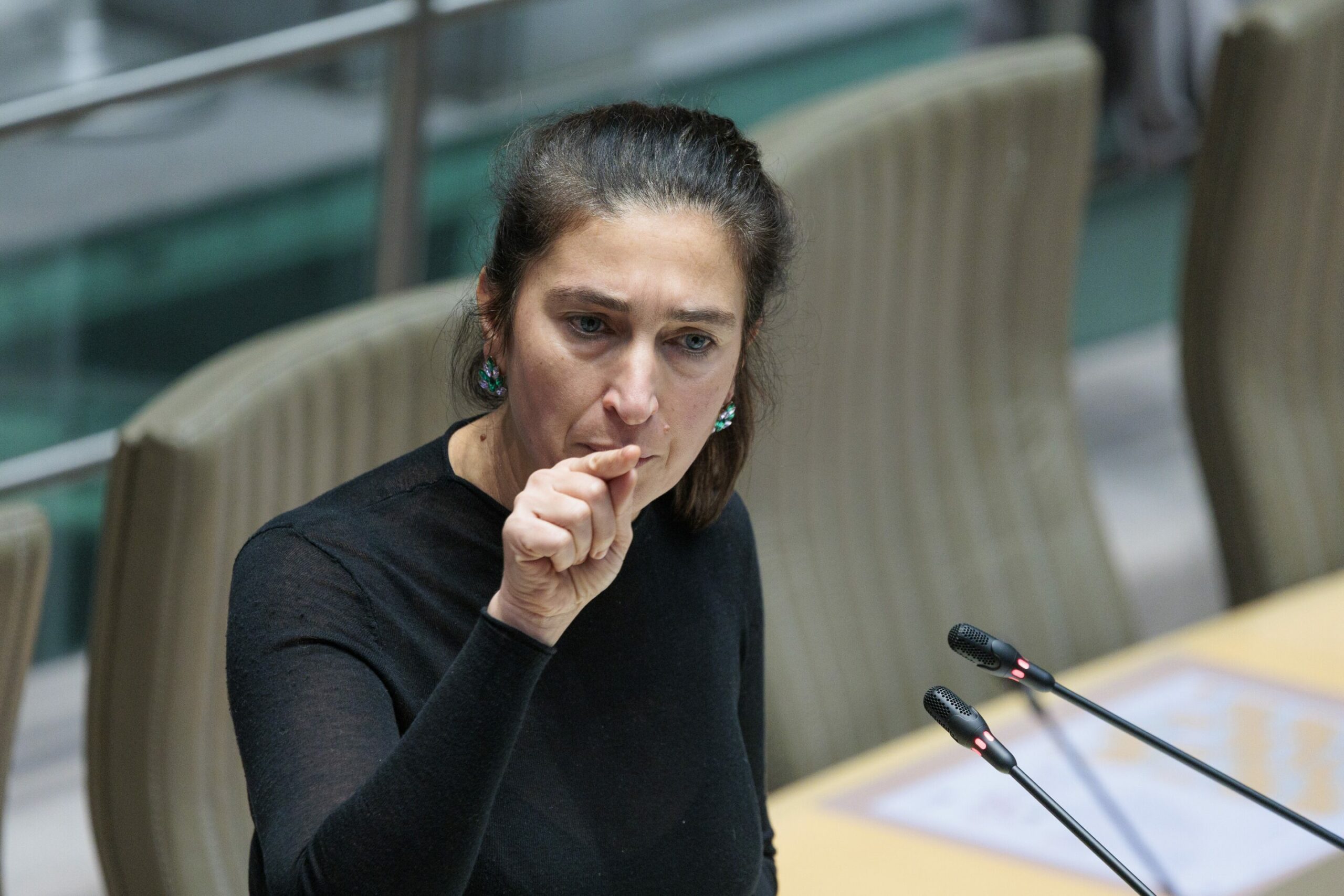
Flemish Minister for Education and Work Zuhal Demir (N-VA) in the Flemish Parliament in Brussels, Wednesday 03 December 2025. Credit : Belga/ Nicolas Maeterlinck.
In road transport, the impact is felt acutely. Philippe Degraef, director of the transport federation Febetra, described a sector that is ageing fast.
Many drivers will retire in the coming years, and fewer young people are entering the labour market – a trend he said applies across western Europe. He estimated the current shortage of lorry drivers in Belgium at around 5,000 and is expecting it to grow.
“Febetra is firmly convinced that labour migration from outside the EU can be a win-win-win situation: for our transport companies, for the migrant workers and for the Belgian economy,” he said.
When employment rules tighten, the direct effects are usually easy to see: fewer applications, fewer workers arriving from outside the EU. The side-effects are harder to spot, especially the ways Belgian employers may try to work around rules they find restrictive.
When hiring on a Belgian contract becomes harder, companies can turn to posting, where a foreign employer sends its workers to Belgium temporarily. VOKA expects that companies will look at secondment more quickly, which it says costs Belgium tax revenue and is less favourable for the social security system than hiring through a single permit.
Degraef is more blunt. "Above all, we must not be naïve," he said.
“A strict Flemish migration policy will not prevent drivers from third countries from being posted by, for example, Polish, Lithuanian or Portuguese transport companies to work in our country without contributing to our social security system."
This effectively forces Belgian companies to look to foreign hauliers, leaving the Belgian economy with the labour but no social security contributions, as these remain payable in the driver’s country of origin.
Weighing the evidence
Labour market economist Jan Denys offered a nuanced reading of the new rules and their impact on labour migration in Flanders.
When asked whether restricting this kind of migration meaningfully helps local jobseekers, he stressed that it depends on the context.
He does understand the policy reflect to limit opportunities for low-qualified migrants from outside the EU at this moment. Since the start of 2026, limits on unemployment benefits are pushing more low-qualified unemployed people back toward the labour market. "At least for now we should focus on the integration of these unemployed people," Denys said
On competitiveness, he is less concerned than employers. "If migration rules would be tougher for high-skilled migrants, then yes. But this is not the case," he said. "Only low and medium-skilled migrants are more restricted," and they have alternatives through posting.
Denys' comparison with other European countries is telling. "For higher-skilled migrants, the rules are more liberal than average," he said, while "for lower and medium skilled more severe than average."
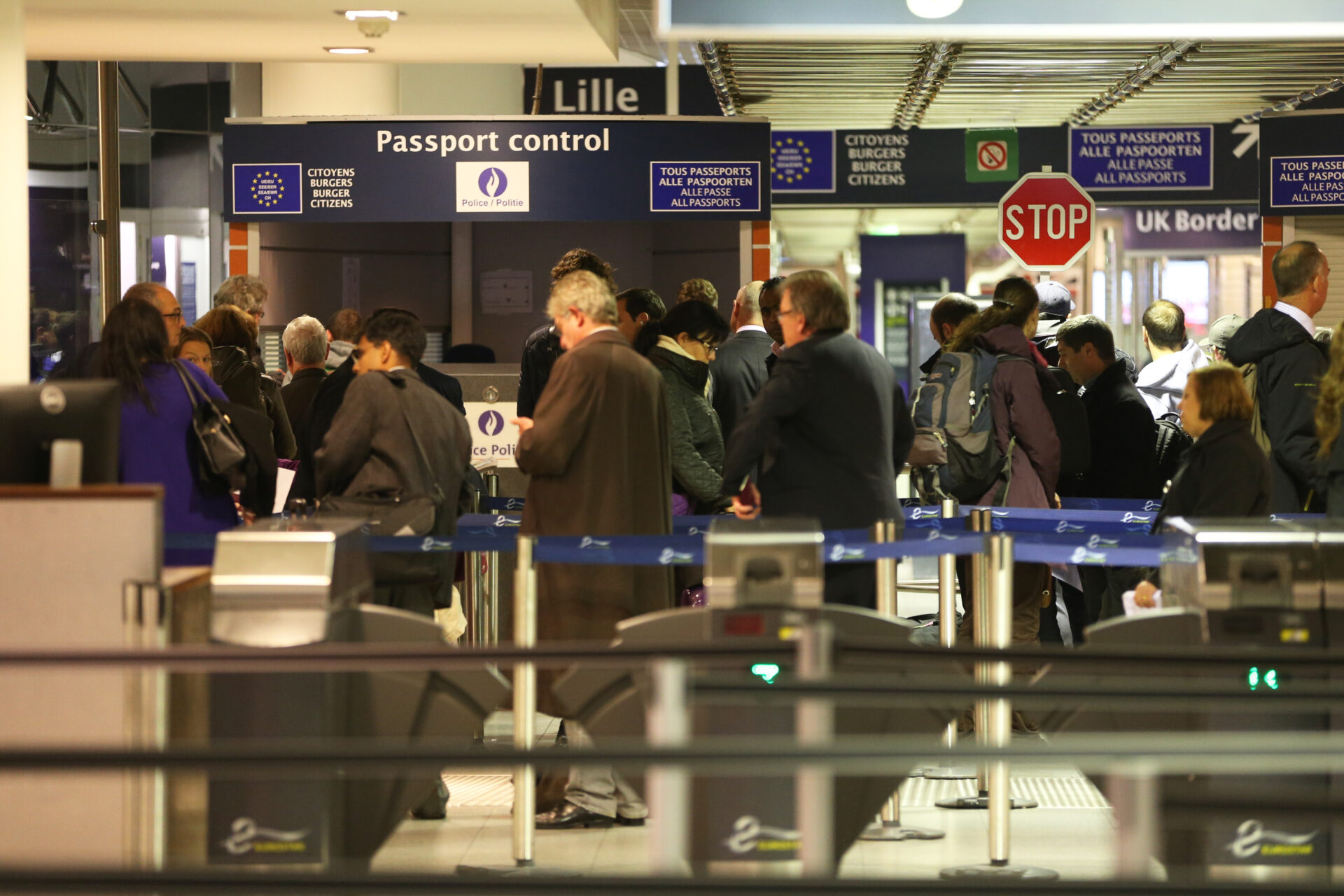
Passengers queueing at Eurostar passport control. Credit: Belga / Nicolas Maeterlinck
Today, for workers with an EU passport, the door to Flanders stays open. For those without one, it is now harder to push open, and that is exactly what the Flemish Government intended.
Whether it also brings more Flemish jobseekers into the labour force remains to be seen both in the medium and long-term.
Employers seem to think that the new rules will inspire endless workarounds with little yield for the Belgian economy. Belgian building sites and motorways, for example, demand a supply of labour, whether through official or more creative routes.
What remains missing is the one statistic that would bring clarity to an ongoing debate: how many vacancies are in fact being filled by jobseekers in Flanders?
Until that figure exists, a fall in applications shows that the rules are working as designed, but not yet that they are working as hoped.
