
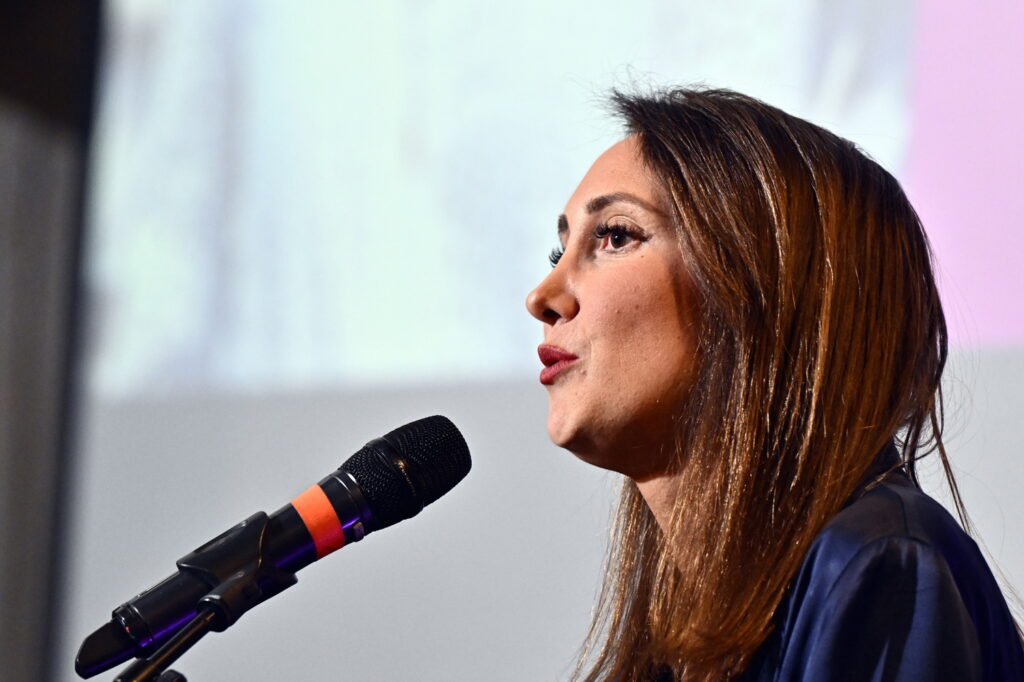
DéFI leader Sophie Rohonyi on Saturday reaffirmed her party’s firm opposition to sacrificing the Wallonia-Brussels Federation for budgetary reasons or weakening education because of the French-speaking institution’s financial difficulties.
Speaking to party activists gathered for DéFI’s back-to-school congress in Schaerbeek, Rohonyi criticised what she called “hypocritical and opportunistic” politicians. She said some celebrated the Federation at Brussels City Hall “with a glass of champagne in hand” without making clear whether they were toasting its future or its demise.
Rohonyi said some political figures were hoping to regionalise the Federation’s powers. By contrast, she said DéFI wanted to streamline what needed to be streamlined, break down barriers between education networks and improve efforts to prevent school failure.
Related News
- Lost in translation? Why Dutch-speakers still feel out of place in Brussels
- Teenagers in Belgium most likely to grow up in workless households in EU
- Calls for a 'French-speaking federalisation' of Belgium: What does it mean?
“Sacrificing the Federation would also be an admission of weakness in the face of Flemish nationalists, who are only waiting for French-speakers to become divided,” she said.
She argued that the Wallonia-Brussels Federation helped defend the shared interests of people in Wallonia and Brussels in areas such as education, culture and sport, while also coordinating issues that are fundamental to their common future.
Rohonyi also described the Federation as a democratic level of government, unlike intermunicipal bodies and public-interest organisations, which she said the Reformist Movement and Les Engagés were refusing to streamline. She argued that this was where savings should instead be made.
She also stressed that education was the best investment in those who would build the future.
Against that backdrop, Rohonyi regretted that, instead of working to improve pupils’ chances of success, the governments in office were taking too many decisions “without involving those who are educating the adults of tomorrow.” She warned that this was a dangerous approach that risked deepening distrust among pupils and teachers in the state’s ability to respond to their concerns about the future.
