
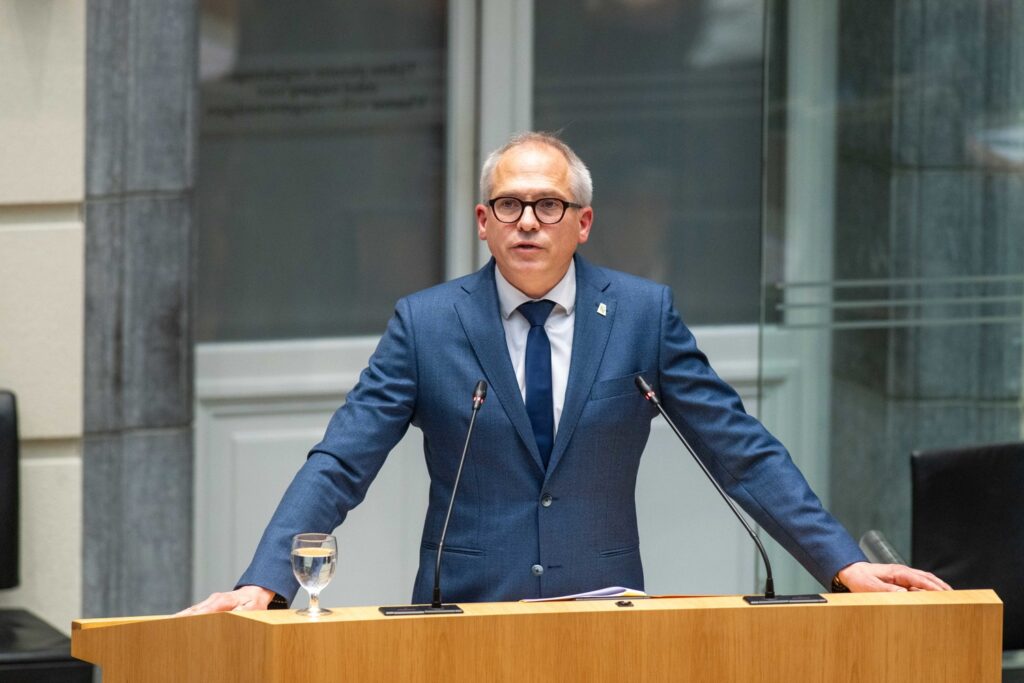
To balance the region’s budget over the next three years, the Flemish government has approved nearly €2 billion in spending cuts, rising to €3 billion by 2029, Minister-President Matthias Diependaele (N-VA) said in his September policy statement.
Diependaele acknowledged that reaching the agreement had not been easy, but said that the three coalition parties had managed to bridge their differing views.
He framed the budget as proof that the government is willing to take responsibility in difficult and economically uncertain times, including by making "uncomfortable decisions."
According to Diependaele, balanced budgets over the next three years are essential to safeguard Flemish prosperity and provide long-term certainty.
To achieve this, the government will cut €750 million from its own operations. These cuts include plans for a new staff statute and reforms to the public administration, while the Flemish Parliament and ministerial cabinets will also be expected to contribute. For the cabinets, the savings amount to €1 million a year.
More than €500 million in subsidies will be scrapped over the next three years, and the growth of the Municipal Fund for local authorities will also be curbed, saving about €240 million.
The government is also ending what it describes as overly fragmented support schemes, including the SME portfolio, which allowed companies to buy services such as training. In light of the geopolitical situation, support for refining companies will also be phased out.
For the Groeipakket scheme, under which parents receive financial aid to raise their children, the age limit will be reduced from 25 to 23.
Property registration tax will also rise again from 2% to 3%, and service vouchers will also become more expensive, as Diependaele said the service voucher system had become budgetarily unsustainable. He noted that residents currently pay €10 per voucher, while the Flemish government adds a further €20.
Related News
- 'Best and final offer': The proposed cuts to Flemish budget as deadline moves to Wednesday
- Flemish budget talks suspended after minister and staffer become unwell
- Flemish government finds delayed agreement on budget
The planned cut in inheritance tax will also be scaled back. However, smaller and medium-sized inheritances will still benefit from a reduction worth €160 million by the end of the legislative term.
The job bonus will remain in place, Diependaele said, because work must continue to pay. He added that investment levels would also be maintained.
He pointed in particular to spending on public works, healthcare and care capacity. Support for youth care, elderly care, people with disabilities and mental health services will also be strengthened, he said, to ensure people receive help more quickly and in the areas where needs are greatest.
“Certainty does not arise by itself. Certainty is built,” Diependaele said in conclusion.
