
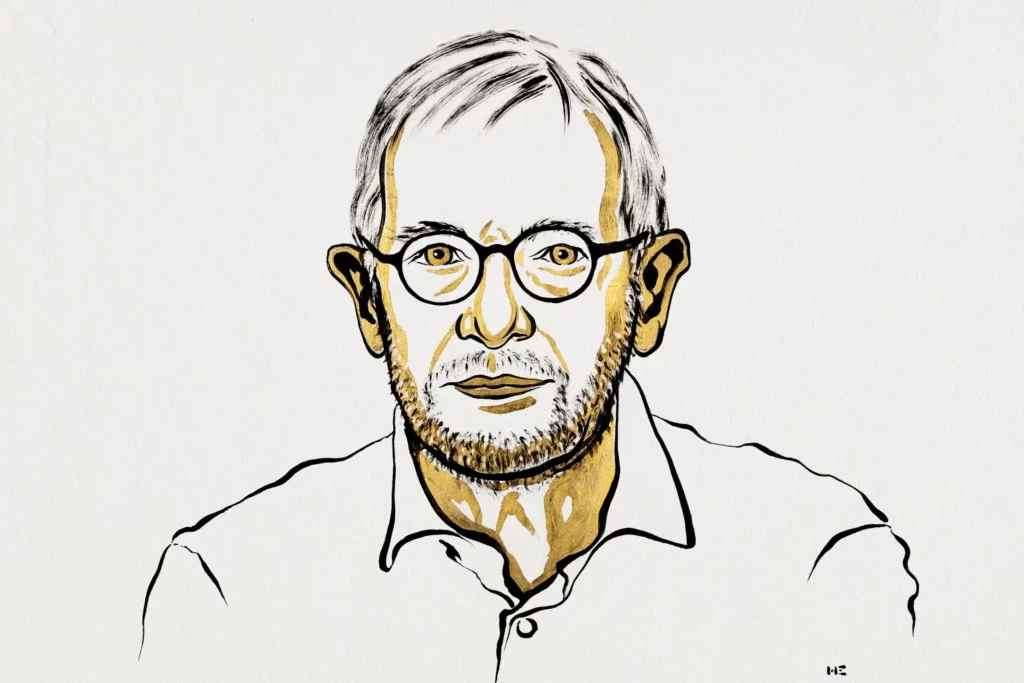
Belgian physicist Francis Halzen has won the 2026 Nobel Prize in Physics for his groundbreaking research into neutrinos and his decisive contributions to the IceCube experiment.
The Nobel Prize recognises Halzen's pioneering work in the field and his contribution to the IceCube experiment. He is best known for his work on neutrinos, extremely small subatomic particles that are notoriously difficult to detect.
The prestigious award was announced on Tuesday by West Flemish professor Ellen Moons, who has served as Secretary-General of the Royal Swedish Academy of Sciences since the beginning of this year.
Halzen played a key role in the development of IceCube, a vast neutrino observatory located at the South Pole that uses sensors embedded deep in the Antarctic ice to detect the particles.
"I hope this reflects the courage of people who joined me at the start of this project, when not a single respected conservative physicist was willing to join me,’ Halzen said in a statement to the Nobel Prize Committee. ‘But many talented people did, and that is why I am standing here today.’
Halzen is the second Belgian to be awarded the Nobel Prize in Physics. The first winner was François Englert in 2013.
The first woman to hold the position at the Royal Swedish Academy of Sciences, Ellen Moons will announce this year's Nobel Prizes in Chemistry on October 7 and Economic Sciences on October 12.
