
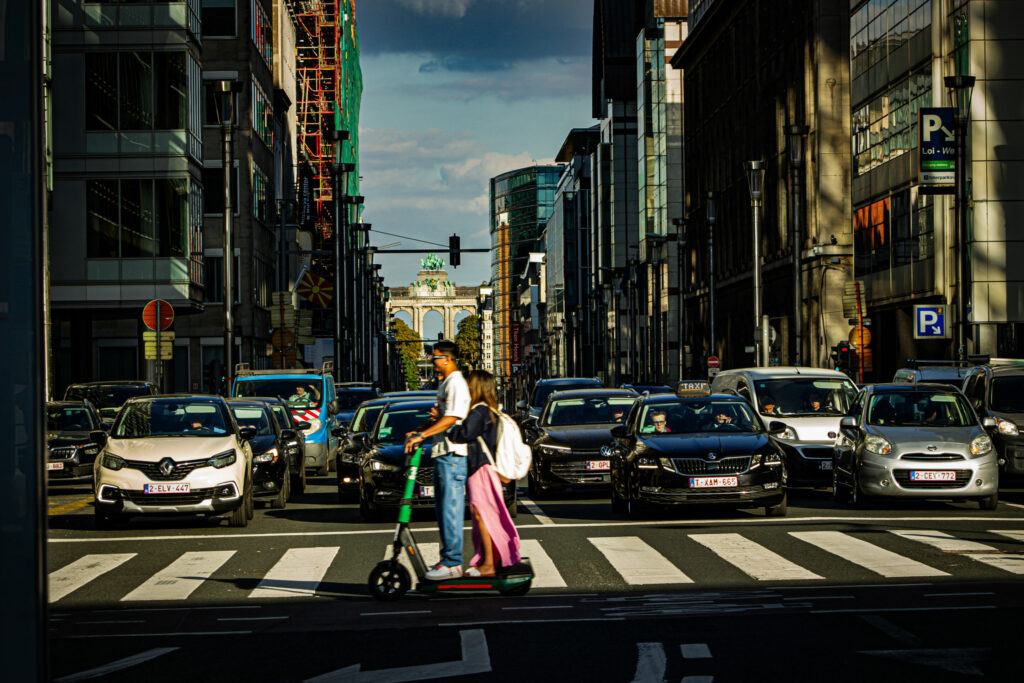
The population of the Brussels-Capital Region barely changed in 2025, ending three decades of continuous growth, according to figures published on Wednesday by the Brussels Institute for Statistics and Analysis (IBSA).
Brussels had 1,255,834 residents on 1 January 2026, just 39 more than a year earlier.
IBSA said the stagnation was mainly due to fewer people arriving from abroad and a large number of Brussels residents moving to Flanders and Wallonia.
The number of people arriving in Brussels from abroad fell by more than 11% compared with 2024. In total, 48,179 people moved to Brussels from another country in 2025, while 34,191 left the capital to live abroad.
This means international migration still added 13,988 people to the Brussels population.
Related News
- No woman in the EU is safe from 'forever chemicals,' blood sample study suggests
- Leaked AI proposal, open letter, Google drinks: Can Ireland be an 'honest broker' on Big Tech?
Meanwhile, 461,155 Brussels residents did not have Belgian nationality on 1 January 2026, representing 36.7% of the region's population. This was around 5,900 fewer than a year earlier, the first such drop in 20 years.
However, Brussels continued to lose residents to other parts of Belgium. More people moved from the capital to Flanders and Wallonia than moved in the opposite direction, resulting in a net loss of 18,553 residents.
Population trends also differed across the capital's 19 municipalities. Nine municipalities gained residents in 2025, while ten recorded a decline.
Anderlecht recorded the largest increase, gaining 876 residents. It has now overtaken Schaerbeek to become the second-most populated municipality in the Brussels region, behind the City of Brussels.
Brussels also remained the only Belgian region where births outnumbered deaths. The difference between births and deaths added 5,103 people to the population in 2025.
