
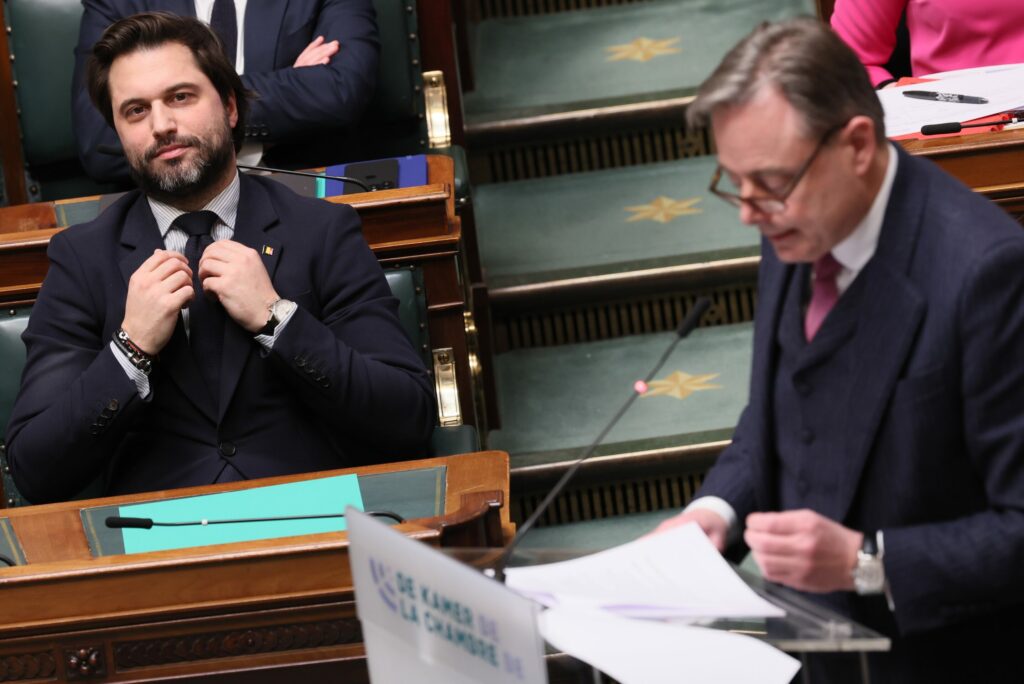
A reform of the Belgian VAT system in exchange for an accelerated break on income tax has reportedly put Prime Minister Bart De Wever (N-VA) in confrontation with the party leader of his largest federal coalition partner, George-Louis Bouchez (MR).
De Wever has once again put a reform to the VAT system on the negotiation table according to Het Laatste Nieuws, as the Federal Government has just one week left before it has to present its 2027 budget to the Parliament.
The objective of the talks is to find €10 billion in cuts or new revenue to limit Belgium's deficit, which sits as one of the highest in the eurozone.
The reform includes raising the top margin of VAT from 21 to 22% on luxury products like clothing, electronics, and furniture. Goods that are currently taxed at either 6 or 12% would be put into one new category and taxed at 9%.
To compensate for the higher costs, VAT on certain products like fruits and vegetables would be lowered to zero, and certain categories currently taxed in the highest bracket would be put in the new 9% bracket to promote economic growth.
De Wever argues that lowering the VAT on newly built homes and some commercial products should appease the MR, and eliminating VAT for fruits and vegetables should be enough to keep Vooruit on board.
Related News
- De Lijn chief warns budget cuts are degrading public transport
- Belgian tax reform and November paycheques: How will your salary be affected?
- On PM De Wever's chopping block to fix Belgium's budget: Non-profits, VAT and health care
The reform is expected to bring in €4.5 billion in new revenue, with the cost of the compensation bringing the net increase in revenue to roughly €2.5 billion.
Despite the existing deficit in the budget, HLN reports that N-VA wants to use the revenue generated by the VAT reform to accelerate a tax break currently set to come into effect in 2029.
Alongside the acceleration of the existing plans, De Wever wants to introduce a new break in 2029.
The total cost for the operation would be around €7.5 billion and should give a boost to economic development in Belgium. The €10 billion needed to decrease the budget deficit would be found in different measures.
While MR set out to increase net income by lowering taxes during the previous elections, Bouchez has made his opposition to an increase in VAT a promise to his voters, leading his party to reject the proposed plans.
As Belgium has to submit its budget to the European Commission on 13 October, De Wever has just one more week to find a way out of talks that are currently deadlocked, as his coalition parties have thus far rejected his proposed cuts.
