
Belgium's French community government agreed on its 2027 budget on Friday, projecting a drop in the budget deficit to €1.27 billion from €1.7 billion this year.
The government has set a target to close the deficit to €1.2 billion by 2029.
Most of next year's deficit reduction comes from long-term structural savings announced in 2026, along with cuts to French-language broadcaster RTBF.
RTBF, which has already been subject to a freeze on indexation of its public funding until 2029, must now save at least €20 million more over the same period. The earlier freeze was expected to save €130 million over five years.
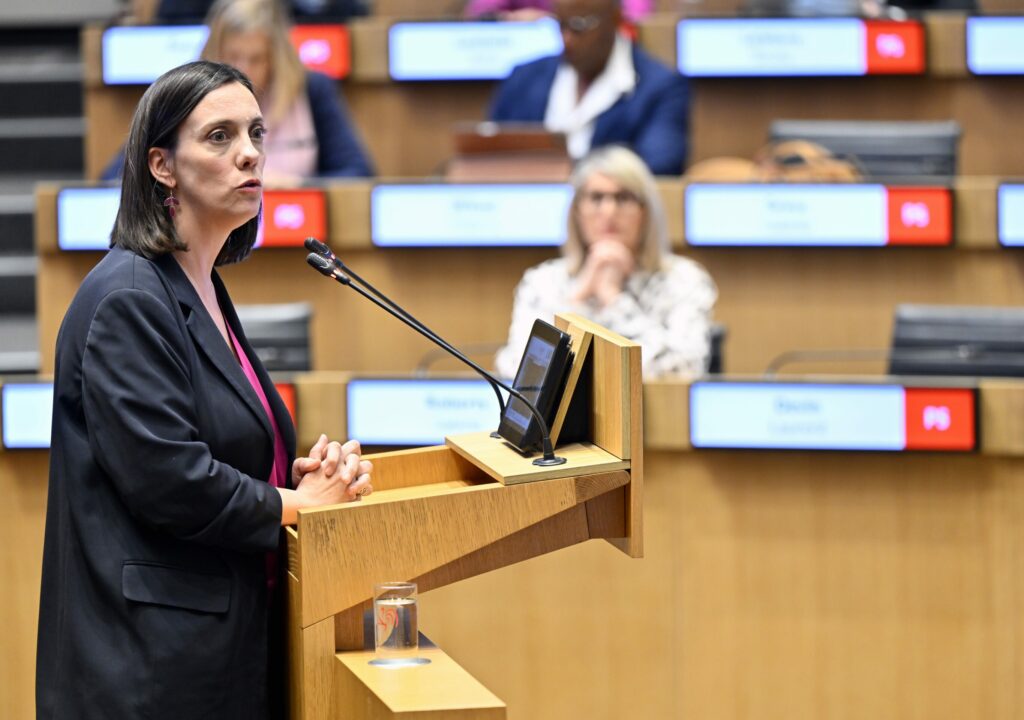
The budget was condemned by the opposition, with Martin Casier (PS) accusing the government of being 'deaf to the demands of those on the ground', following protests in recent weeks.
"The Degryse-Glatigny government is pressing ahead without listening to anyone, with very tangible consequences: jobs are disappearing and access to education and public services is becoming more expensive," he said.
Ecolo was also critical, accusing the government of being out of touch.
"Whilst anger has been simmering for months in schools, universities and the cultural, children’s and youth sectors, the MR-Engagés government continues to draw up its budget in an ivory tower, a world away from the outcry on its doorstep," argued Barbara Trachte (Ecolo).
The deal makes the French Community of Belgium the third government in Belgium, after Flanders and the Brussels-Capital Region, to finalise its initial 2027 budget.
The federal government continues deliberations this weekend to find €10 billion in savings to meet EU rules on excessive deficits for eurozone members.
Related News
- Calls for a 'French-speaking federalisation' of Belgium: What does it mean?
- Half of Belgians have tried BDSM – so why are we still uncomfortable talking about it?
- Warning triangles, gender-neutral road signs: Belgium changes its traffic rules from next year
Under Belgium’s special financing law, the French community will receive a positive correction to past grants in 2027, worth about €163 million. That temporary income increase will not be repeated in 2028.
As a result, the deficit is expected to rise again in 2028 before returning to the €1.2 billion target in 2029, according to a government statement.
The government will also scale back its diplomatic representation by reducing the number of delegates-general it posts abroad. It currently has 14, and it will not hold any diplomatic recruitment exams for the rest of the legislature. The measure is expected to save €12 million by 2029.
Further savings will come from tighter rules for replacing civil servants. Staff in so-called critical roles will still be replaced in full, but only one in five departing employees in other posts will be replaced.
At the same time, ministers agreed to redirect €13 million to fund a scheme known as Ombrage (shading). After a summer of extreme heat, the programme aims to help schools cope with climate change by funding measures such as classroom blinds and greener playgrounds.
The budget also includes €14 million by 2029 to support tailored assistance for pupils in the second and third years of secondary school as part of the planned reorganisation of the common core curriculum.
