
More than seven decades after its demolition, one of Victor Horta’s most remarkable creations is being brought back into the spotlight.
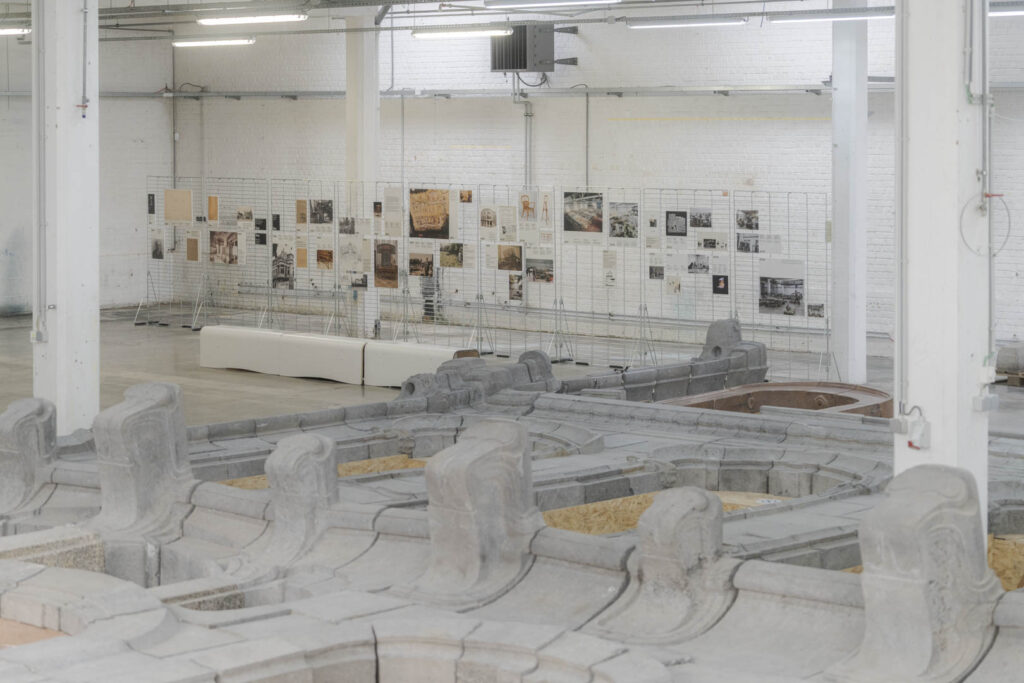
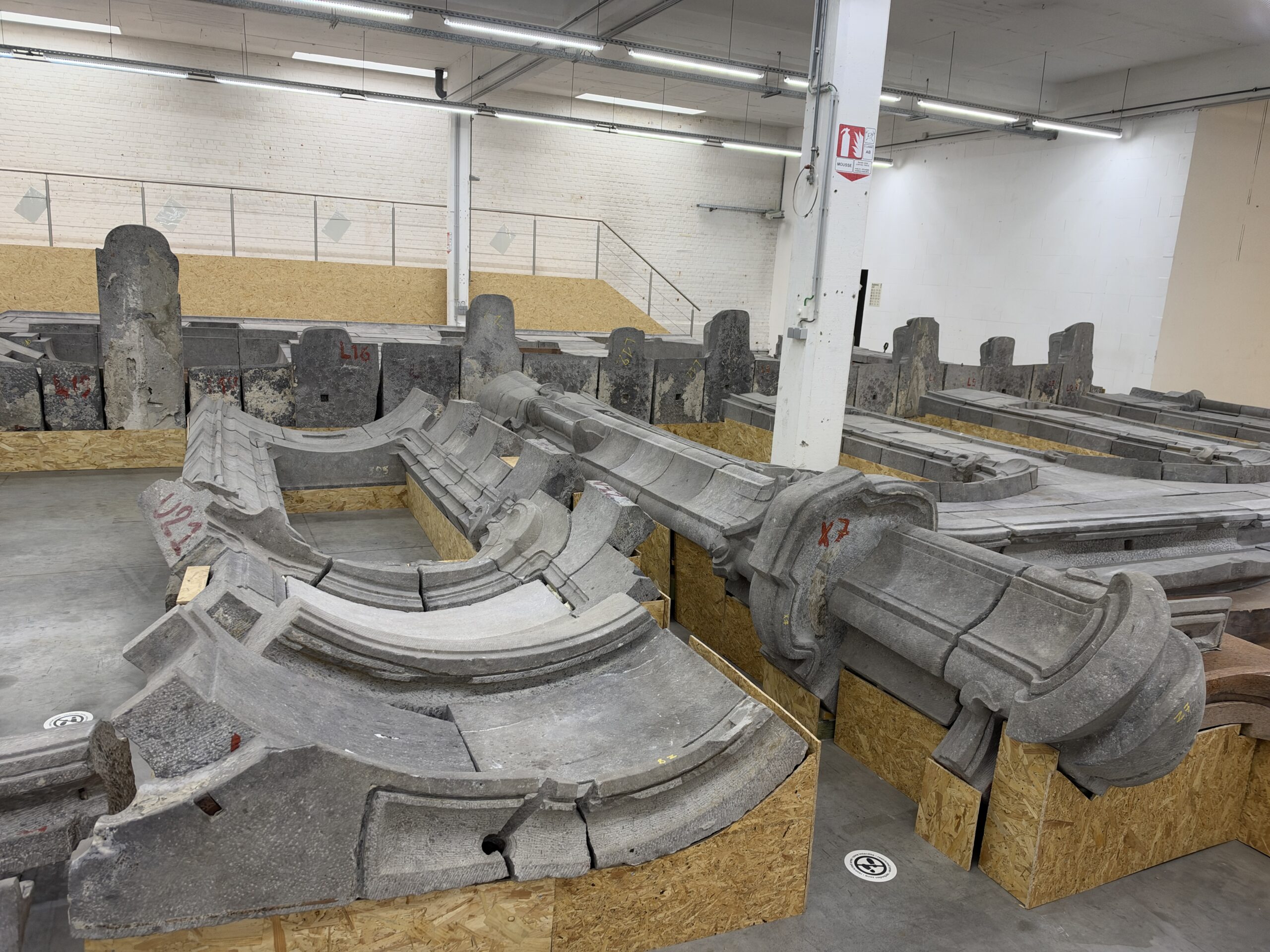
From 7 November, visitors will be able to discover the remains of the Hôtel Aubecq façade in Berchem-Sainte-Agathe, where some 600 sculpted stones have been carefully reassembled in an unusual exhibition that offers a completely new perspective on the architect’s work.
Built in 1902 on Avenue Louise near the Bois de la Cambre, the Hôtel Aubecq was once considered one of the finest examples of Brussels’ Art Nouveau architecture. Yet, despite being designed by renowned Belgian architect Victor Horta and its exceptional craftsmanship, the mansion was demolished in 1950 to make way for a modern apartment building.
More than 75 years later, part of this architectural masterpiece will finally be available to the public again, thanks to a partnership between urban.brussels and Constructiv, the Belgian construction sector’s training fund.
Credit: The Brussels Times/Léa Huppe
The exhibition, entitled Aubecq 3.0, will open on 7 November at Constructiv’s campus in Berchem-Sainte-Agathe, where the original stones have been laid out horizontally rather than reconstructed vertically.
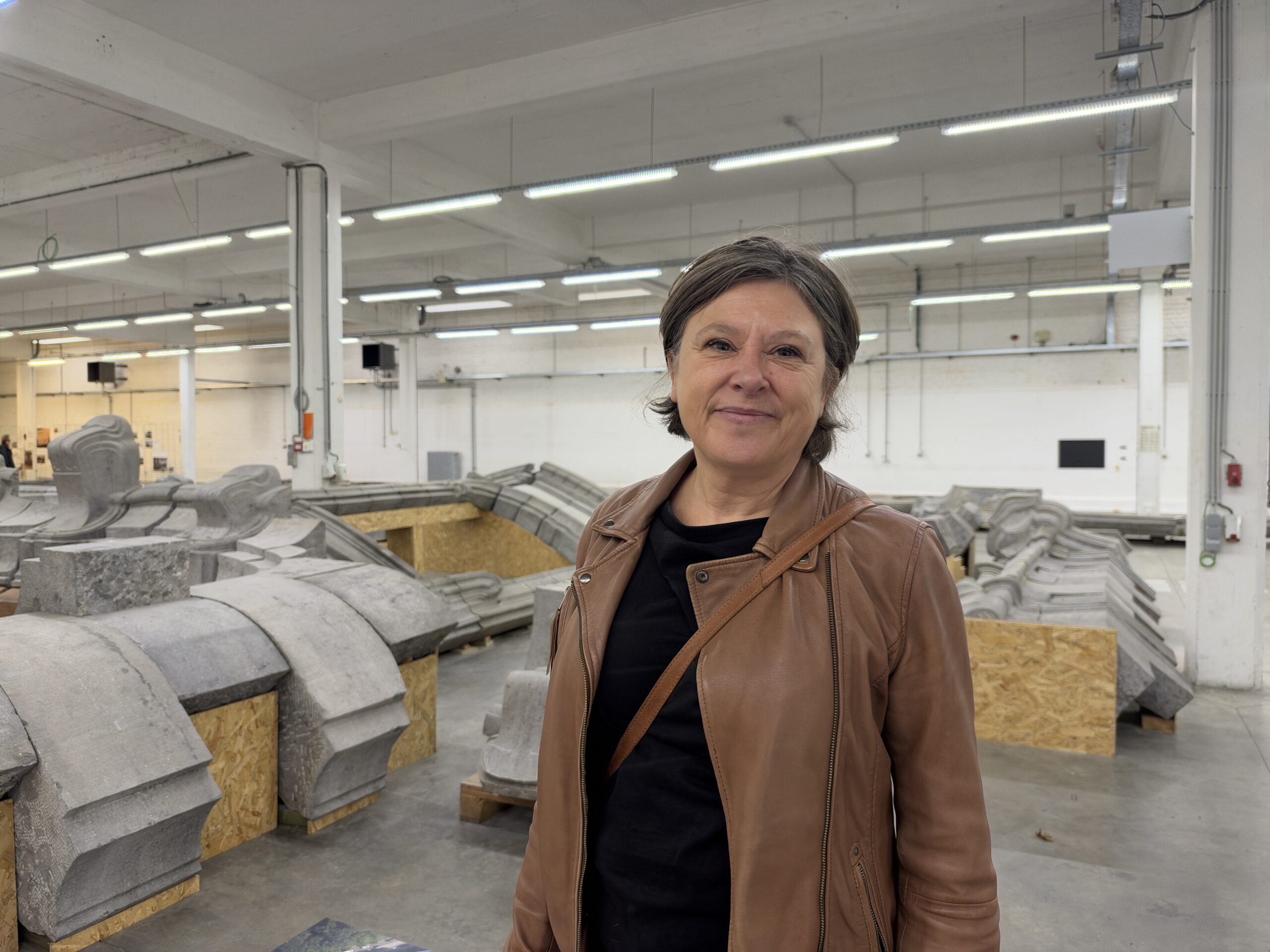
“What’s particularly extraordinary is that visitors can literally walk through the façade,” explains Pascale Ingelaere, Head of Movable Cultural Heritage at urban.brussels to The Brussels Times.
“We’ve deliberately left an opening where the balcony slabs originally stood, allowing visitors to discover what lies behind the decorative elements.”
Pascale Ingelaere. Credit: The Brussels Times/Léa Huppe
This unusual arrangement offers an opportunity to admire details that would normally be impossible to see from the street, including the stone-cutting techniques, anchoring systems and intricate sculptures.
“When you walk among these stones, you realise that they are genuine works of art. Every stone is unique. Every stone is a sculpture in its own right,” she adds.
A victim of Brussels’ architectural past
The destruction of the Hôtel Aubecq remains a striking example of Brusselisation, a term associated with the widespread demolition of historic buildings in Brussels during the 20th century.
Following the Second World War, Art Nouveau had fallen out of fashion, and wealthy families increasingly favoured modern apartment buildings over traditional mansions.
“People no longer wanted Art Nouveau. They were looking for a different kind of modernity,” Ingelaere explains. “The Hôtel Aubecq was demolished because it no longer met the expectations of the upper bourgeoisie.”
According to Ingelaere, Octave Aubecq’s son, who reportedly disliked the building, decided to sell it to property developers. A demolition permit was issued in 1949.
Credit: urban.brussels
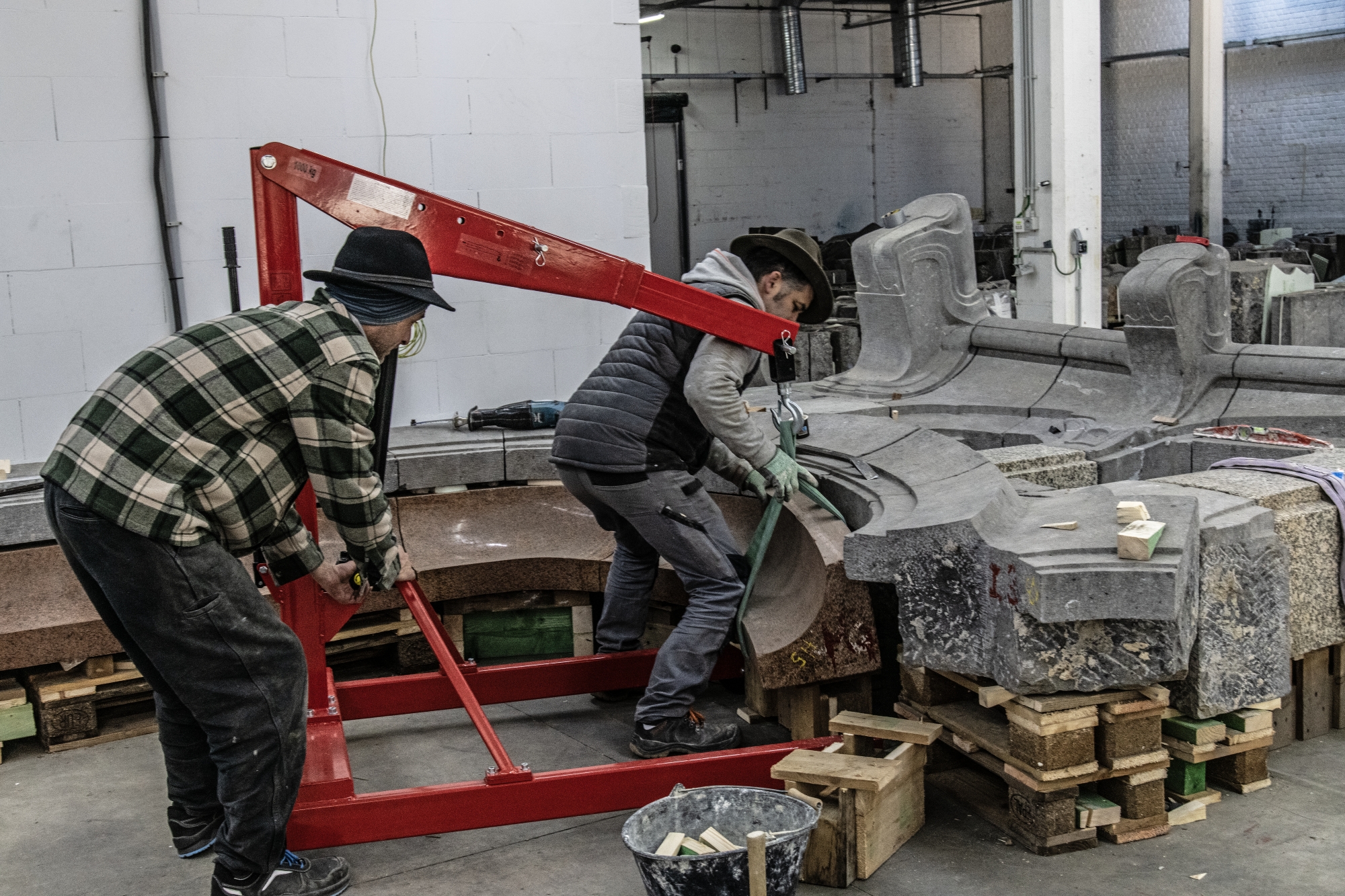
However, the façade was partially saved thanks to Jean Delhaye, a collaborator of Victor Horta, who convinced the authorities to finance the careful dismantling of hundreds of stones. “Horta himself considered it one of his most accomplished works in terms of sculpture,” Ingelaere points out.
The stones subsequently embarked on an extraordinary journey. Over the following decades, they were moved between vacant plots and warehouses in Saint-Gilles, Tervuren, Laeken and Schaerbeek.
The Brussels-Capital Region acquired the collection in 2001, but despite several attempts to showcase it, the façade remained largely inaccessible.
“This is the third time the façade has been reassembled horizontally. The first was in the 1980s, the second in 2011,” Ingelaere explains. “Unfortunately, after a few months of guided tours, the warehouse was practically abandoned again.”
More than just a museum exhibition
The new project aims to give the historic façade a second life, not only as a cultural attraction but also as an educational resource for future generations of construction workers and craftspeople.
Constructiv is developing a centre of excellence dedicated to construction and heritage professions in Berchem-Sainte-Agathe. The Hôtel Aubecq stones will form part of its training activities.
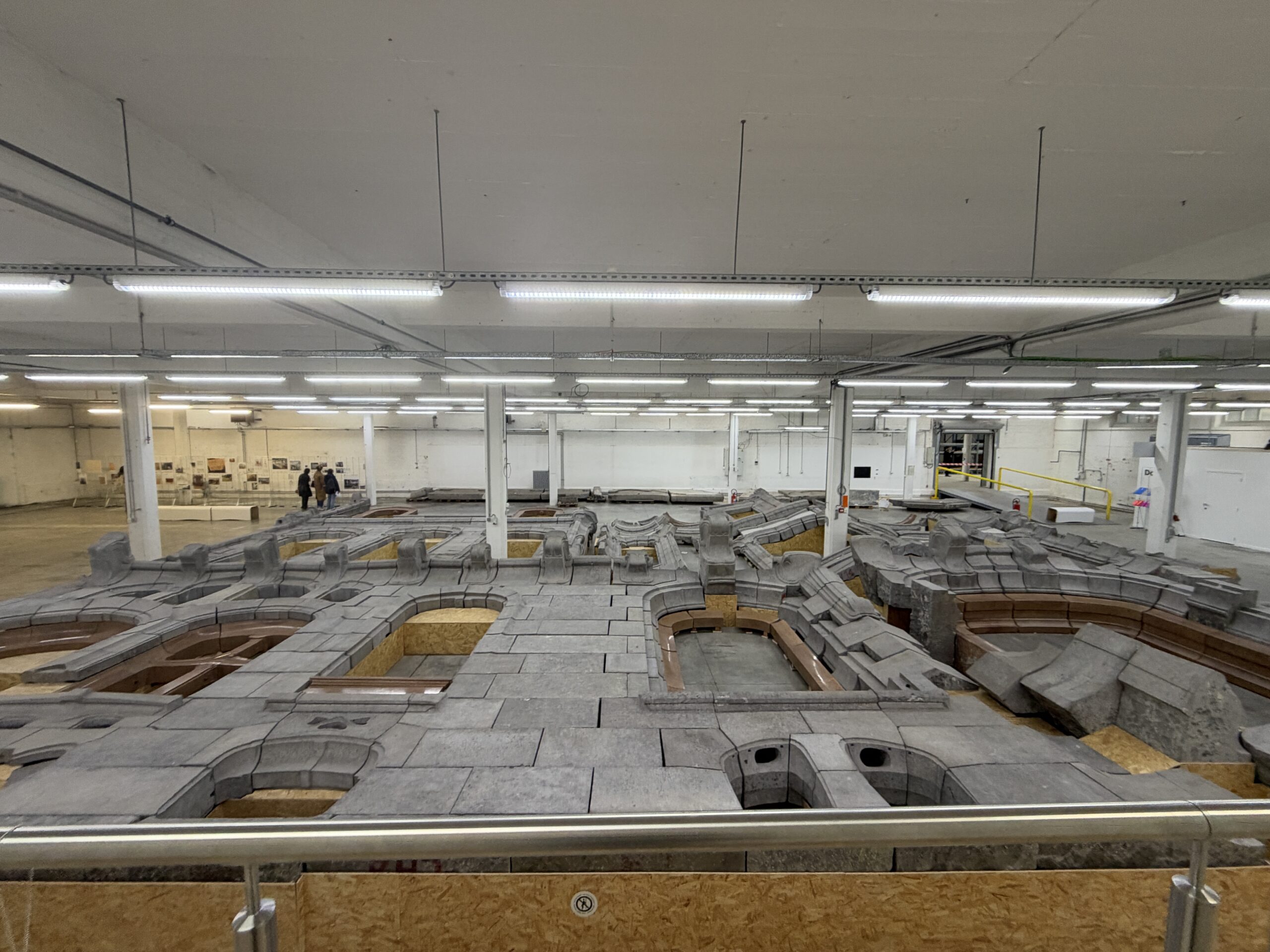
The exhibition opens on 7 November. Credit: The Brussels Times/Léa Huppe
“There’s stone cutting, assembly work and anchoring techniques. We also still have the original window frames, which will eventually be used to train future manufacturers and restoration specialists,” Ingelaere explains.
“For us, it was a wonderful opportunity to ensure that the façade wouldn’t simply remain a museum exhibit but would become a practical resource.”
For at least the next two years, visitors will be able to explore the exhibition through guided tours, while schools and associations will have access to dedicated educational activities. The exhibition opens on 7 November, with visits available by reservation at www.hotelaubecq.be.
