
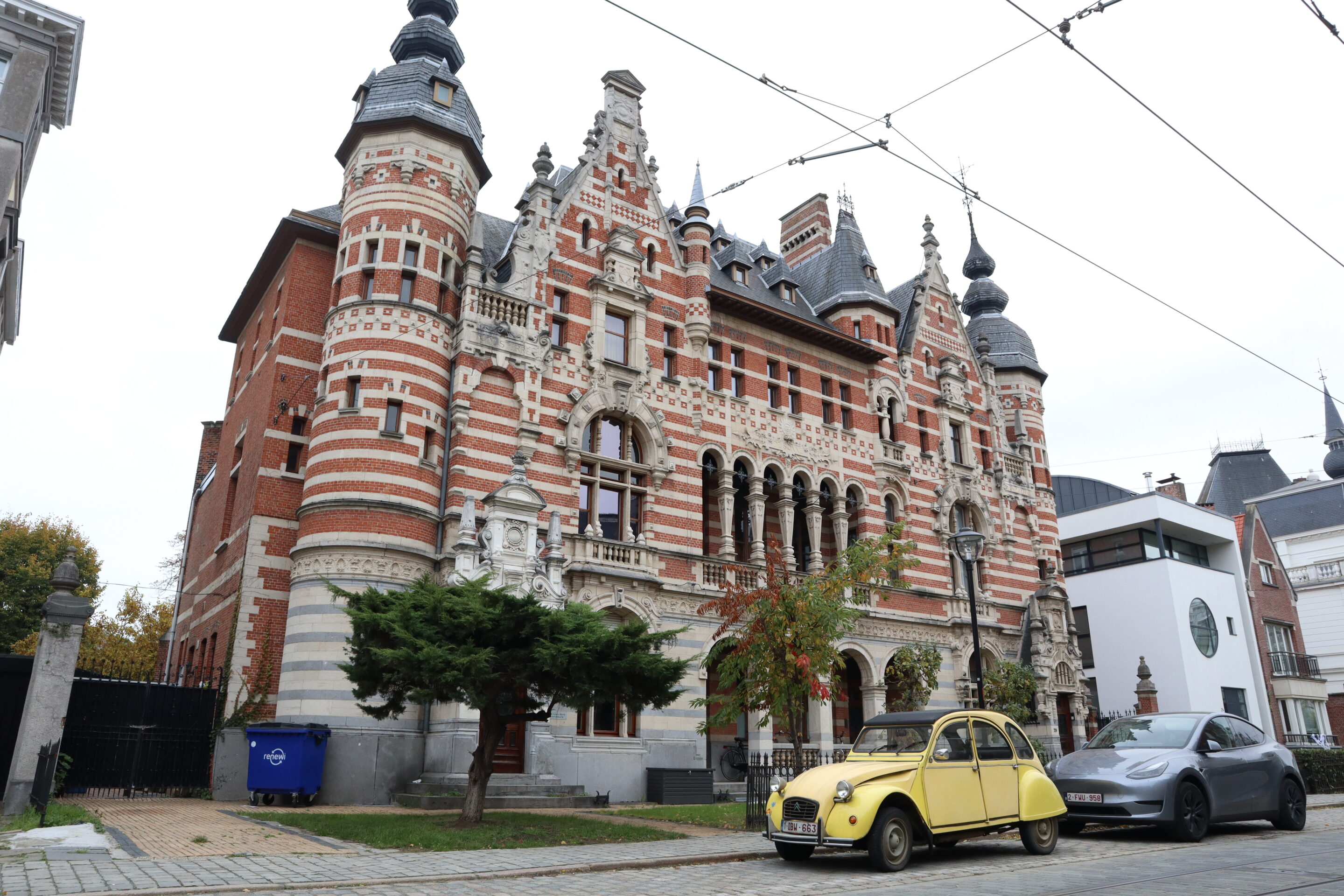
The Cogels-Osylei in Antwerp's Zurenborg neighborhood is ranked among Europe's most beautiful and eccentric architectural streets.
Wealthy buyers today pay over €1 million for one of these magnificent Belle Époque urban villas. Yet in the 1960s, local authorities planned to bulldoze the entire boulevard.
Located mostly in the Berchem district just inside the city's ring road, Zurenborg was not always the desirable hip neighborhood that it is today.
For centuries, the local stream flooded lands that modern mansions stand on, turning the waterlogged earth acidic. Farmers avoided the zure gronden (acidic soil), which gave the neighbourhood its name.
Two Catholic banking dynasties changed that image entirely. Baron Jean Joseph Renier Osy bought 60 hectares in the area in 1837 and his son Edouard and brother-in-law John Cogels later consolidated the surrounding plots into a massive 64-hectare private estate.
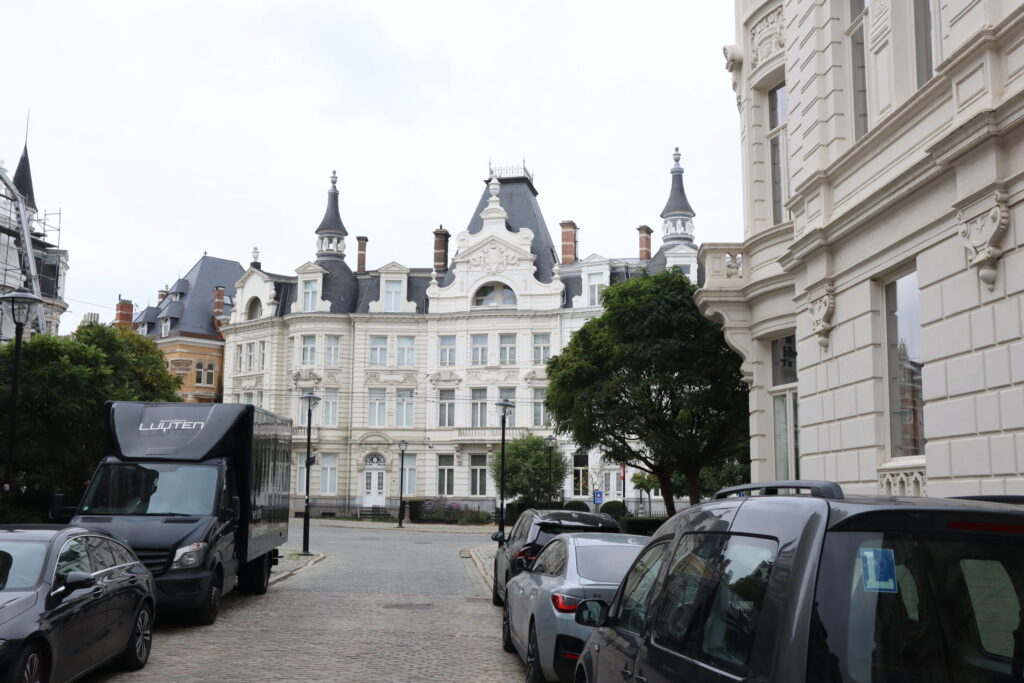
Credit: Kosmos Khoroshavin / The Brussels Times
Only in 1886, the landowners established a residential real estate company during Antwerp's “second golden age” – a 40-year boom when the port city expanded to five times its original size.
"Instead of letting people build whatever they wanted, a specific rulebook was enforced, requiring features like a front yard," Tanguy Ottomer, a renowned Antwerp tour guide, told The Brussels Times.
"This is why we have so many magnificent pieces of architecture situated right next to each other today."
Private buyers had to finish building within two years of purchasing a plot. Property managers reviewed every blueprint, banned polluting trades, restricted cafés to corner plots, and vetted tenants to enforce “strict Catholic morals.”
Many mansions carry their own name on the facade. "Before people could read or write, houses were identified by visual symbols or names on their facades, such as the 'House of the Devil' or the 'House of the Angel'," Ottomer explained.
"This naming tradition was carried over into later centuries for prestige."
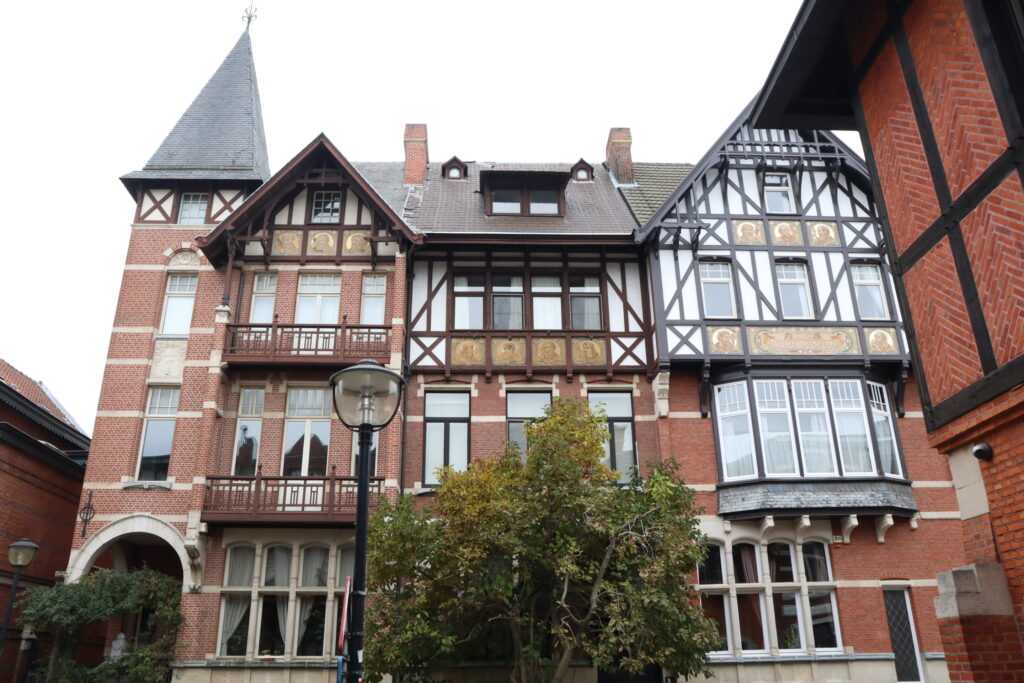
"The twelve apostles" house. Credit: Kosmos Khoroshavin / The Brussels Times.
Notable houses
The "Villa complex" is centered around the Cogels-Osylei street. Other parts of it include Transvaalstraat, Pretoriastraat, Velodroomstraat and Generaal Capiaumontstraat – all neatly tied together.
Asked about his favourite architectural pieces, Ottomer starts from Cogels-Osylei 1.
Number one, the standard-bearer, is marked with a golden statue in front of the 1896 Brabo mansion. Brabo, a Roman soldier, is the central figure in the myth of Antwerp’s foundation.
“This is one of the five Brabos we have in the city," he said.
Brabo's bigger statue-fountain is located on Antwerp's Grote Markt.
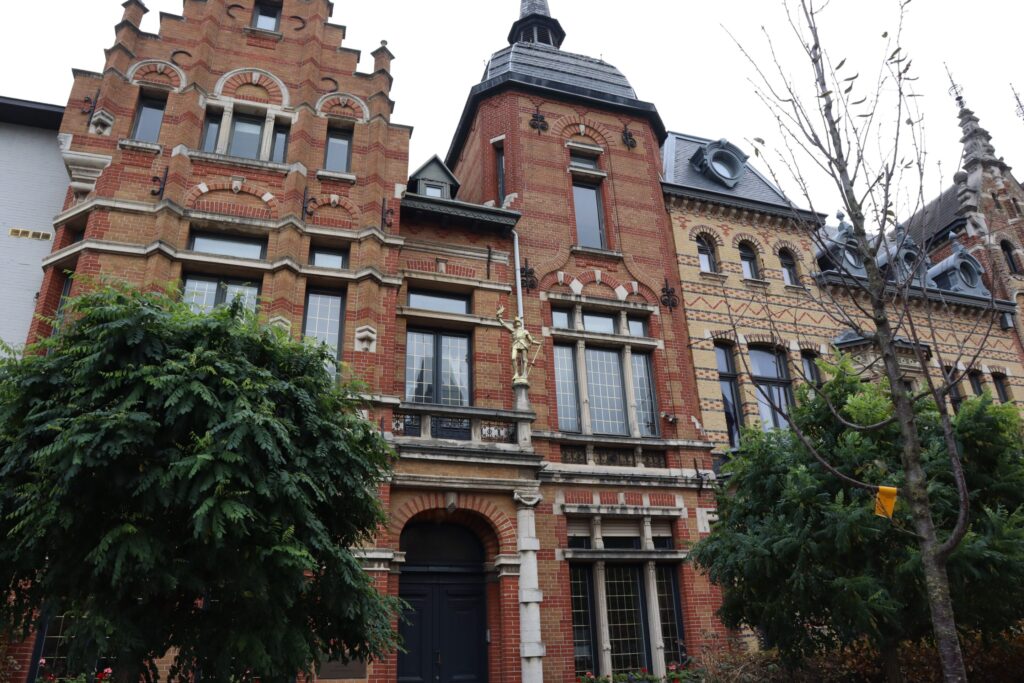
Credit: Kosmos Khoroshavin / The Brussels Times.
Another one of his favourites is number 80: the 1904 "Quinten Matsys" house, designed by Jacques De Weerdt.
"This house was inspired by a famous Brussels design. It was built for a painter and includes a wishing well inspired by Quinten Matsys," said Ottomer.
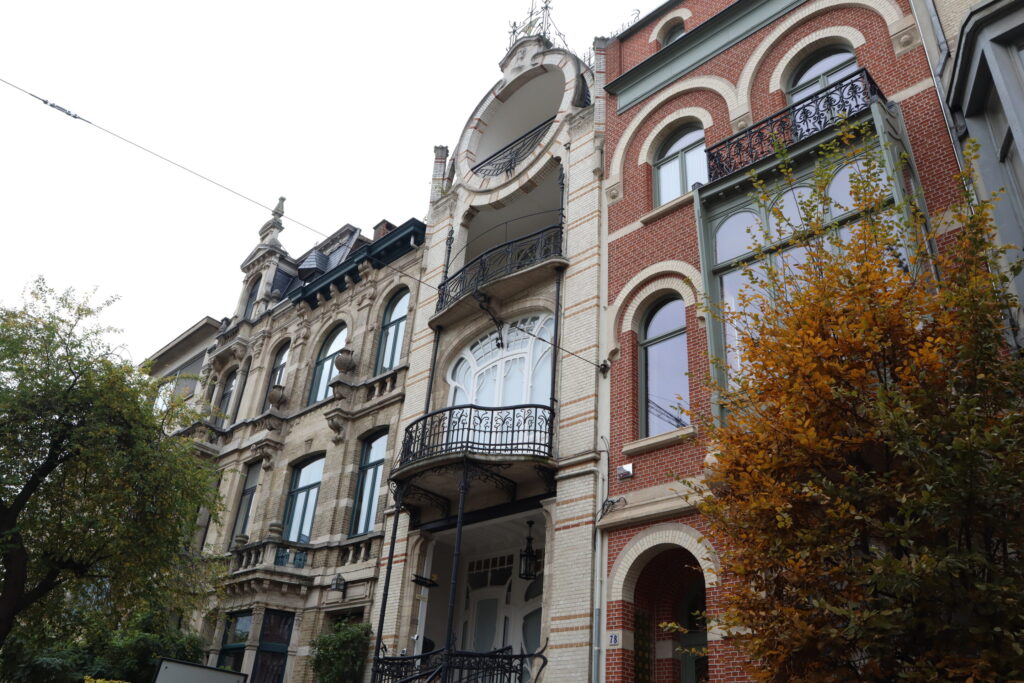
"Quinten Matsys" house. Credit: Kosmos Khoroshavin / The Brussels Times
At the intersection of Waterloostraat and Generaal Van Merlenstraat, Bascourt's 1899 ensemble De Vier Seizoenen (The Four Seasons) maps human life across four corner mosaics: spring, summer, autumn, and winter.
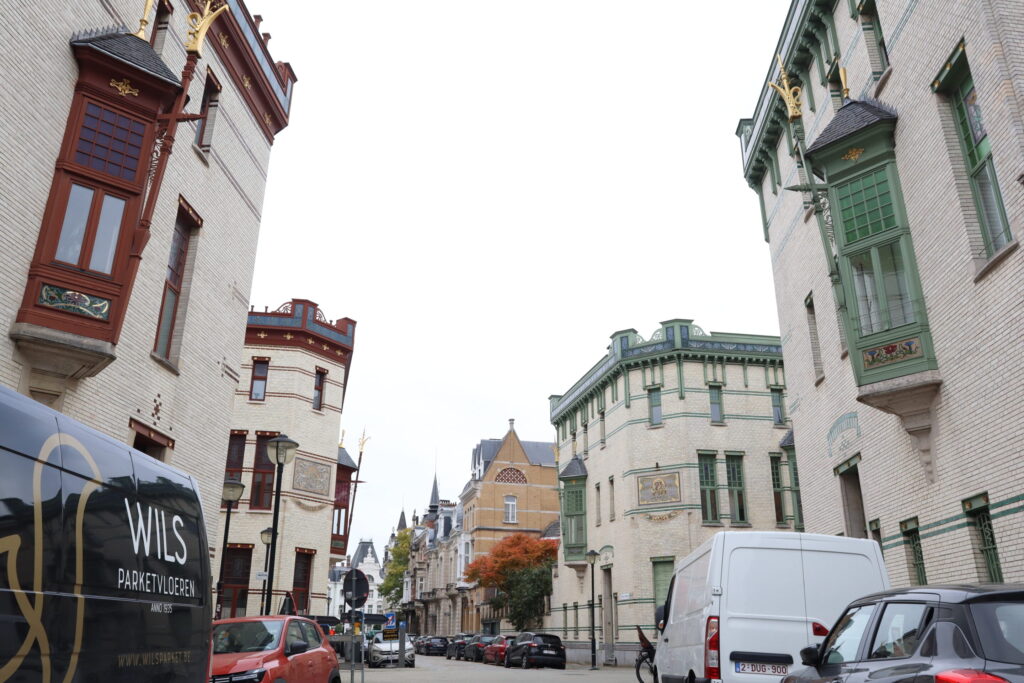
"The four seasons" corner houses. Credit: Kosmos Khoroshavin / The Brussels Times.
Around the corner at Generaal Capiaumontstraat 2–4 sits "Euterpia," a 1906 Greek Neoclassical double house crowned by a gilded statue of the muse of poetry.
"It used to be a very famous, private restaurant that Keith Haring frequented when he came to Belgium in the late 1980s," Ottomer said. "He even drew the label for their house wine and sketched on the toilet door."
Belgian fashion designer Ann Demeulemeester, a member of the famous Antwerp Six, later bought and renovated the building, although it became private and inaccessible to the public
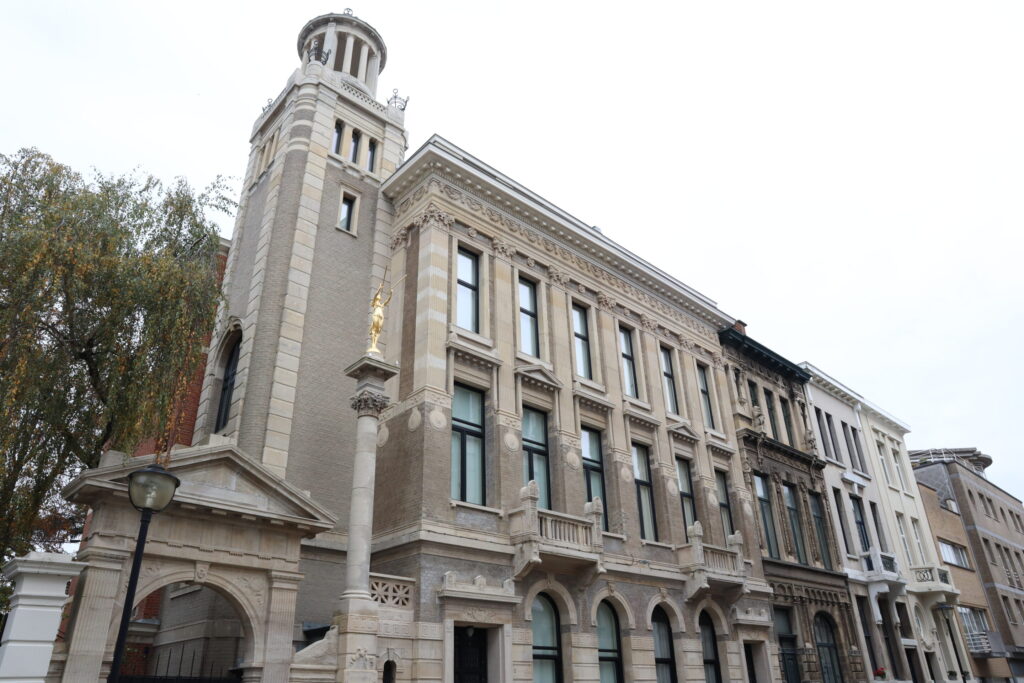
"Euterpia" house. Credit: Kosmos Khoroshavin / The Brussels Times.
A brick railway viaduct splits Zurenborg in two. North of the tracks, around the Dageraadplaats and the neo-Gothic Sint-Norbertus Church, the villas give way to hundreds of more modest, white-plastered row houses built for the workers who constructed the mansions.
"A local priest collaborated closely with the families to ensure only people living in that neighborhood could work on the houses, which attracted many workers to settle there," Ottomer explained.
On the brink of destruction
After the First World War, critics derided Cogels-Osylei's eclecticism was a blemish on a modern city.
By the 1960s, the uninsulated mansions became incredibly expensive to heat. Wealthy families fled for car-friendly suburbs instead.
Driven by post-war "Brusselization," municipal authorities drafted blueprints around 1971 to demolish the entire district for high-rise apartments, office towers, and a department store.
Wrecking crews even demolished the small Berchem station at the end of Cogels-Osylei. "Luckily, artists occupied the remaining houses and protested against further demolition, which is why we still have this beautiful Art Nouveau area today," Ottomer said.
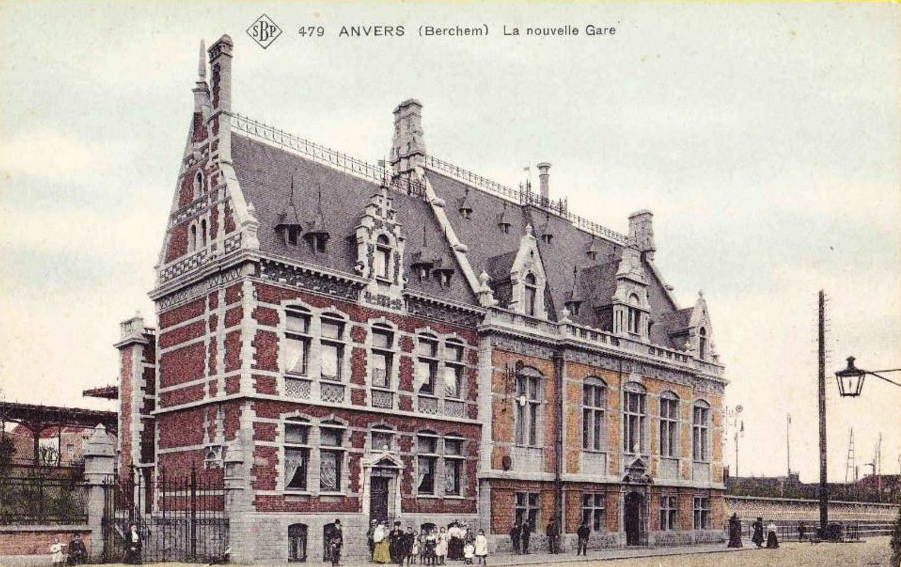
The now demolished Antwerpen-Berchem train station. Credit: Wikimedia Commons
Ironically, it was a modernist architect, Renaat Braem, who submitted an emergency protection request on 4 April 1969.
Alongside grassroots group SOS Zurenborg, Braem fought developers for 15 years until Royal Decrees protected the Berchem townscape in 1980 and classified 170 monuments on 11 April 1984.
Now, Cogels-Osylei is still standing proud. If you visit Antwerp, make sure to stop by and enjoy the stunning lavish façades.
