
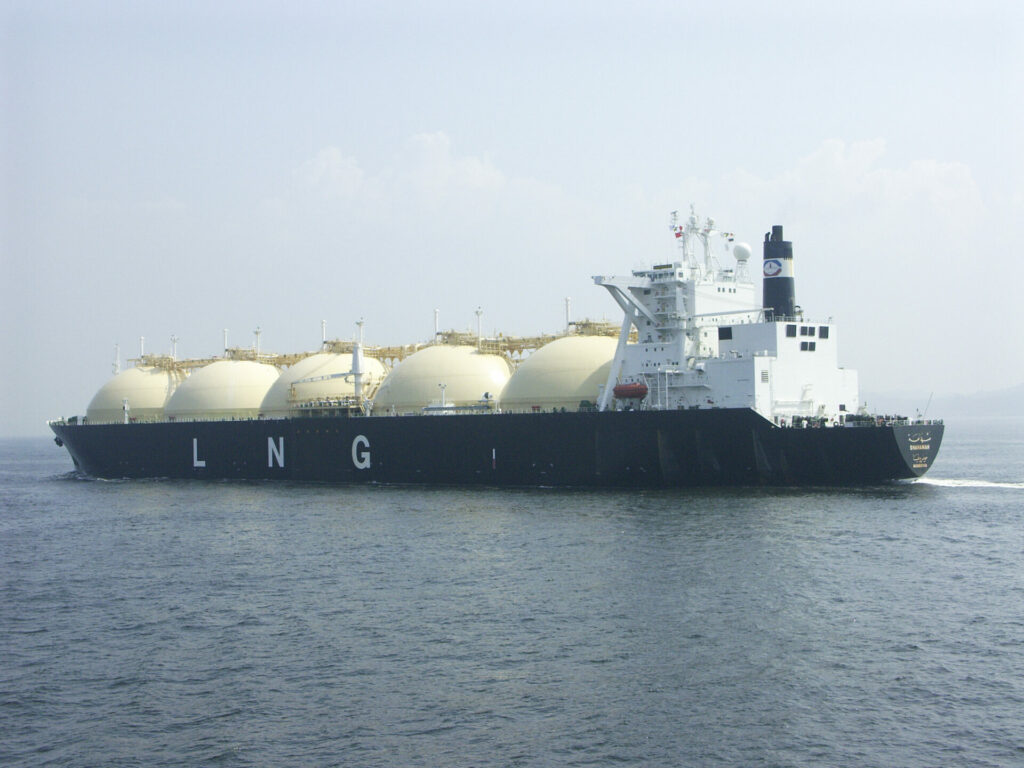
Europe's gas consumption in 2023 fell to a ten-year low, however the continent continues to import significant quantities of Russian liquefied natural gas (LNG), according to research from IEEFA (Institute for Energy Economics and Financial Analysis).
"Gas consumption in Europe (EU + UK, Norway, and Turkey) plummeted in 2023 to its lowest level in a decade as countries ramped up their energy efficiency measures and renewable power initiatives," stated the IEEFA report, published on Wednesday.
In the months following Russia's initial offensive in Ukraine, European demand dropped 20%. Europe also adapted to the halt in Russian gas via pipeline and shifted towards LNG transported by shipping. In actual terms, consumption dropped to 452 billion cubic metres – less than 2014's level of 472 billion cubic metres.
LNG sales to Europe for 2022 and 2023 totalled over €170 billion. During this period, American LNG was the biggest source with a total of €75.15 billion. Russia provided €23.84 billion worth, closely trailed by Qatar (€23.80 billion).
Russian LNG shipments to Europe increased by 11% between 2021 and 2023, and tripling to Belgium specifically. However it is important to note that although Belgium is the third-largest importer of Russian LNG worldwide, the vast majority of this is then transported elsewhere in Europe – a situation that ministers regret but stress that Belgium cannot unilaterally cancel.
"Two years after Russia's offensive in Ukraine began, Europe's energy system is more diversified and resilient," noted Ana-Maria Jaller-Makarewicz, an analyst for the IEEFA. She highlighted the shift towards energy efficiency and renewables that will make the continent structurally less dependent on LNG.
In addition, Jaller-Makarewicz emphasised the heightened need for energy sovereignty. "Having experienced the dangers of risking security of energy supply by depending too much on one source, Europe must learn from its past mistakes and avoid becoming over-reliant on the U.S., which provided nearly half of its LNG imports last year."
However, changes initiated since the energy crisis last year make it unlikely that Europe will again allow itself to be so much at the mercy of external influences. The report highlights the major expansion of LNG facilities, both for imports and storage, which mean that by 2030 the combined capacity of Europe’s LNG import terminals could be three times higher than its expected LNG demand.
