
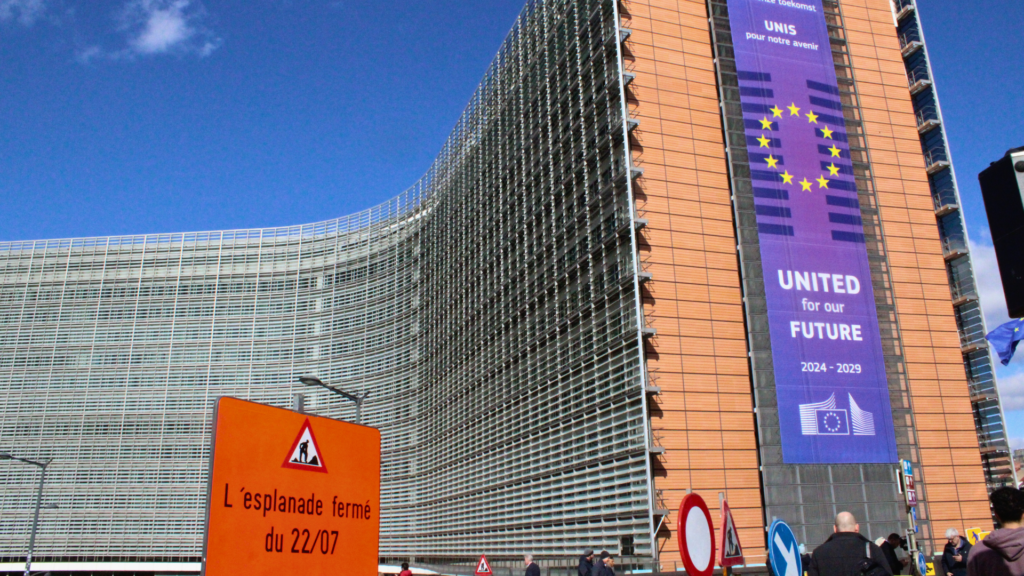
One and a half years after the long-awaited works on the Schuman Roundabout began, the area has been taken over by the construction site, and not everyone is happy. Is the redevelopment on track, when will the disruption (finally) end, and what is the impact on locals?
After years of discussing how to improve the Brussels esplanade —plans that took seven years to come to fruition—the works to turn the hectic, car-heavy Schuman Roundabout into a "real town square" finally began in November 2023.
"The Schuman roundabout is symbolic for Brussels and Europe," Alain Hutchinson, Brussels Commissioner for Europe and International Organisations (tasked with sustaining relations between Belgium's public authorities and the various European Union (EU) institutions), told The Brussels Times. "The esplanade is encircled by the Council, the Commission and the external services, among others."
However, he argued it had become a kind of cauldron of cars and traffic jams. "So it was necessary to improve this space and make it a little more dignified, including for the institutions."
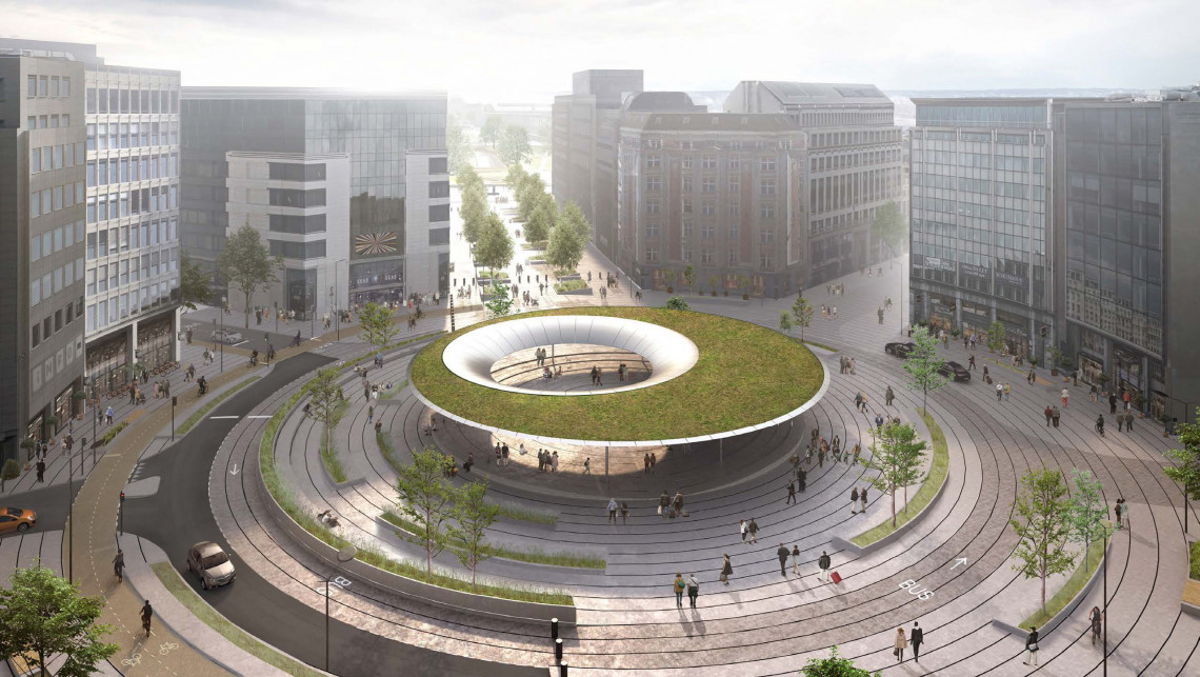
Illustration of the renewed Schuman roundabout. Credit: Ans Persoons Cabinet/ COBE + BRUT
The redeveloped area will include a large pedestrian zone around the roundabout, with traffic reduced to one lane. A visible cycle path will be added around the roundabout and on both sides of Rue de la Loi. Finally, the centre will be ornated with a modern steel canopy with a green roof.
Current schedule
Photos soon emerged of the raised centre of the traffic hub being levelled, creating a buzz in the European Quarter. However, 18 months later, the excitement has dissipated, replaced by disruption and traffic jams on the streets and annoyance among people living and working in the area.
So, how much longer will the work last? "As announced at the start of the work, the reconstruction is expected to end by the first half of 2026," Elien De Swaef, spokesperson for Beliris (leading this construction site), told The Brussels Times.
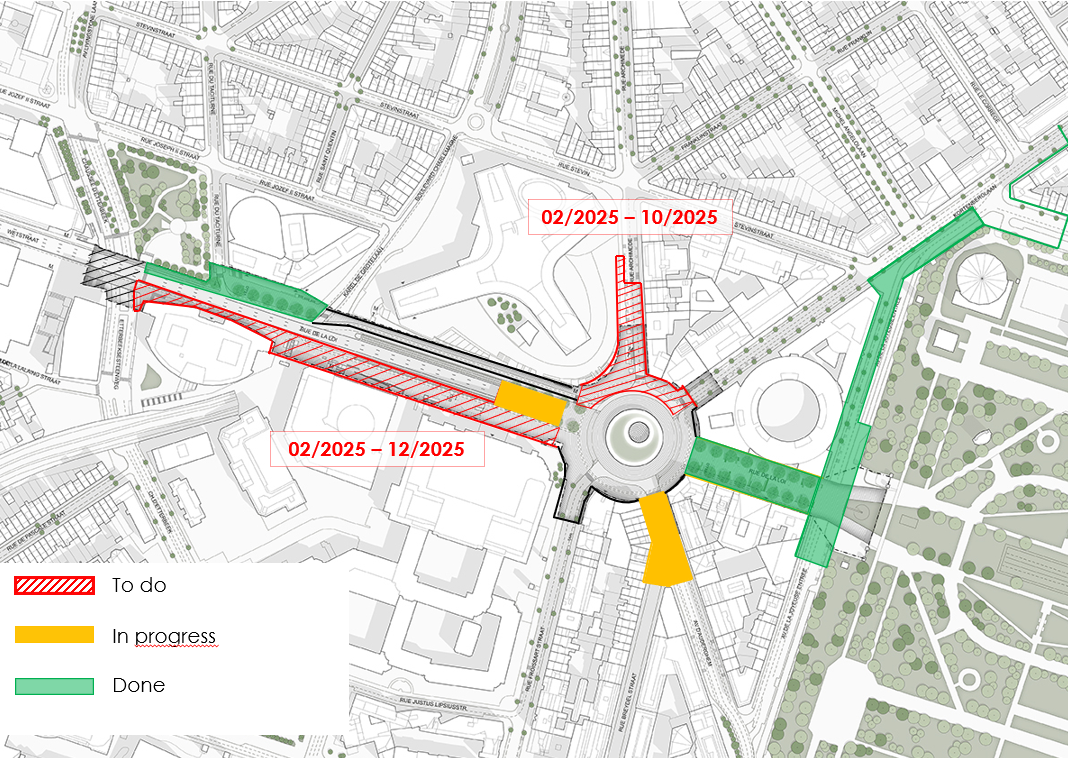
The project is broadly on schedule. Works on the Boulevard du Triomphe, the stretch of Rue de la Loi next to the Berlaymont, and the part of Rue de la Loi between Schuman and the Parc du Cinquantenaire have been finalised.
Credit: Beliris
The Boulevard d'Auderghem opened on Monday 17 March, while the central stretch of Rue de la Loi is expected to be accessible by the end of the month (both areas are highlighted in orange on the map).
Work is ongoing in Rue Archimède (to the north of the roundabout), and construction will start – with a slight delay – in Rue de la Loi along the Europa building and Justus Lipsius (the Council building) at the end of March. Traffic is banned on Rue Archimède, between the roundabout and the Jean Monnet crossroads, until October.
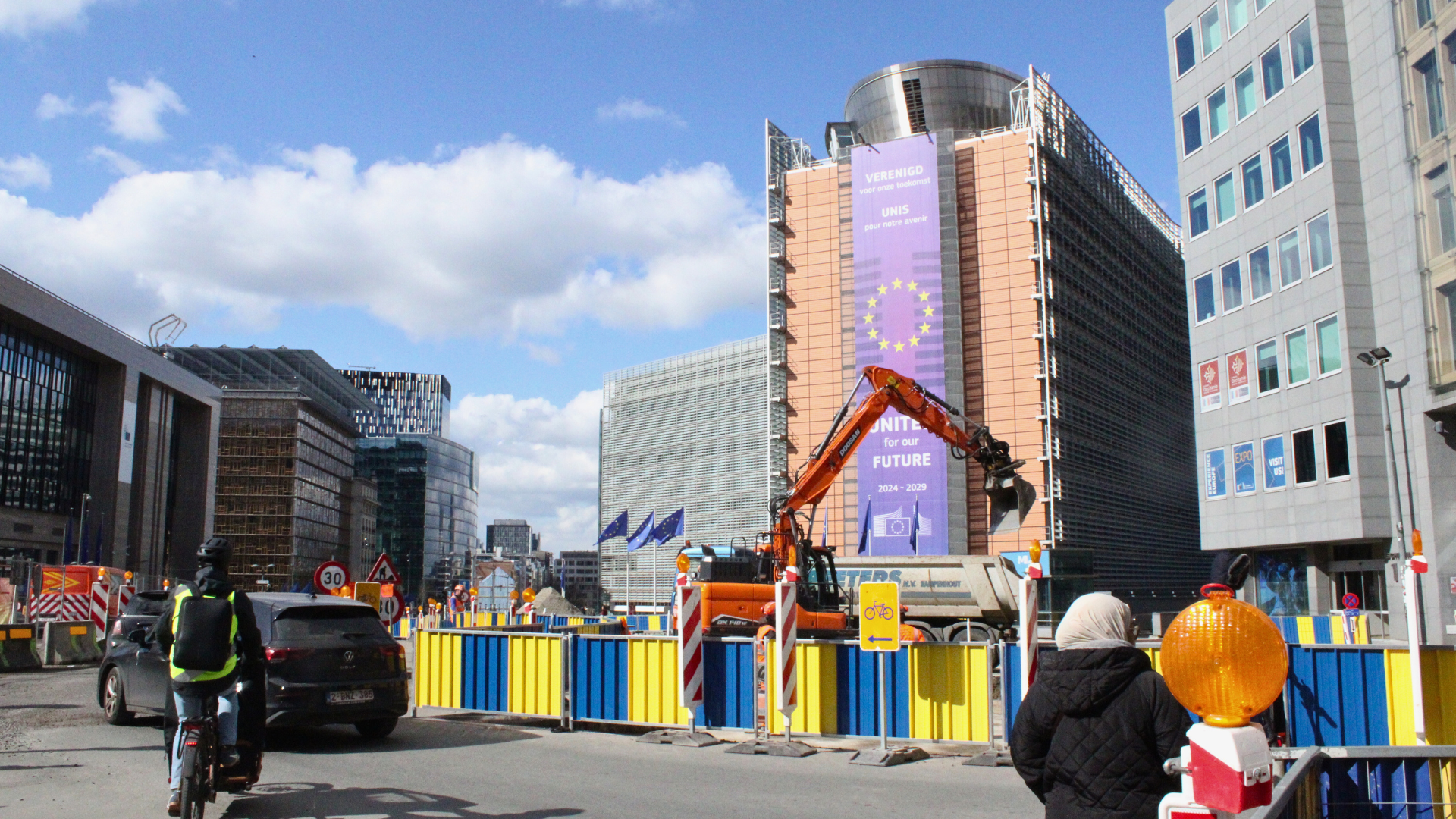
The new temporary road in the centre of the construction site. Credit: The Brussels Times
The current traffic situation is confusing at best. "When works are ongoing, it is always a bit of a search for motorists on how to get around," Brussels Mobility's spokesperson Steven Fierens recognised. However, he emphasised that the final product will be an improvement.
"Previously, only the Rue de la Loi was reduced to one traffic lane, resulting in drivers on multiple lanes trying to squeeze into the one lane, causing a bottleneck," Fierens said. Brussels Mobility is rearranging Avenue de Cortenbergh between Schuman and Rue Le Corrège to reduce traffic to one lane towards Schuman. "This means there will be a smoother flow of traffic."
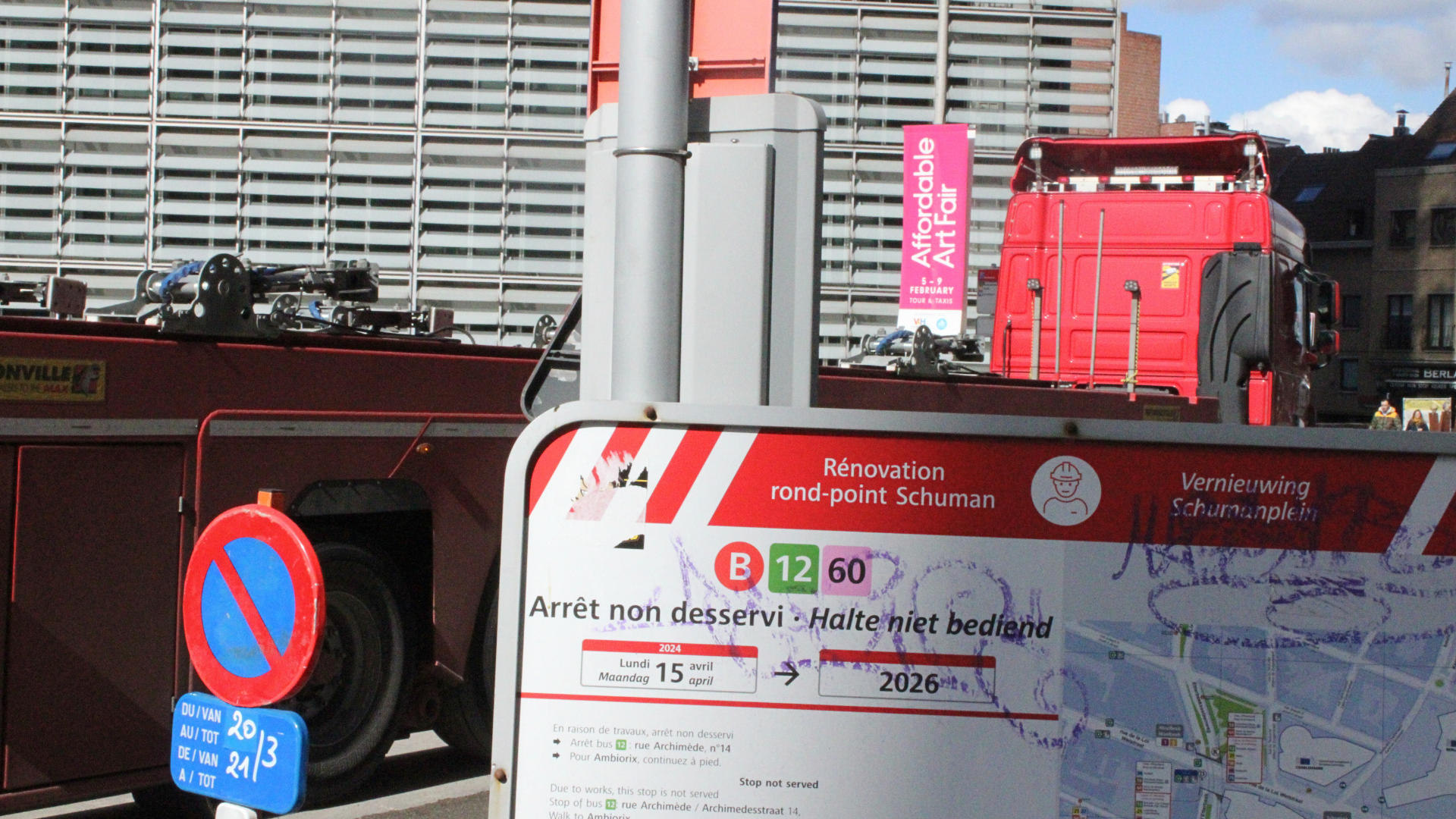
A sign indicating that the bus stop will not be served. Credit: The Brussels Times
The altered traffic situation also disrupted public transport. Buses are completely diverted and passengers can't get off the bus around Schuman anymore. "We now avoid the entire area because we knew the work would be disruptive," Guy Sablon, spokesperson STIB (Brussels' public transport operator), told The Brussels Times. Timetables were adjusted to reflect route changes.
Security concerns
Due to the large scope and disruptive nature of the works, measures were taken to guide local residents and businesses throughout the works. An ombudsperson was appointed to answer questions, which so far are mainly related to the planning, garage accessibility and deliveries from the site, according to De Swaef.
However, locals did take every opportunity to express their discontent with the project and its cost – €25 million (excluding VAT), partly subsidised by the European Recovery Plan – right up until the demolition of the square began. A group of neighbourhood committees filed an appeal for annulment with the State Council in early December 2023 and are still awaiting a ruling.
An ombudsperson was also appointed to be at the beck and call of the EU institutions. "From the outset, I made sure that they were represented," Hutchinson said. They helped choose the design, were given an advance copy of the works schedule and are regularly being updated about the works.
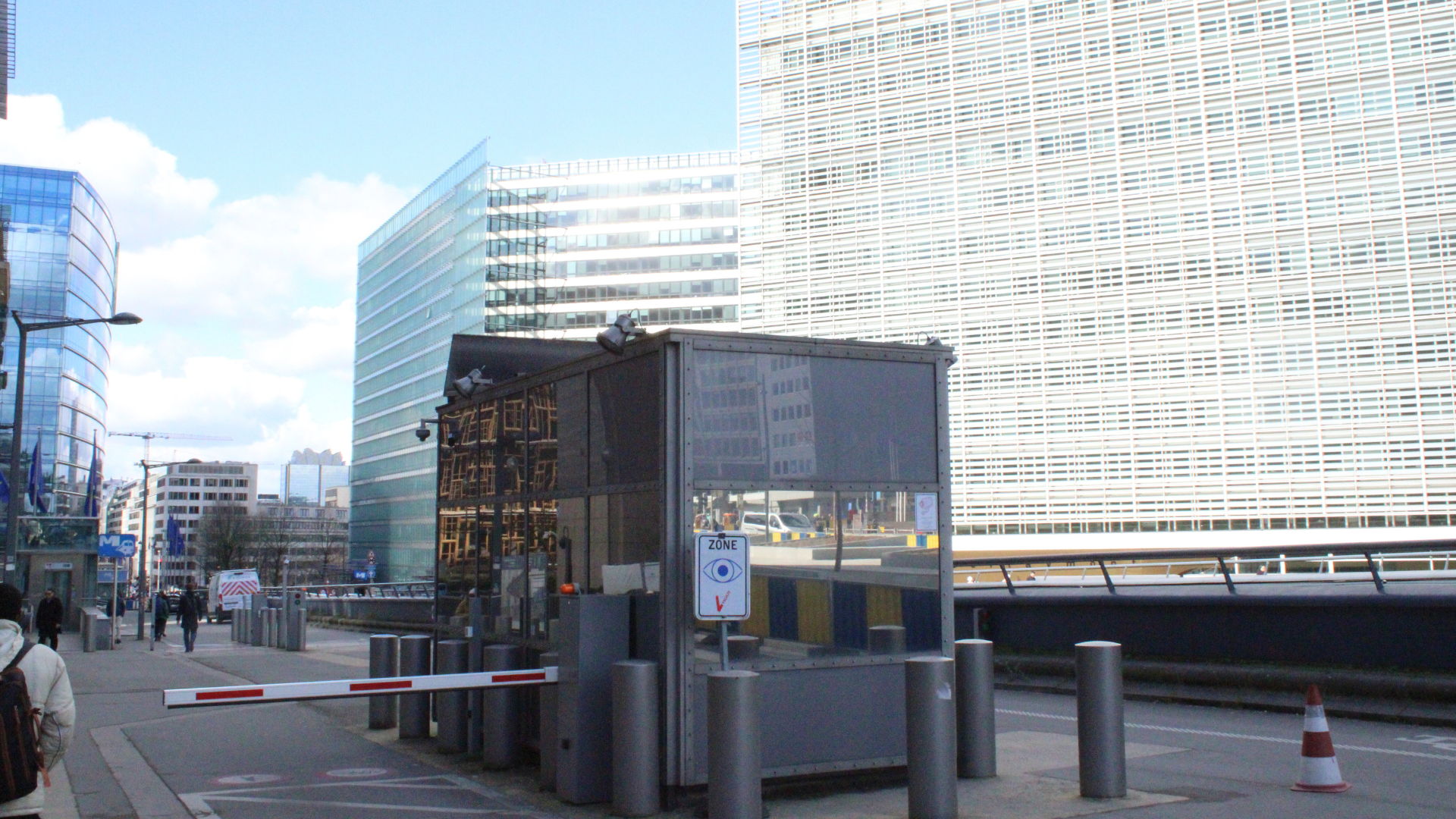
The guard building by the Justus Lipsius building. Credit: The Brussels Times
One major concern on the minds of the institutions is safety. A centrepiece in this discussion was the guardhouse opposite the Justus Lipsius building. "There have indeed been extensive consultations about this building. It will be removed and a new one will be built on their plot," De Swaef said.
Safety bollards will be installed around Berlaymont (the Commission building) and Justus Lipsius. These will be installed by the region. In exchange for removing the guardhouse, the Council can manage the bollards themselves.
The Council building also regularly hosts EU summits, for which local authorities take various safety measures. Both the design of the new space and the construction planning took into account the summits' organisation.
Bad for business
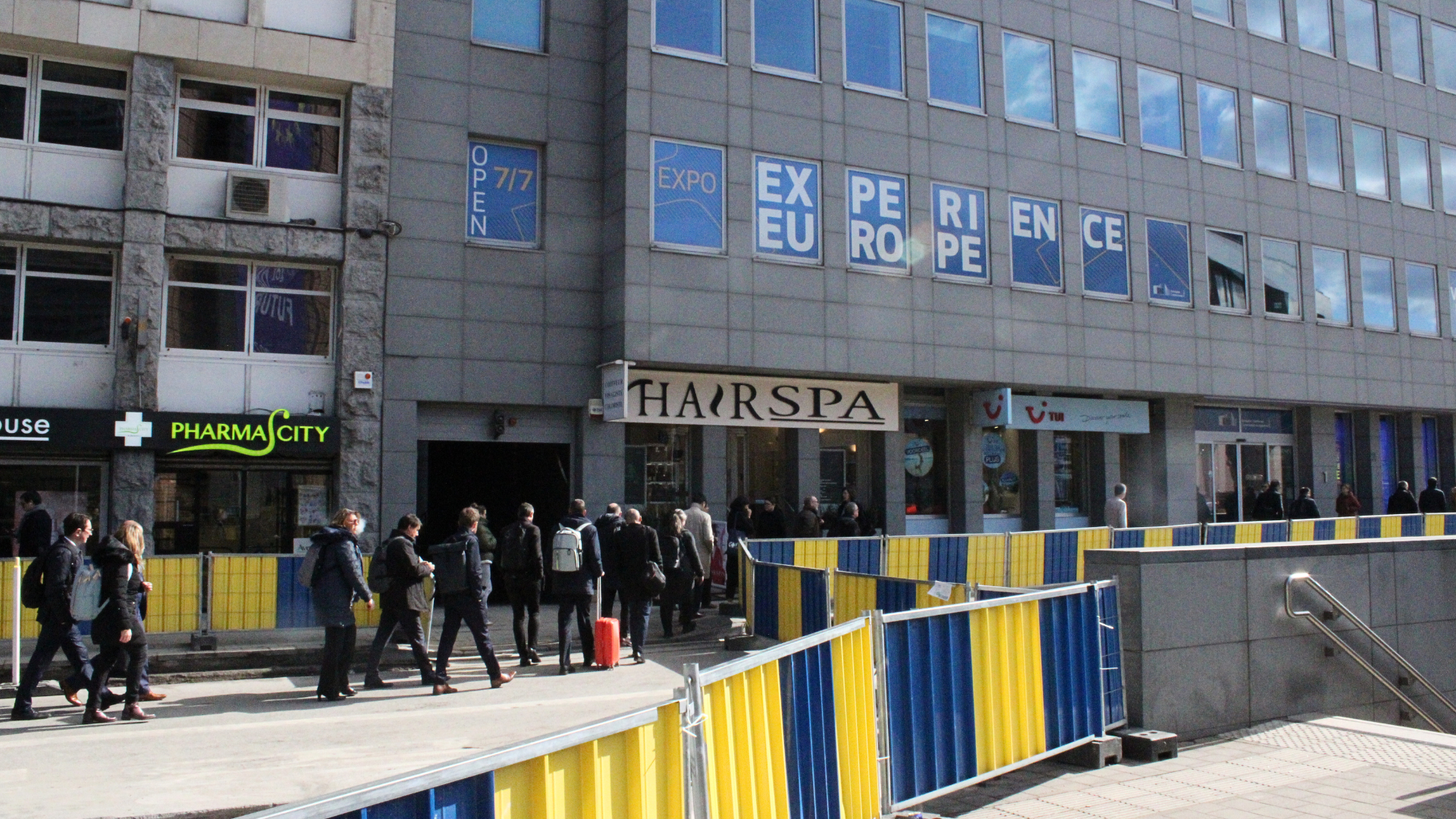
The project has not only enraged residents but also local businesses. One woman working at a hair salon on Rue Archimède said footfall decreased significantly once the work began. "My clients living further away don’t come anymore because of the disruption and blocked roads," she told The Brussels Times.
Another business on the same street said construction and attracting clients don't go hand in hand. "Works bring noise, a lot of mess, and this puts clients off," the shop's salesperson said.
Jean-Pierre Brouhon of the non-profit organisation L’Association des Commerçants du Carrefour Jean Monnet (ACCJM), representing the interests of traders and businesses in the Jean Monnet district area around Schuman, confirmed shopkeepers are facing challenges.
Credit: The Brussels Times
"The situation has exacerbated the already concerning circumstances created by the rise in teleworking," he told The Brussels Times. Many of the institutions and international organisations located here are allowing their employees to work remotely. Because they made up the main clientele – locals tend to go to the city centre to shop – the move resulted in a "significant loss of income".
Brouhon noted that the worsening of the situation due to the works would not only be felt in the short term. "The finalised redevelopment will block traffic in a very similar way. The neighbourhood will remain cut off and difficult to access, depriving shopkeepers of literal traffic." He added that suppliers are facing major detours.
Locals argued that the project disregarded residents and businesses. According to Brouhon, the ACCJM was never consulted in the preparatory stage of the project, despite requesting to be involved.
Related News
- The grand plans for the Cinquantenaire
- Léonard roadworks progressing faster than expected
- Several bus and tram routes disrupted until autumn 2025
"I agree that the roundabout needed to be reviewed because there was room for improvement," said Brouhon. "But so far, this redevelopment is just about Brussels' image. They want to give the idea that they're doing something big and beautiful, but it has been poorly thought out, without properly consulting and listening to locals."
Brouhon has called for a better balance of traffic, allowing all forms of transport to enter the neighbourhood by creating more public parking spaces and bicycle parking spots. He added that the region should organise more events and activities in the area to attract more visitors.
These works are not the only project aimed at revitalising an area of Brussels long regarded as ugly, functional, and unattractive to live in, especially for families. But whether the redesign and repurposing of office spaces and work environments will attract people back to the area remains to be seen - it could be an expensive but ultimately fruitless experiment.
