Ten years ago today, four years before the Covid-19 confinement put ordinary life on hold, Brussels went into lockdown.
The city’s metro was suspended for four days, public events were cancelled and schools and universities were closed as the eyes of the world turned to Belgium in the wake of the November 2015 terrorist attacks in Paris.
The 13 November attacks were astonishing for their scale, speed and brutality. That evening, jihadist gunmen and suicide bombers conducted a sequence of co-ordinated attacks that culminated in a massacre at the Bataclan concert hall in eastern Paris. Overall 130 people were killed, 90 in the Bataclan, and more than 400 were treated in hospital.
Islamic State claimed responsibility for the bloody attacks, but it soon became clear to investigators that the attackers had strong links with Brussels. A rental vehicle with a Belgian registration plate was found near the Bataclan.
In the days that followed, house searches were conducted in the Belgian capital, with Molenbeek at the centre of police activity.
Unprecedented in peacetime Belgium
On Friday, 20 November 2015, Belgium's security council raised the terror threat level in Brussels to Level Four, the maximum. Officials warned of an "imminent and serious threat" of a coordinated attack, possibly targeting shopping centres, public transport or crowded areas.
What followed was something unprecedented in peacetime Belgium: an entire European capital going into lockdown.
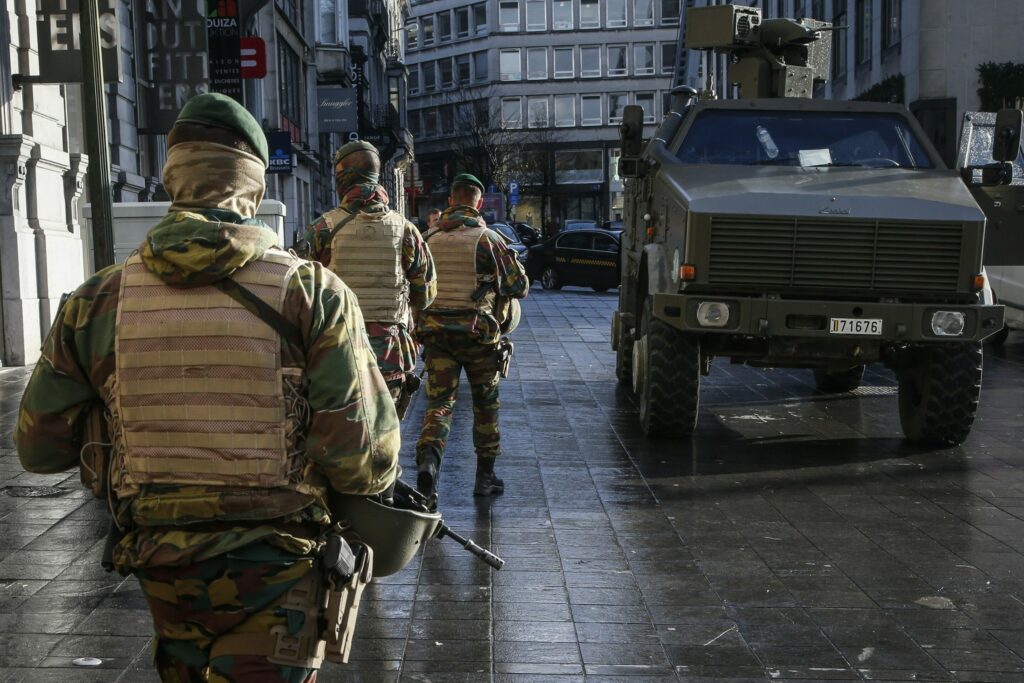
By Saturday morning, the metro network was closed, trams and buses stopped running, and schools, universities, cinemas and Christmas markets were closed. Soldiers in camouflage patrolled the streets with automatic rifles. Armoured vehicles stood outside government buildings and hotels.
The atmosphere was tense but eerily quiet. Residents were told to stay indoors and avoid large gatherings, while cafés and restaurants in popular districts like Ixelles, Saint-Gilles, and the city centre were deserted. At night, the sound of helicopters circling overhead became the city's new background noise.
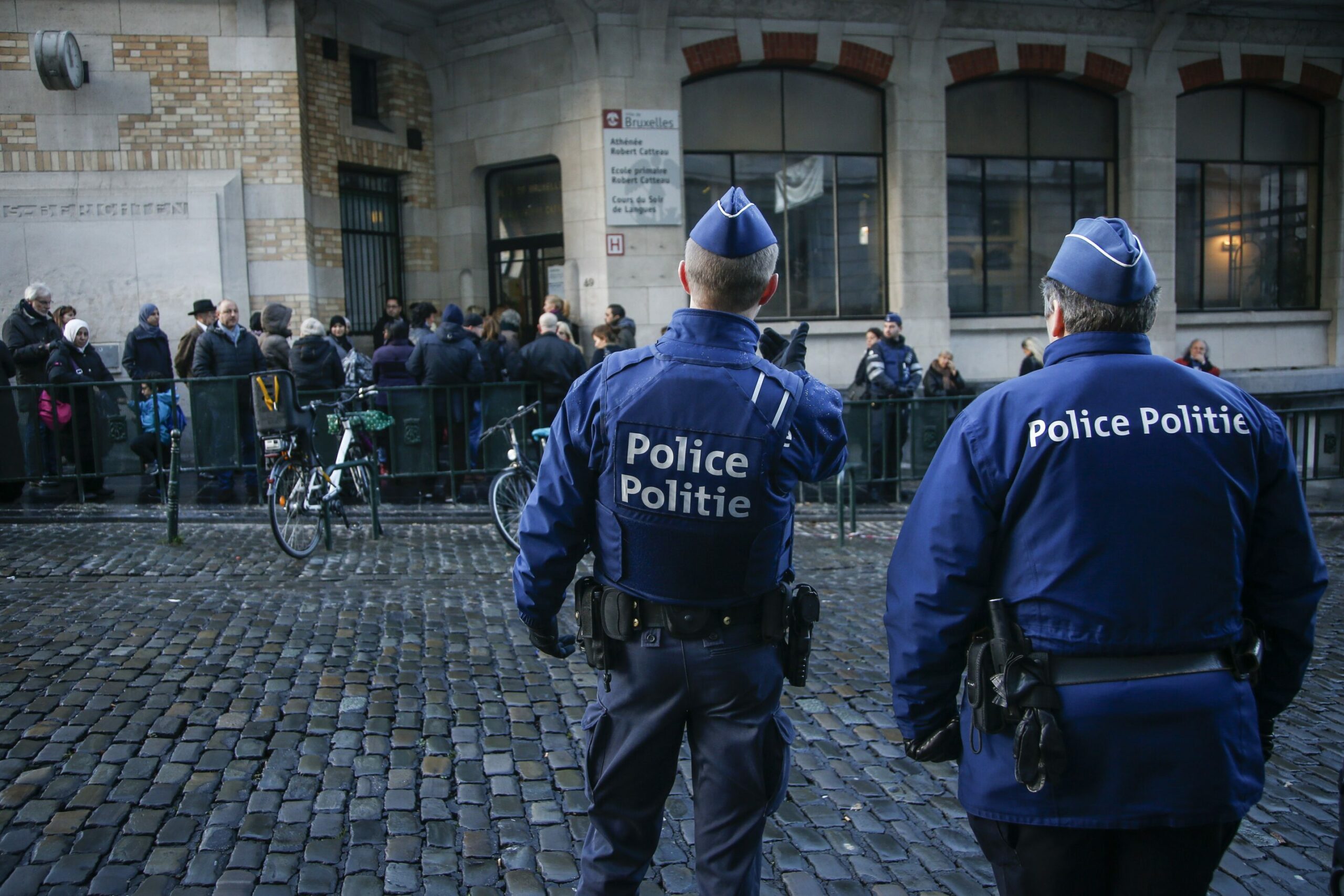
Police officers watching parents wait outside the Athenee Robert Catteau School, Wednesday 25 November 2015, in Brussels. Credit: Thierry Roge/Belga
On Sunday, the threat level remained at four and Prime Minister Charles Michel said there was a risk of an attack by multiple people at multiple locations in the city. Police closed off major city streets as the massive security operation continued.
When Belgian police launched overnight raids in search of suspects, they asked citizens not to share information or photos online that might alert terrorists to the movements of security forces.
In response, Belgians flooded Twitter with pictures of cats, a light-hearted act of solidarity that became a symbol of the national mood: anxious, yes, but quietly defiant.
The lockdown lasted four days, from 21 to 25 November. On the Wednesday morning, when schools reopened and the metro resumed partial service, the relief was palpable.
A foretaste of the Covid lockdown
The consequences were felt for many months to come - a dark foretaste of the Covid lockdown four years later. Business owners spoke of huge losses, and many residents described the experience as surreal, "like waking up in a ghost city."
As we know, worse was to come for the people of Brussels. On 22 March 2016, terrorists struck the city’s airport and Maelbeek metro station, killing 32 people.
For two years following the Paris attacks, heightened security measures remained in place. As police and security agencies grappled with the terrorist threat, armed soldiers became a common sight on the streets of Brussels. Threat Level Three remained in effect in Belgium until January 2018, when it was finally lowered.
