
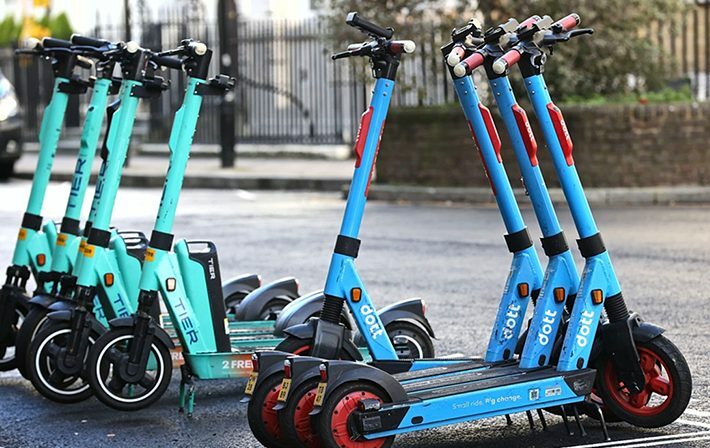
On a summer afternoon in Brussels, it doesn't take long to spot an e-scooter. They weave through traffic on Avenue Louise, wait outside metro stations in the European Quarter and sit parked on sidewalks across the city.
But by January 2027, they will be gone.
Earlier this month, the Brussels-Capital Region announced it would not renew the licences of the two remaining shared e-scooter operators, Bolt and Dott, effectively ending their services. Instead, Brussels intends to strengthen its bike-sharing network.
Regional officials say the e-scooter ban is necessary to address safety concerns, e-scooters cluttering public space, and rising accident rates. Last year, 666 people were injured in incidents involving electric scooters, a 26% increase from the previous year, according to regional figures.
Local authorities have also raised concerns over the use of shared e-scooters in criminal activities.
An imperfect solution?
Conversations with Brussels residents revealed nuanced reactions to the ban.
Adam, a 21-year-old student in Brussels, said poorly parked e-scooters are one of his biggest frustrations.
"They cause a mess sometimes because people leave them whenever they want," he said. "It's sometimes really annoying if you walk and the scooters are just in random places."

Adam, a 21-year-old student in Brussels, said shared e-scooters can create clutter on city sidewalks but questioned whether an outright ban is the best solution. Credit: The Brussels Times/Anika Austvold
Despite those complaints, he is not entirely convinced they should disappear from the city's streets.
"I think there is something that should be done about it, but I don't know if completely banning it is a perfect solution to this problem," said Adam.
Cedrine, 33, who lives in Ixelles, expressed a similar hesitation. She occasionally uses e-scooters when public transport options are limited, particularly in the evening. "For me, it was really practical," she told The Brussels Times.

Cedrine, 33, of Ixelles, said shared e-scooters are a practical transportation option when public transit is limited. Credit: The Brussels Times/Anika Austvold
While she understands concerns about accidents and unsafe behaviour, she believes stronger regulation should have been explored before a complete ban.
For some, personal experience has reinforced support for the ban.
Diana, a Brussels Times reader who suffered a serious head injury while riding an e-scooter, said the experience changed her view of the vehicles. "Honestly, I wouldn’t mind seeing them banned," she said. "What changed my mind is that my accident wasn’t just bad luck. Research shows e scooter riders suffer head and facial injuries more often than cyclists, and helmet use is notoriously low."
She added: "At some point, I wonder if the convenience is really worth the cost. We already have bikes, public transport, and walking. Do e-scooters bring enough benefits to justify the injuries, hospitalisations, and impact on public spaces?"
Isabelle, 56, who lives and works in Watermael-Boitsfort, does not dismiss the concerns that prompted the ban. She simply believes there may have been other ways to address them.
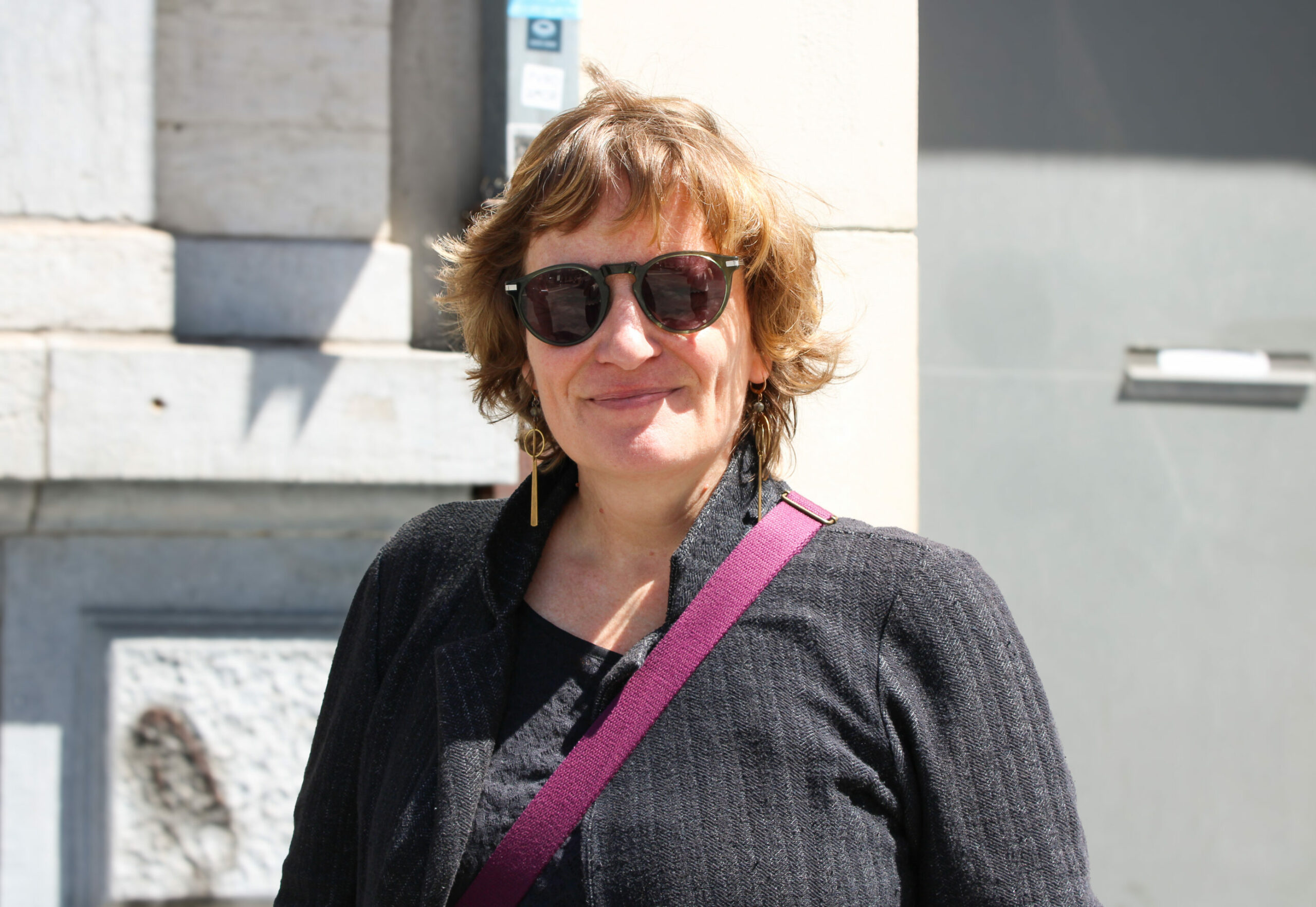
Isabelle, 56, of Watermael-Boitsfort, said the debate over e-scooters is ultimately about how different forms of transportation share the road. Credit: The Brussels Times/Anika Austvold
"I think maybe it should have been regulated instead," she said. "I know there are many crashes and accidents."
Although Isabelle primarily gets around the city by bicycle, she worries that reducing transport options does not necessarily address the underlying challenge.
"It's really interesting to have plenty of means of transport," she said. "The real question is how we share the road."
Fast and affordable
For those who use shared e-scooters regularly, the prospect of losing them raises concerns about mobility as much as safety.
Joseph, a 31-year-old resident of Jette, said shared e-scooters have become one of the fastest and most affordable ways for him to travel around Brussels.
"A trip from my house to central Brussels takes 12 minutes by e-scooter," he told The Brussels Times. "By public transport it takes 35 minutes and requires two metro journeys."
Olli, a consultant in his early 30s who has lived in Brussels for a year and a half, said e-scooters often fill gaps left by the public transport network.
"When you have to go somewhere that is not on the metro line...e-scooters are pretty much always faster," he said.
He uses them to travel several times a week and worries the ban will make moving around the city less efficient.
'This decision goes beyond safety alone'
For the Brussels government, however, this decision is about more than convenience.
Brussels Mobility Minister Elke Van den Brandt (Groen) argues that e-scooter riders are significantly more likely to be injured than cyclists and that poorly parked e-scooters create obstacles for older residents, people with reduced mobility and parents with strollers.
"This decision goes beyond safety alone; it is about choosing a city with enough alternatives to get around quickly and efficiently," Van den Brandt added.
Stef Willems, spokesperson for the Belgian road safety institute VIAS, said authorities are justified in responding to rising accident numbers and criminal misuse involving e-scooters.
"We perfectly understand that there is a problem with e-scooters," Willems said. "But you won't resolve all the problems just by banning the shared e-scooters."
He noted that some users may simply switch to privately owned e-scooters, which can be harder to regulate and are often capable of travelling at much higher speeds.
According to Els Wauters, spokesperson for Van den Brandt, private scooters fall under federal law. "The regulation is in the hands of minister Jean-Luc Crucke, who is working on a regulatory framework to reduce the number of accidents," she told The Brussels Times.
Crucke's office said they have already introduced several measures aimed at prioritising e-scooter safety.
"At the federal level, we have already taken concrete steps, including introducing a helmet requirement for e-scooters capable of speeds exceeding 20 km/h and engaging extensively with shared mobility operators to improve user identification and safety standards," Crucke said.
For now, shared e-scooters will remain on Brussels streets until the end of 2026. Whether residents embrace the government's push toward shared bicycles remains to be seen.
