
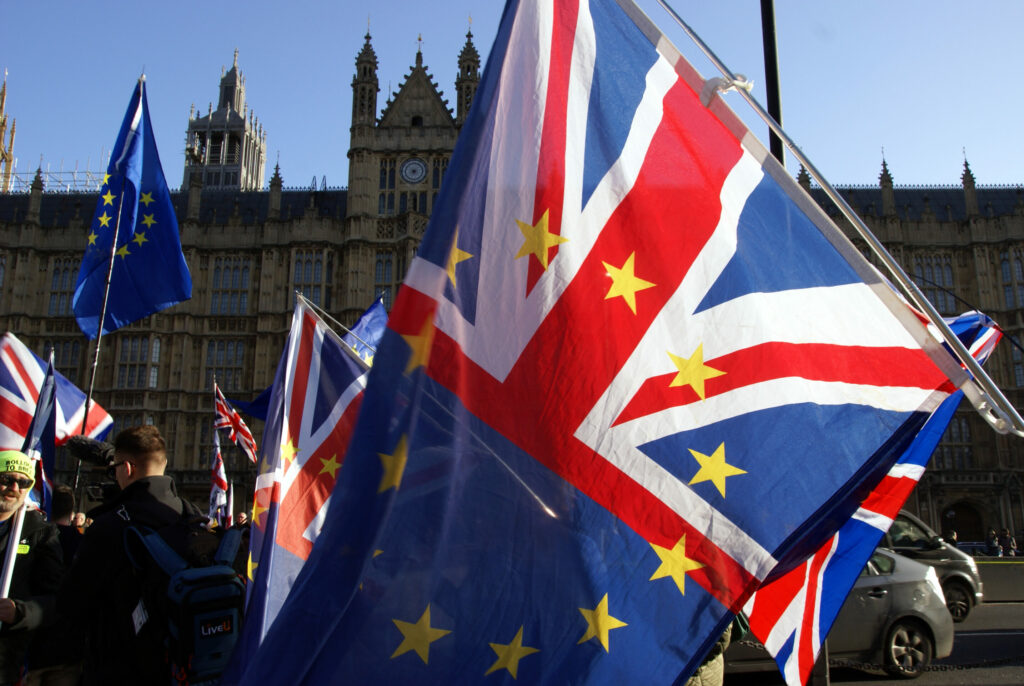
In an interview with The Brussels Times, James Stevens, managing director at public affairs consultancy Rud Pedersen and the newly appointed president of the British Chamber of Commerce to the EU and Belgium, shares his thoughts on the historic 2016 Brexit referendum.
Stepping into James Stevens' bright office at Rud Pederson in central Brussels, an array of James Bond memorabilia catches the eye, with trinkets lining his shelves and a 007 poster on the wall.
"Shall I stand next to my porcelain British bulldog?" he asks, smiling for the camera.
But despite clear affection for his homeland, and particularly his home county of Yorkshire (proudly referring to its nickname of "God's own country"), Stevens is a staunch Europhile.
"My purpose is to help build European democracy," he says. "I went to the College of Europe. I'm married to an Italian. My kids go to the local Belgian school. My whole life has been about being part of building the European project."
Unsurprisingly, he was also a firm advocate for the UK to remain in the EU: he hosted a charity auction fundraiser for the 'Remain' campaign and was "devastated" when he heard the result of the referendum on 23 June 2016. "There was personal devastation and a sense of loss and grief," he says.
This reaction didn't only come from people inside the institutions, but also society in general.
"People used to come up to me in the street and go, 'I'm so sorry'. It was like your mum had died. They'd look at you and stroke you on the arm," he recalls.
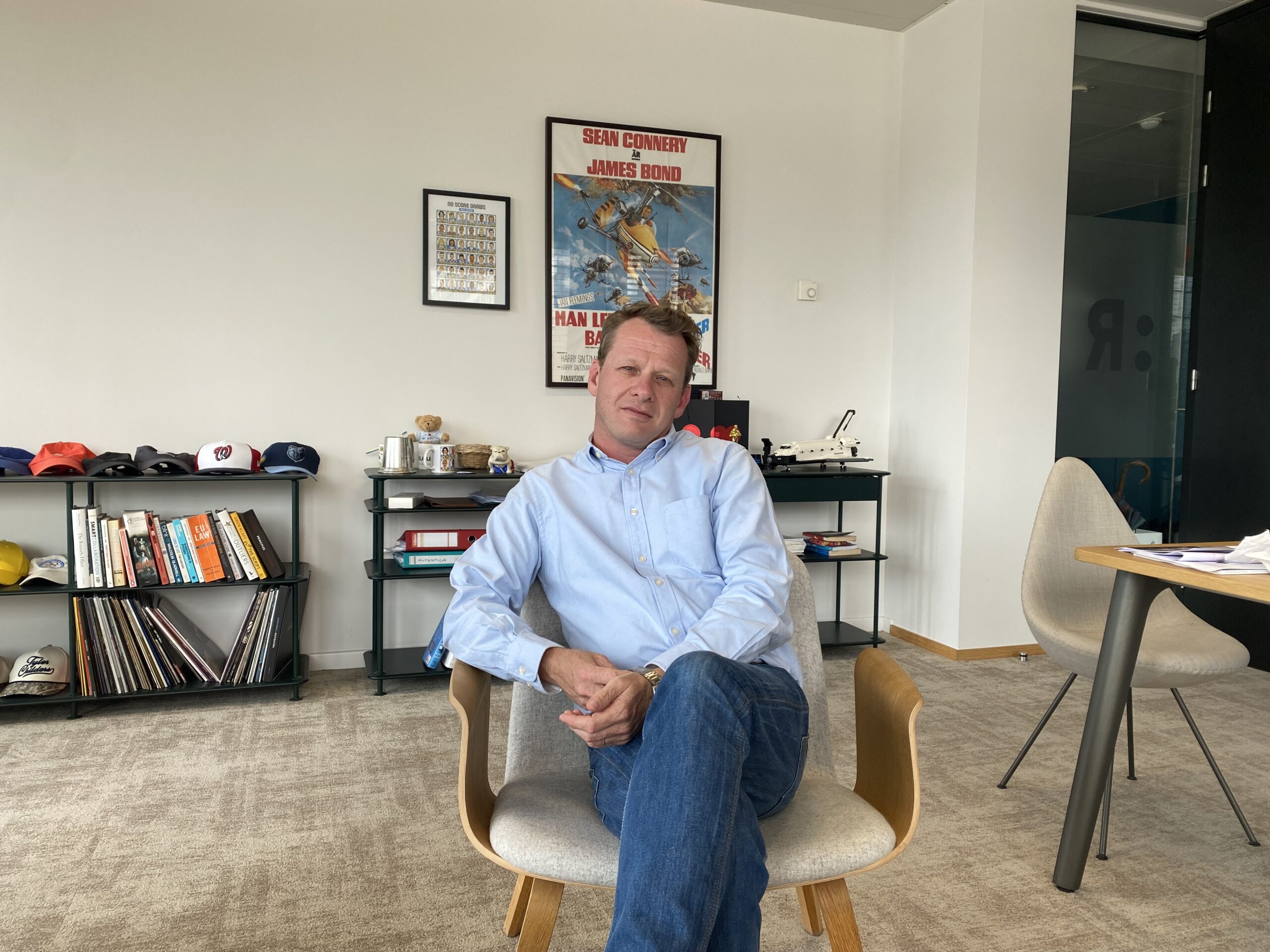
James Stevens, managing director at public affairs consultancy Rud Pedersen and the newly appointed president of the British Chamber of Commerce to the EU and Belgium. Credit: Isabella Vivian / The Brussels Times
2016 didn't only mark an "existential" moment for him on an individual level, but also for British and EU industry.
This was the case for beloved British store Stonemanor, located on the outskirts of Brussels. "When Brexit first came around, we had to close our doors for the first time in 42 years. There was no movement of goods across any border, so we had zero stock available," store manager Ryan Pearce told The Brussels Times in 2024.
While Brexit may not have triggered the major crisis that some feared when the British pound plummeted, Stevens does not believe it has bolstered the British economy in any way, and he has not seen any benefits – other than gaining an extra passport. "But then I realised, like most supposed Brexit benefits, I could have done that before."
The UK's sluggish economic growth since the landmark referendum is undeniable from the stats. According to a recent working paper from the National Bureau of Economic Research, Brexit had reduced UK GDP by 6-8% by the end of 2025, productivity and employment declined by 3-4%, and investment dropped by 12-13%.
The Centre of European Reform also found that Brexit has reduced total UK exports to the EU by about 12% and total imports from the EU by about 16% in an 18 June report.
Don't EU want me, baby?
Whether the EU would have been better off in recent years had the UK still been a member is unclear. However, Stevens says people within the institutions have told him they do miss having the country in the room for its pragmatism and solutions-oriented approach. Indeed, many of the bloc's best ideas, such as the single market, were largely British, he says.
Pragmatism aside, British humour is also missed in Brussels. "There are so many Brussels events where you think, if you could just introduce even an element of humour, it would make this more enjoyable to sit through some bizarre Byzantine discussion about widget regulation."
While many have moved on in Brussels, "there's still a scar on the institutional side when you speak to people. There's still an open wound that Britain left," he says.
No more 'political theatre'
Brexit was also "existential" for the British Chamber of Commerce (BritCham), which represents UK business in Brussels and which Stevens worked with for three decades before being appointed as president on 6 May this year. "Overnight, all the institutions stopped coming to the Chamber," he says.
As a result, the Chamber has shifted in its role – and has regained relevance in doing so. Pre-Brexit, it was an events platform, but now the president says, "We're becoming an advocacy organisation. And a more vocal one."
In his new role, Stevens' goal is to increase the influence of the lobby group and reduce friction as much as possible, with structured cooperation and prioritising (cyber)security, defence, energy, and supply chain resilience.
"If you focus on the new challenges and tackling those together, you're far better off than having a conversation about what happened ten years ago."
What matters most for business, he says, is not the "big political stuff", like Brexit, but rather the "little things that create friction", such as how electricity passes back and forward across the English Channel. "Those are the kinds of things that really have a day-to-day impact on business."
He's hopeful that the EU–UK Summit on 22 July will have a positive impact, with the EU's Sanitary and Phytosanitary (SPS) agreement, the Emissions Trading System (ETS) and youth mobility likely on the agenda, as well as the lobby group's upcoming 2 July conference on European economic security and competitiveness.
However, he cautions that the summit must deliver concrete agreements rather than symbolic gestures. "The EU and UK now need to deliver concrete results that reduce barriers for business, not more political theatre," he said in a statement when the date was announced.
Change across the Channel
While he wants to increase the lobby group's influence during his two-year term, and says business is keen for the UK to rejoin the single market and customs union, Stevens concedes that BritCham's activities in Brussels won't have an impact on what the UK electorate eventually decides.
"We're not, at the British Chamber, going to have an impact on what happens back home. But what we can do is speak truth to power, both to the UK government and to the European Commission, about practical things that we can do that go above and beyond mood music positivity."
He also stresses that change is needed on both sides of the Channel. "We talk a lot about the UK domestic political situation. And I think probably all of us, both here and in the UK, don't think so much about the domestic political situation of the EU Member States," he says, pointing to the 2027 French presidential election.
"There's a rise in parties that look a lot like UKIP and Reform UK in many Member States that might have a different view."
On the UK side, much has changed in the last couple of years. Candidates currently vying for Labour leadership are openly talking about rejoining the EU, such as former Health Secretary Wes Streeting, who deems Brexit a "catastrophic mistake".
Outside of Westminster, public opinion is also changing. A YouGov poll from May showed that 56% of Brits support rejoining the EU, compared to 51% in January 2024. Among those who voted to leave the EU in 2016, 22% now support rejoining.
Stevens believes the EU and UK will move closer together in the future, given their geography, shared values and aligned interests – and the "madness that's happening in the rest of the world". However, it's not yet clear whether this will entail rejoining fully or single market and customs union membership.
Related News
- 'It's not if, it's when': Brits walk from London to Brussels to urge UK to rejoin EU
- EU confirms UK return to Erasmus+, ending years of separation
- Stonemanor: The family-run business bringing Britain to Belgium
Hailing from a lower socio-economic provincial town, Stevens says he can understand why people would vote for Brexit and Reform UK and want to disrupt the status quo, as they believe opting for "traditional parties", such as Labour and the Conservatives, has not improved their lives.
"Unless our traditional parties – and I'm not just talking about the UK here, we're talking about Europe as a whole – start doing something about that, I can empathise with those who vote for such parties, not only in the UK, but anywhere else."
Ultimately, he believes, however, that Europe as a whole only succeeds if it works together, and that being pro-European is "additive, not subtractive" – especially when it comes to food.
Having lived in Brussels for 25 years, he ranks cheese cubes with mustard and celery in his top ten favourite things about Belgium – "but that doesn't mean I don't like chips and curry sauce from back home any less", he concludes.
