
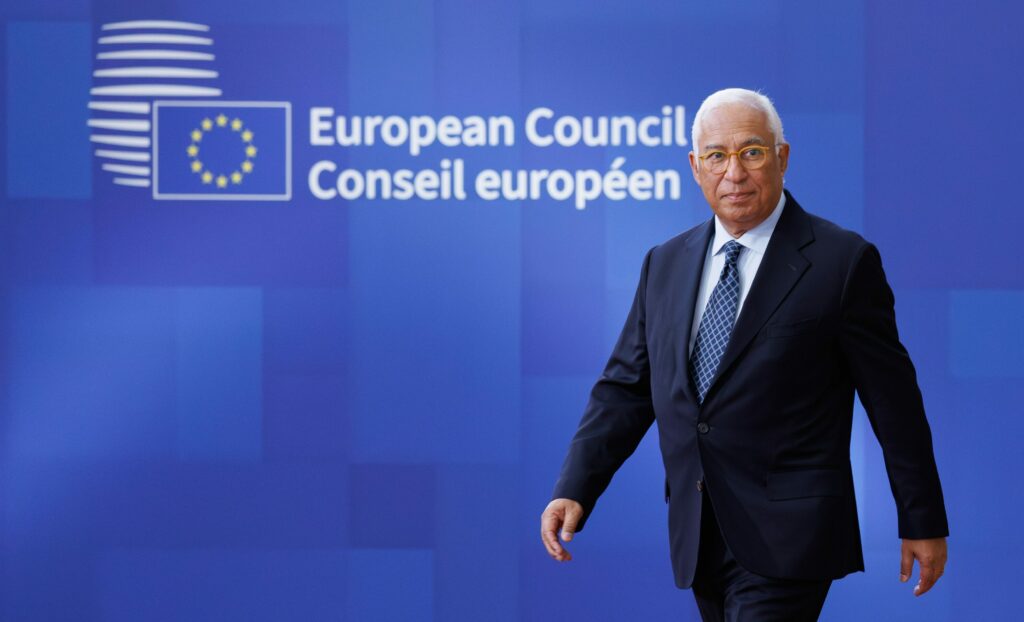
European Union leaders will gather in Dublin on 13 November for a summit dedicated to artificial intelligence (AI), European Council President António Costa announced on Tuesday.
The meeting will focus on strengthening Europe’s competitiveness in AI, reducing its dependence on foreign technology and developing international cooperation on regulating the rapidly evolving sector.
“Our focus will be AI: how the EU can strengthen its competitiveness and AI sovereignty, and contribute to international cooperation on AI governance,” Costa wrote on X on Tuesday evening.
In his invitation to EU leaders, Costa stressed the need for a high-level discussion as artificial intelligence continues to reshape economies and societies.
Related News
- Canada’s EU ties grow with digital trade accord and defence collaboration
- EU and Canada pledge closer relations as trade grows 80% under CETA
“Given the rapid pace of AI development, I believe a first dedicated discussion at leaders’ level is now necessary on the opportunities offered by AI, as well as its transformative impact on our economies and societies,” he said.
Arthur Mensch, chief executive of French AI company Mistral AI, and Geoffrey Hinton, a Nobel Prize-winning physicist widely regarded as one of the pioneers of modern artificial intelligence, are expected to address the summit.
The meeting comes amid growing debate over how governments should regulate AI without undermining innovation and economic competitiveness.
Concerns over AI-related safety incidents have intensified calls for stronger oversight, particularly as increasingly powerful systems are deployed across businesses and public services.
In September, major US technology companies signed a voluntary, non-binding code of conduct aimed at addressing some of these concerns.
However, many scientists continue to call for internationally coordinated regulation to reduce the potential risks associated with the technology.
The Dublin summit is expected to provide an opportunity for European leaders to discuss how the EU can remain competitive in the global AI race while strengthening safeguards and cooperation with international partners.
