

One of the largest galleries in Brussels city centre is a ghost town despite a renovation costing over €5 million two years ago. Amid marbled walls, lighting jobs and red carpets, businesses continue to shut up shop. What's going on?
The Louise District used to embody everything that was chic and glam about Brussels. With an entrance on Place Stephanie, Galerie Louise opened in 1952 to great excitement. The opening of Galerie Porte Louise, which is connected to the original by the 'Rotonde Star' and accessible via Avenue de la Toison d'Or, followed in 1964.
In 1954, the De Schriek family opened Chouchou toyshop, which Bernard De Schriek still runs today. "The gallery was the place to be," he told The Brussels Times. "All of the belle bourgeoise with their fur coats and suits came on Saturdays. It was difficult to walk around because there were so many people. It was another time."
"Their commercial success is undeniable," Le Soir wrote of the galleries in 1978. "The absence of 'for sale' or 'to let' signs is enough to demonstrate the commercial and real estate interest of these two galleries."
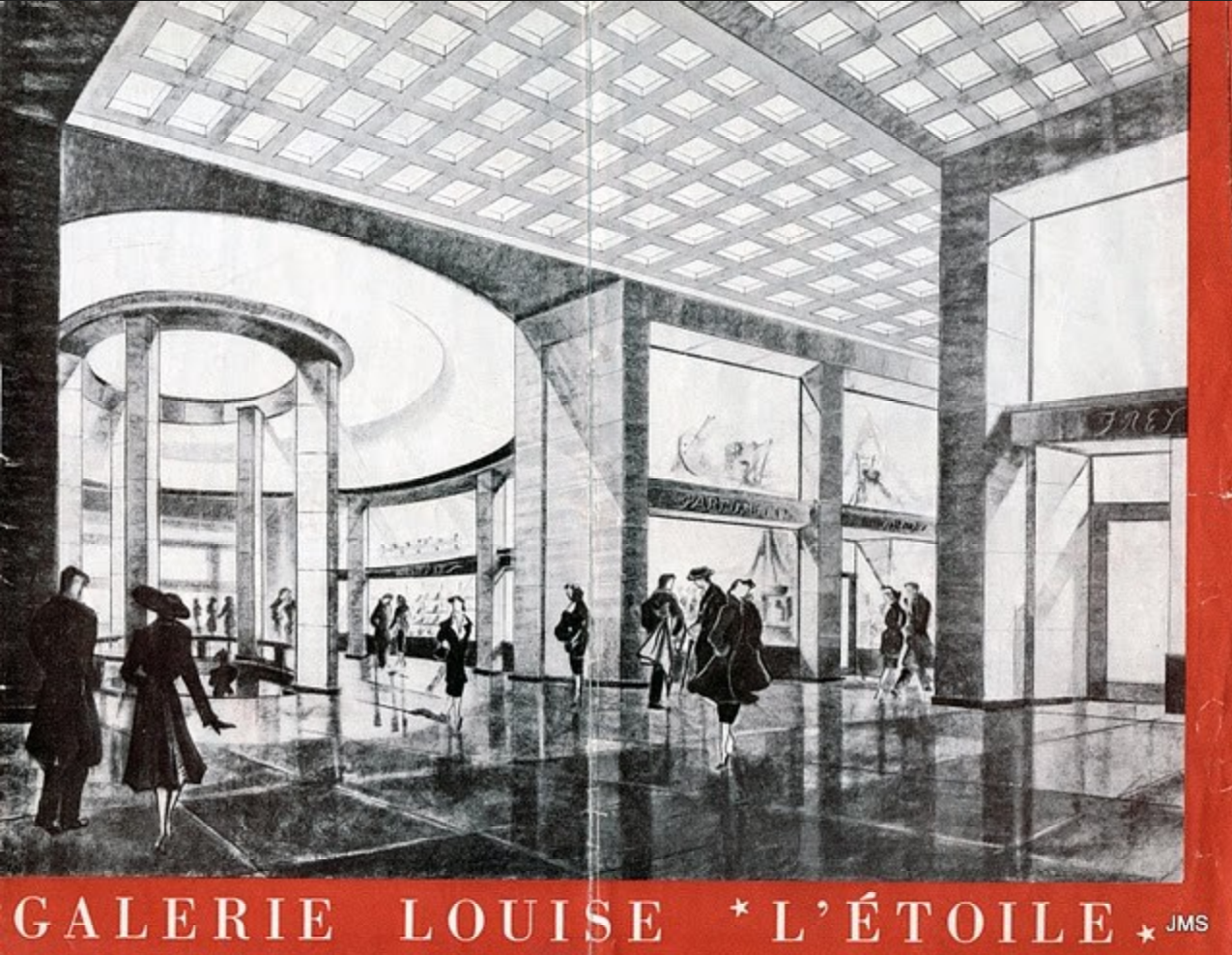
Credit: JMS
This is no longer the case: the gallery lies eery and empty. 'For sale' and 'to let' signs are visible in almost every abandoned shopfront as songs like 'Hotel California' by The Eagles blare through tinny speakers. Someone wandering through the building might come across one or two other wayward souls while exploring the three floors that consist of a padlocked basement, broken escalators and businesses that have fallen into disrepair.
One of the 'for sale' signs hangs in the window of De Schriek's unit. The 62-year-old businessman has moved his operation to Chaussée de Waterloo in Uccle but is unable to sell his property in Galerie Louise.
"It is impossible to rent and impossible to sell," he explains. "Impossible to rent because everything around the shop is empty and impossible to sell because the only person able to buy is GH group."
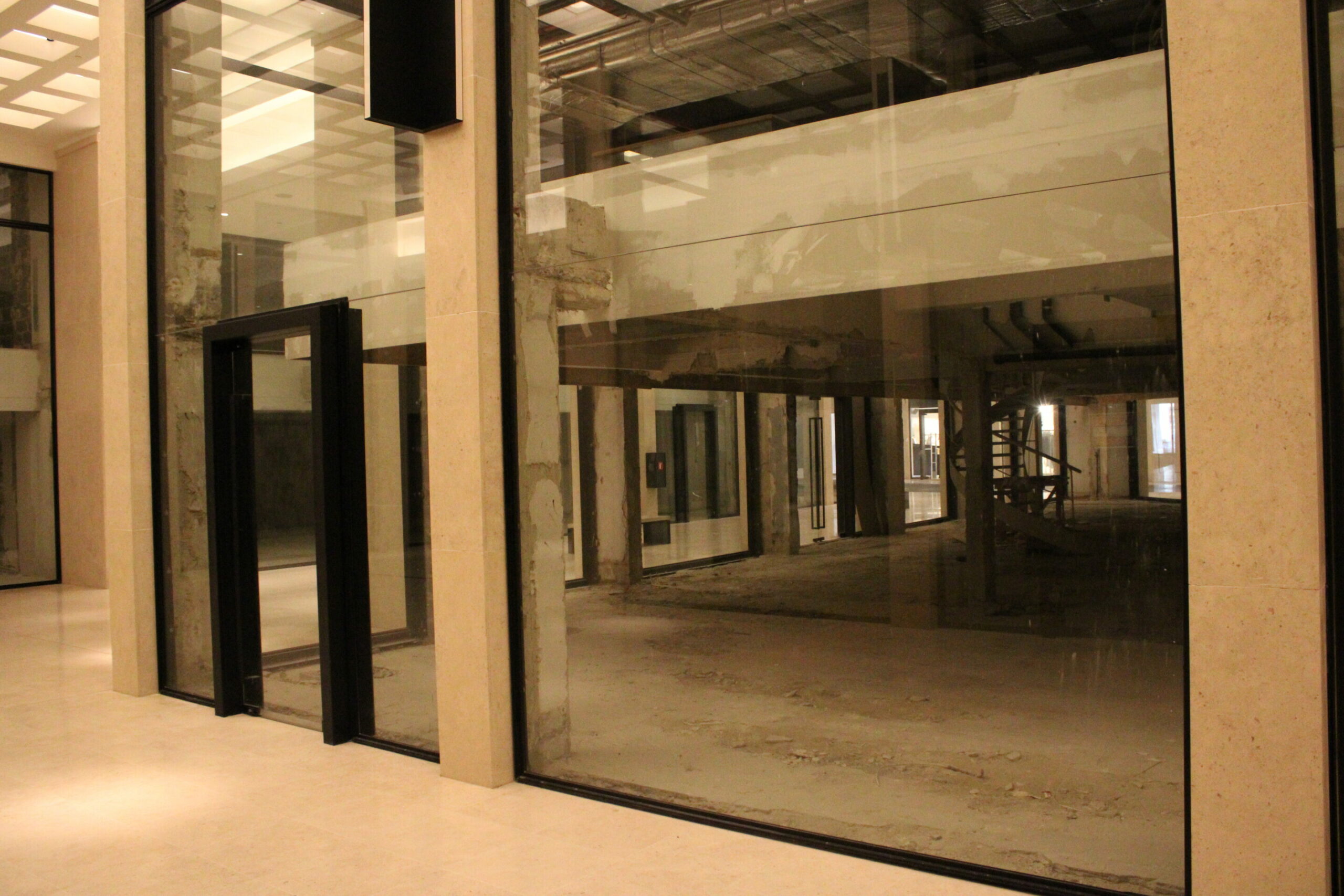
An abandoned shop unit in Galerie Louise. Credit: The Brussels Times
Investment freeze
GH Group is owned by Gérald Hibert, who l'Echo describes as "one of the biggest enigmas in the Belgian real estate sector." Hibert owns 30 of 38 establishments in Galerie Louise and his total real estate assets are valued at €1.5 billion.
However, the real estate tycoon is between €700 and €800 million in debt. Several sources believe the fallout from a slew of legal cases is making it tough to attract new businesses to the gallery.
Even works valued at over €500 million have done nothing to encourage interest. Marble floor and wall coverings were replaced, shops and shopfronts were expanded and given new steel linings and new lighting was installed.
Dracula's castle
Not all shops have abandoned ship. "Dracula might be living somewhere in here," jokes Dimitri, an employee at Bexley suit shop. "In all seriousness, businesses are deserting the gallery due to a lack of customers and a lack of renewal. We have older, very loyal customers, so we have business from people who know us. But without that, we are hidden away."
Dimitri believes the impact of working in such a quiet place is less hard-hitting on a chain such as Bexley than on small, independent businesses. "It is much more complicated for people who do it all at their own expense. They rent the shop, they buy their products [...] If there is no footfall, there is less money."
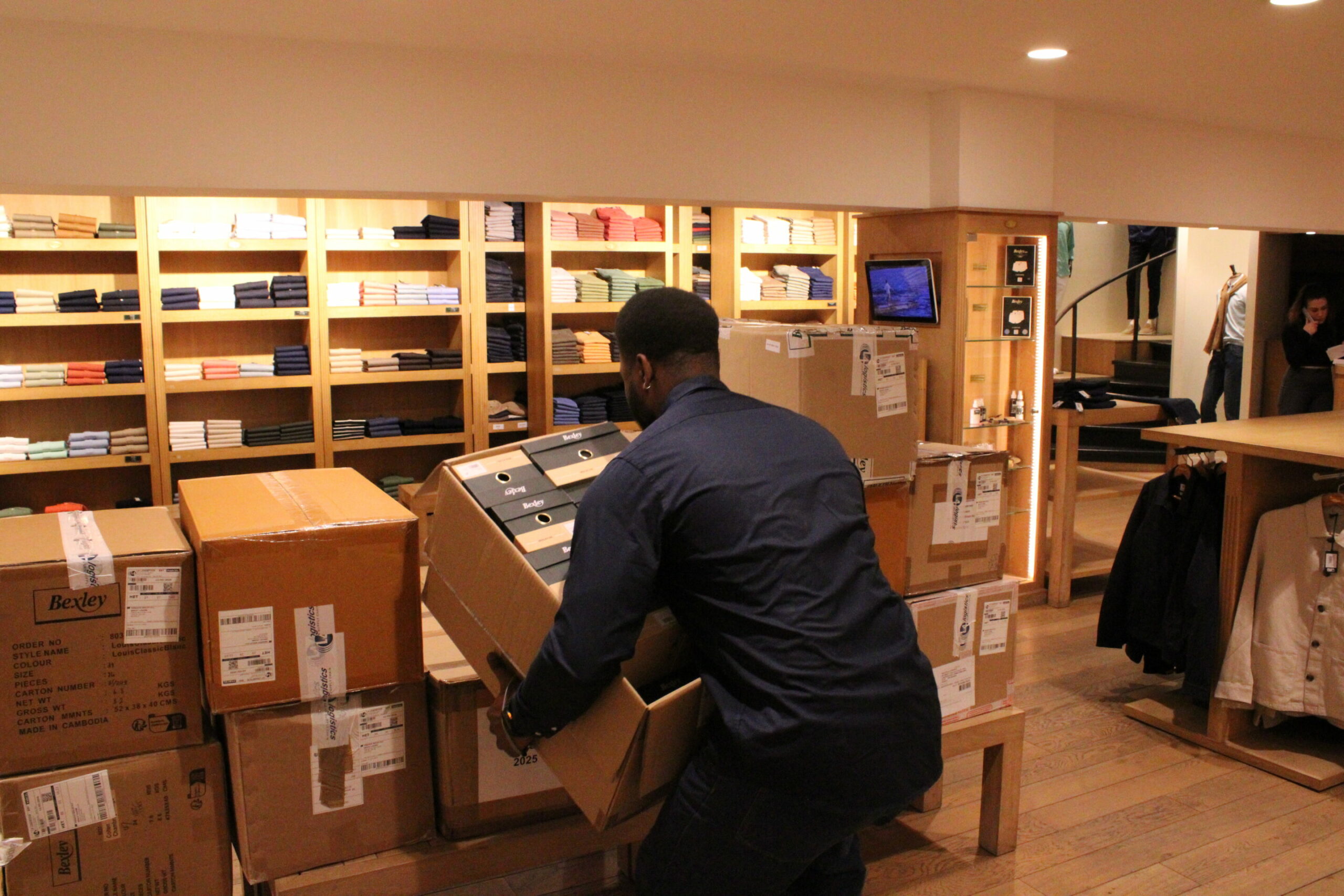
Dimitri unpacks boxes in Bexley, Galerie Louise. Credit: The Brussels Times
'Our morale is low'
Elisa runs Reflex Snack Bar with her brother Gabriel and couldn't agree more. "We have our loyal customers, but we don't have any footfall, which is important for topping up the till a little. But as everything is closed and there is nothing to do here, people don't come in anymore," she told The Brussels Times.
The independent, family-run business moved from one secluded corner of the gallery to a livelier passageway several years ago in the hopes that the new location would catch more business walking past. But this area soon dried up too, especially when the Covid-19 pandemic hit.
Elisa describes a challenging situation where the café stays open six out of seven days a week but doesn't have the means to employ extra help.
"We don't count our hours, and it costs a lot of money to employ someone else and get them to stay for a few extra hours. It's just not possible," she explains. "We are doing okay because my brother isn't married, he doesn't have a family and he doesn't have children. So he forgoes a normal salary and prioritises me instead. He can get depressed. It's very hard, physically and psychologically. Our morale is low."
Simon Djanaschwili is a jeweller and also owns 30 units in Galerie Porte Louise. He says high taxes are making it impossible to attract new tenants and return the the Louise District to its former glory.
"As I am a property owner here, I am trying to breathe new life into the gallery. But it's not possible to do it alone." he said. "Tenants are backing out because of high property tax. This is what is holding things up. If there were a cancellation for several years or a fairly significant reduction, of course there would be more people interested in renting shops in the gallery. But no one is doing anything and it's a shame, because the gallery is a jewel of Brussels and one of the most beautiful in Belgium."
Prosperous future?
When contacted by The Brussels Times, Commerce Councillor for Ixelles Gautier Calomne (MR) acknowledged that "an excessively high level of fixed charges, combined with sometimes excessive rents, makes it difficult for new traders to set up" but said this was a regional rather than municipal competency.
"It would certainly be appropriate to consider a reform in this area, particularly for commercial areas in difficulty, along the lines of what exists in other major European cities," he said, stating that Galerie Louise is a "priority" for Ixelles and that the commune is "committed to working with the regional authorities and private stakeholders to encourage the rapid revival of this area, which is in great need of it."
Will this vast commercial space in the city centre ever enjoy a new lease of life? Past and present inhabitants are uncertain.
"I don't really see how to have hope at the moment," says De Schriek. "What we need is for a serious investor to take charge."
"The ideal situation is for investors to take interest again so the gallery can go back to how it was," echoes Elisa. "But I don't see things improving anytime soon. I think change will take years."
