
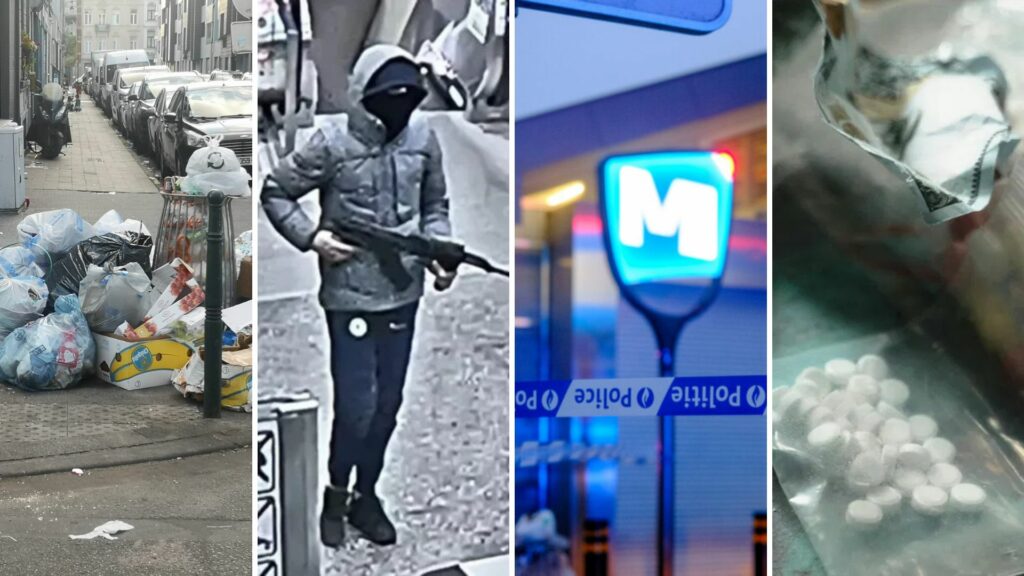
Although news cycles have moved on from the spate of shootings and drug-related violence in Brussels at the start of the year, the residents of the Cureghem district in Anderlecht certainly haven't. Now, they are calling for an action plan.
As soon as surveillance camera footage of two Kalashnikov-carrying young men in the Clemenceau metro station made headlines in February, Cureghem went from one of Brussels' most talked-about neighbourhoods to a district of international notoriety. Since then, residents have felt that the authorities have (deliberately) abandoned the district.
"We thought rock bottom had been reached. But then it manages to take yet another step further backwards," Jens Popelier, one of Cureghem's residents, told The Brussels Times. He and several others wrote an open letter to denounce the situation.
"A simple stroll through the neighbourhood is enough to see the results of a policy of sacrifice pursued by our authorities. Year after year, the situation was allowed to deteriorate, hoping that the problems would eventually spread to neighbouring municipalities," Popelier said.
'Respect Cureghem'
The locals have started a WhatsApp group, called 'Respect Cureghem', which has some 60 members, but someone new joins every day. "The frustrations are really bubbling up. People are wondering why it is only getting worse and why nothing seems to be changing. This way, they are trying to organise themselves."
The residents acknowledge that the district is at a major disadvantage because of its location: Cureghem is located in the immediate vicinity of the Brussels Midi railway station, at the crossroads with both the municipalities of Saint-Gilles and the City of Brussels (Brussels 1000).
However, they also wonder if local authorities are not using this intersection to their own advantage by pushing the problem just across the border. On top of that, big roads such as the Chaussée de Mons and the Boulevard Poincaré are managed by the Brussels Region, adding another layer on top of the different authorities responsible for dealing with these concerns.
"This institutional lasagna is a nightmare for us. What's more, the stalled negotiations for the Brussels Regional Government are making everything even worse, because everything is on hold," Popelier said.
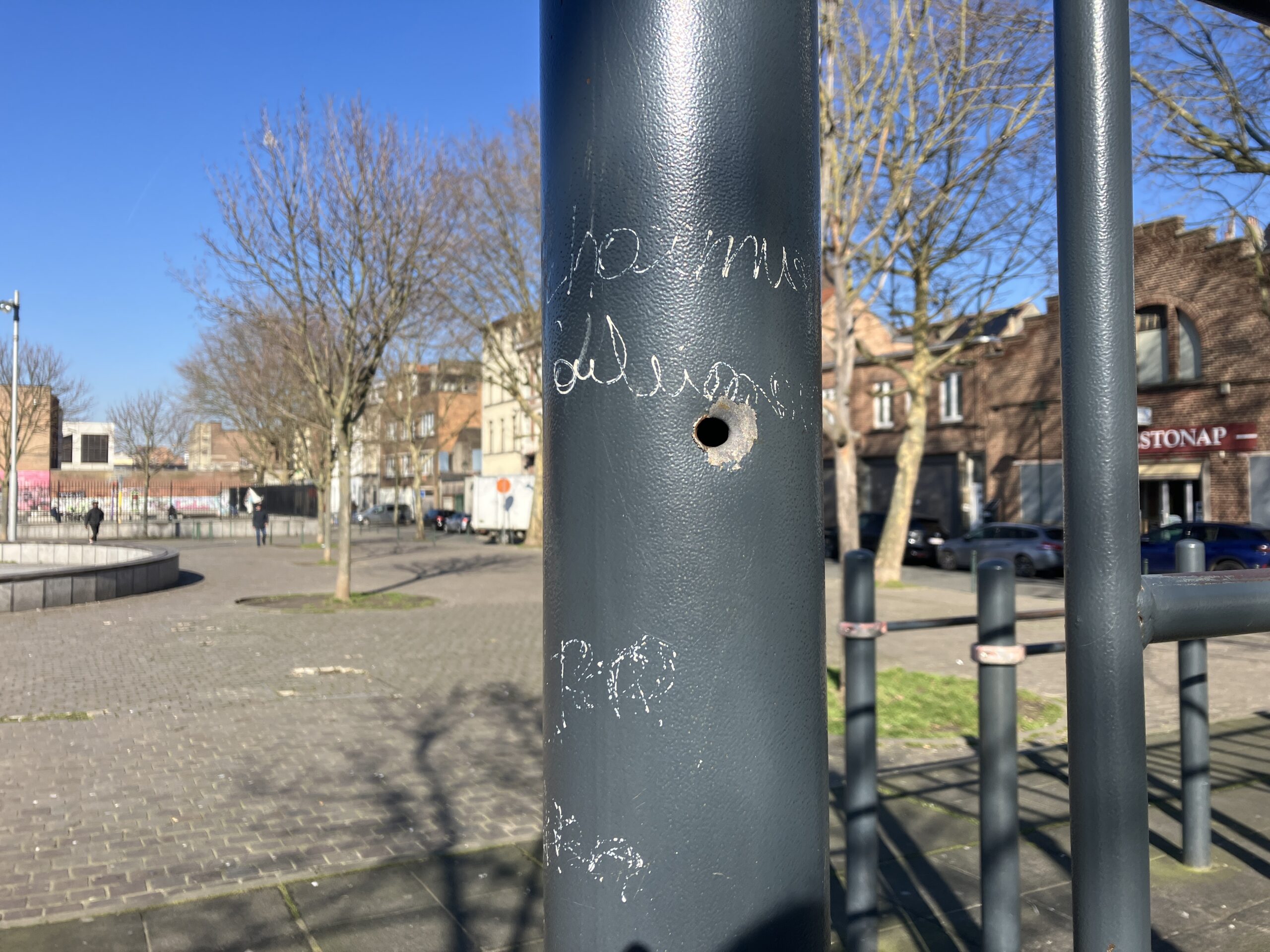
A bullet hole in a climbing frame for children on the square in Anderlecht. Credit: The Brussels Times
For months, many residents have been communicating their concerns, complaints and questions to the Anderlecht municipal council, but to very little effect. This is not the first or even the second cry for help from people living in the area, and while more voices are speaking up, residents feel "like very little effort is being made to address the problems that arise," he said.
Cureghem locals speak of daily confrontations with the various problems in the neighbourhood. "The moment you cross the line between private property and public space, you immediately have to be careful not to step on glass, or on faeces (either from dogs or people). You are confronted with open drug use – people lying with needles in their arms, or people smoking crack in a doorway, where families with children enter and exit."
In addition to the drug users, there is the violence between dealers, problems with the rubbish collection, the constant noise nuisance from the many bars and restaurants that stay open very late, the suspicion of prostitution, the constant car traffic and the fact that the state of the public roads makes it next to impossible for cyclists and pedestrians to move around safely.
"It is a melting pot of problems," Popelier explained. "And one perpetuates the other. It is a downward spiral of all these problems that go hand in hand."
'Institutional disdain'
Of Anderlecht's 126,000 residents, some 25,000 live in Cureghem – that's one in five. However, none of the ten city councillors live there. "This speaks volumes about the institutionalised disdain the neighbourhood suffers."
Popelier also pointed out that the refugee reception crisis did not help the situation either. In August 2023, the Federal Government decided to stop providing shelter for single men seeking asylum, despite it being a legal entitlement.
"These men ended up on the streets. Many of them lingered in our neighbourhood, partly because they had to make their way to the Petit Chateau Fedasil Arrival Centre to apply for papers," Popelier explained.
With little or no connection to the area, nowhere to go and nothing to do while their application is being processed, these (young) men are easy targets for drug gangs and the organised crime environment.
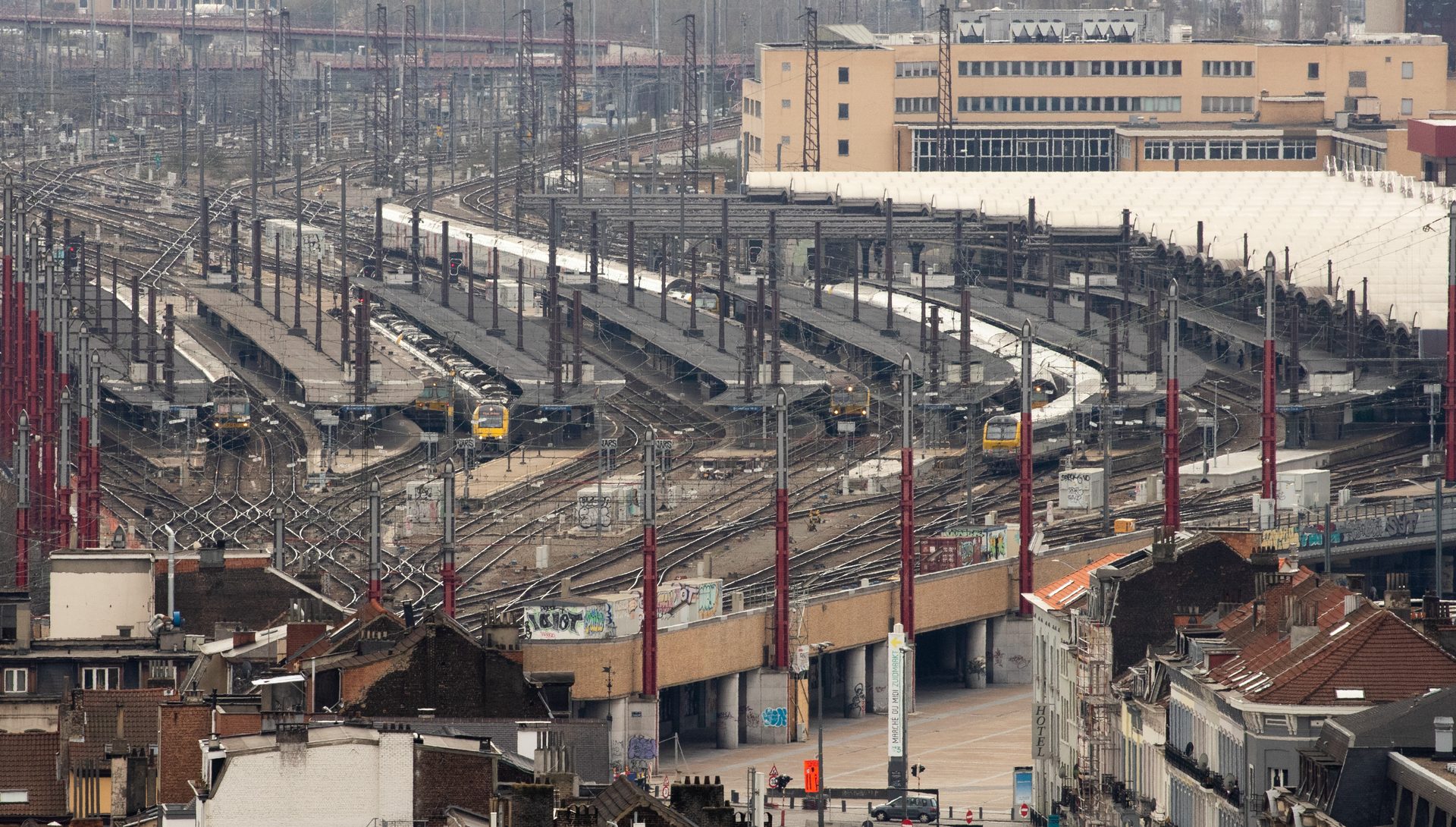
Brussels Midi train station. Credit: Belga/ Benoit Doppagne
Since the Covid-19 period, the rise of crack use and trafficking has only made the existing problems worse. "In recent years, the market for crack in our neighbourhood has only increased. The open use of the drug, especially on Avenue Clemenceau, is horrific."
These factors result in an enormous increase in the feeling of insecurity in the area. "Our neighbourhood is repeatedly a victim of the choices made by various levels of government," he said.
And while the police are constantly trying to take action, Popelier explained that there is only so much they can do if the rest of the justice system does not follow through. "The police arrest someone, but a few hours later, they are back on the streets. That is very discouraging, not least for the police. They are mopping with the tap open."
Things can be better
Still, the locals believe that Cureghem is worth fighting for, and that the municipal council should make efforts to encourage people to be proud of their neighbourhood. "From our perspective, we want to make it clear that we are not giving up."
Popelier stressed the need for "a serious action plan" from the authorities, stressing that many residents would be willing to put their shoulders to the wheel. "Many layers of problems must be addressed: cleanliness, safety, mobility, and overt drug use. This will take effort and time, but we want things to move forward."
When they called the police with a complaint, some residents had already been told to just move away from the area. "But sorry, that is not an option for us. We believe in our neighbourhood, we like where we live, and we want to stay where we are. Things can be better. We are convinced we can succeed."
On 14 September, local residents are organising a flea market to promote connections between residents and the neighbourhood and to highlight the potential of the district at the Triangle (Rue Lambert Crickx and Rue de l'Autonomie).
The Brussels Times has contacted the office of Anderlecht mayor Fabrice Cumps (PS) for comment, but did not receive a response by the time of publication. However, he gave a detailed statement later. You can read his response here.
Related News
- Brussels drug violence: 'It's a crisis,' authorities admit
- Drug violence: 'You'll just have to live with it', says Brussels leader
- Man seriously injured in new Anderlecht shooting
- 'It's like the Wild West. For the first time, I'm considering moving away' - Cureghem residents despair at drug violence
