
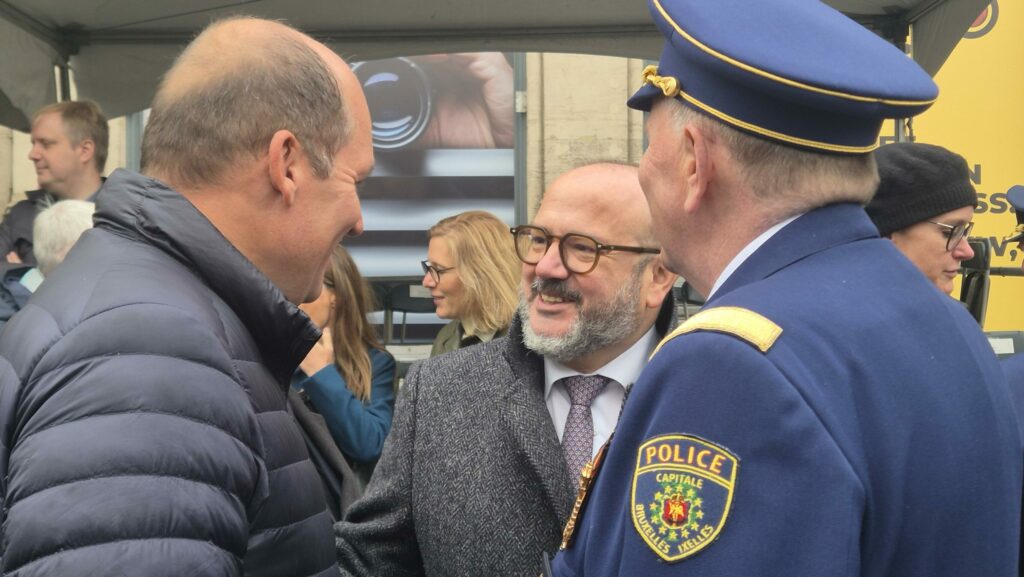
The preliminary draft law intended to facilitate the merger of the Brussels police zones contains "several ambiguities and inconsistencies," according to an opinion issued by the Council of State. Among other things, questions arise regarding the financing of the Brussels zones.
In April, Interior Minister Bernard Quintin (MR) presented his plans to reduce the six Brussels police zones to a single central command for the entire region, led by a single chief of police.
That person will take operational decisions in consultation with a police college, which will include the 19 Brussels mayors and the Minister-President. The new structure should be fully operational by 2027.
The Council of State has now examined the preliminary draft law. In a 33-page opinion, the court of law comments, among other things, on the financing of the police zone. Zones that merge – even on a voluntary basis – will receive additional federal funds, but it is not clear how these will be distributed and what will happen when the total pot of €40 million is empty.
No budget left?
The Council of State warns that there may be no budget left for zones that merge voluntarily. The court is calling for a distribution key to be laid down in law.
The Council of State is also critical of the physical presence of the police, one of the main concerns of the Brussels mayors. The government wants to focus more on virtual counters and mobile police stations, so that citizens do not always need a physical police station.
However, the Council of State warns that not everyone has access to the internet; physical access to the police must remain guaranteed.
There are also questions about the police college of the unified Brussels zone: it is not entirely clear what the tasks of that body are and how often it meets. Additionally, there is a risk of weaker democratic control, because the municipal councils no longer have a say over the police.
