
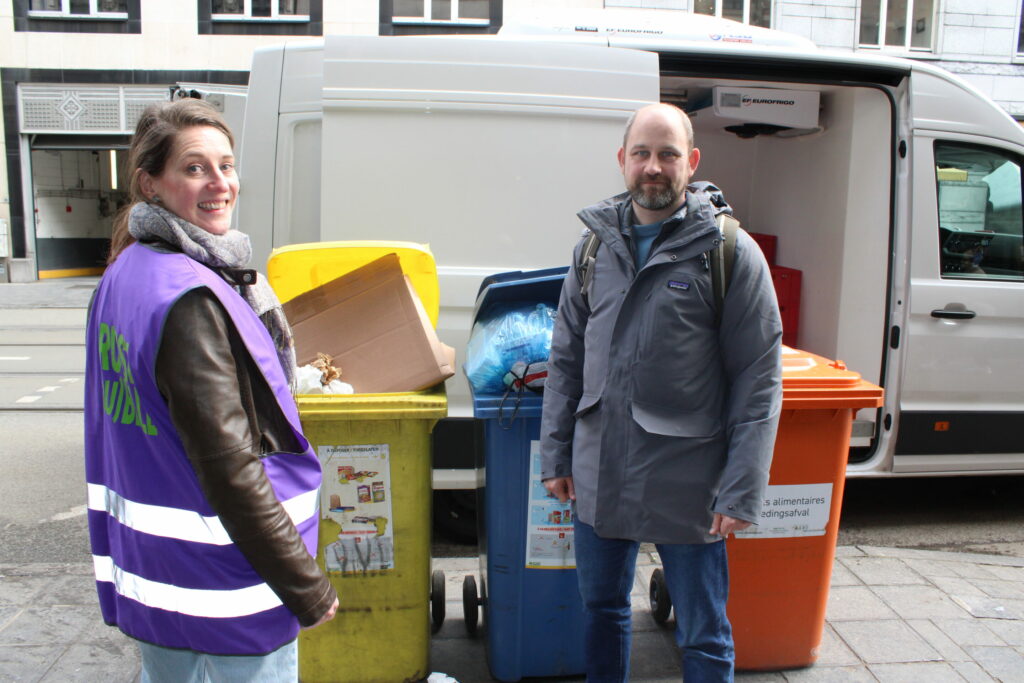
Bruxelles, ma belle? Anyone who spends a few hours in the Belgian capital will be hard-pressed to agree with the famed song by Dutch singer Dick Annegarn. However, a citizens' collective with the cheeky name 'Brussel (Pou)belle' wants to change that.
A year and a half ago, just before the October 2024 local elections, several citizens who were sick and tired of stumbling over stray rubbish on the streets of Brussels set up a politically neutral collective to clean up the city.
"I have lived in Brussels for 13 years and have moved between different municipalities and parts of the city, but the dirtiness has always been a constant," Ksenia Goncharova, who joined the collective about a year ago, told The Brussels Times.
Originally from Russia, she now lives in Jette, close to the border with Molenbeek-Saint-Jean and Koekelberg, in what she calls a "problematic triangle" in terms of waste management: at a crossroads of three municipalities, no one feels responsible.
With several regional roads (not managed by the municipalities, but by the Brussels Government) intersecting with municipal streets, as well as tram lines and a metro stop managed by Brussels public transport operator STIB/MIVB, Goncharova believes the area is emblematic of the issue.
"There is so much fragmentation, so many layers of power. Yet no one seems to be responsible," she said. "When I just moved here, I thought it was a mentality issue, but I have since understood that it is an institutional one. When I learned about the collective, I just needed to be part of it."
'It will get worse before it gets better'
For Thorfinn Stainforth, a Danish-Canadian who moved to Brussels 16 years ago and who has been a part of Brussel (Pou)belle since it was created, the collective is also about understanding why Brussels' waste system is the way it is.
"It has been like this for a very long time. But we believe that it does not have to be," he said.
Together with around 30 Brussels residents from all municipalities and of all ages, the collective drafted a citizens' proposal. Backed by over 1,000 people, its support is growing every day.
Using the 2024 local elections as an example, Stainforth pointed out that the issue of cleanliness is high on the agenda for virtually every political party in Brussels in each of the region's 19 municipalities.
"Still, nothing was being done," he said. "The whole mission was to ensure the topic remained a priority, and that the elected officials actually commit to their promises. We are keeping up the pressure."
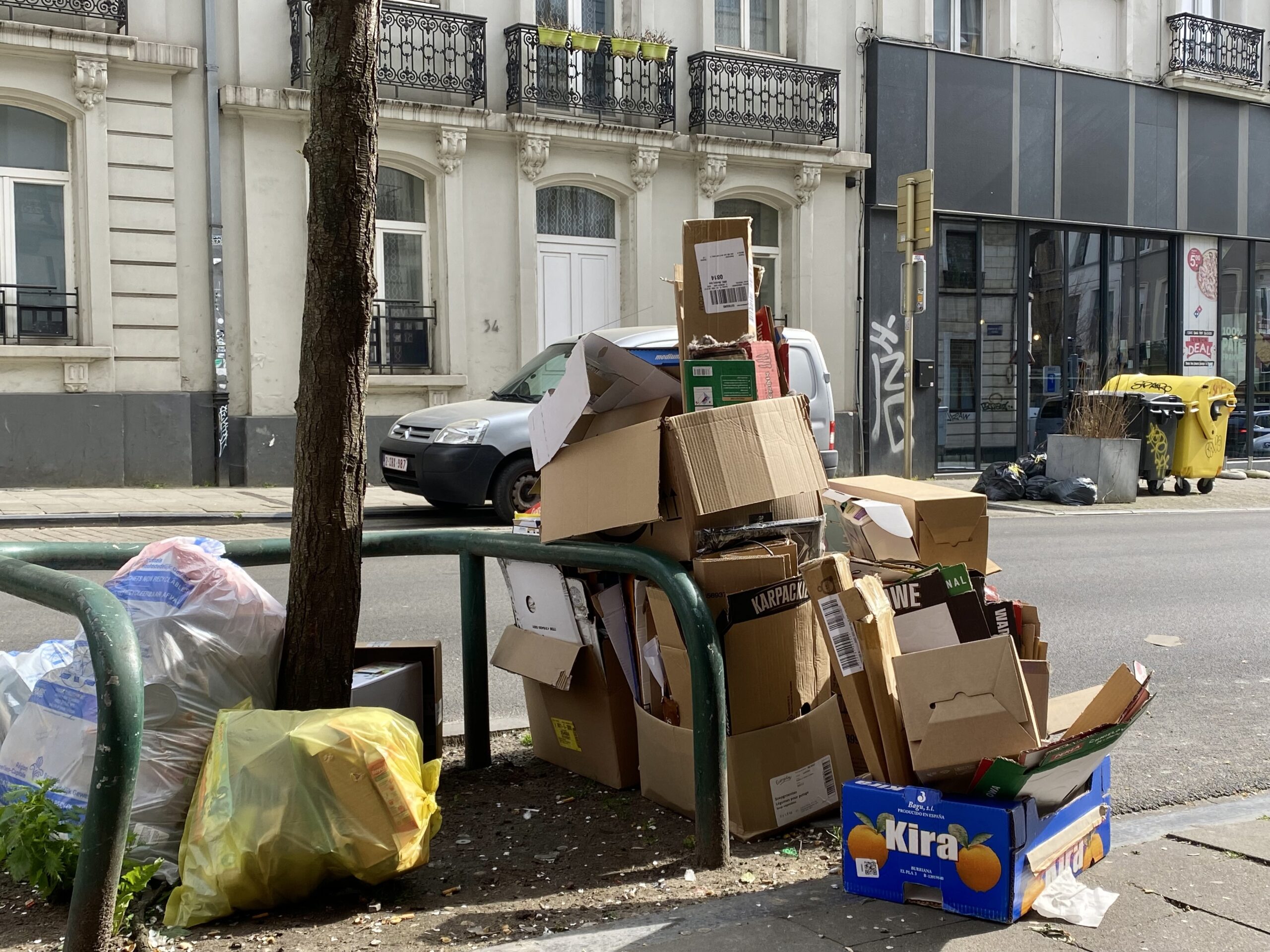
Rubbish piling up in Brussels on Tuesday 24 March 2024. Credit: The Brussels Times
When the collective started its operations, Brussels did not have a new regional government yet. Now, about 600 days later, a new team of ministers is finally in charge. Goncharova and Stainforth are hopeful.
"There are positive signs. Even the fact that cleanliness is almost a separate competence (State Secretary Audrey Henry is in charge of Cleanliness, Regional Planning and Urban Development) raises the profile of the topic," Goncharova said.
While a state secretary does not hold as much weight as a minister, the collective prefers a focused state secretary over a minister with too many responsibilities, they stressed. In the previous government, Minister Alain Maron was in charge of a whopping seven competences: Environment & Climate, Social Integration, Health, Energy, Water, Cleanliness and the Port of Brussels.
"This is a very good chance, and there is a lot of pressure on this government to clean up the city. But with the budgetary situation, it will not be easy," Goncharova said. "I fear that it will get worse before it gets better."
State Secretary Henry announced that she would reform the collection system, with fewer collection rounds. On top of that, the planned budget cuts will only lead to more strikes, which will not help the situation.
'Not rocket science'
While there are bound to be cleanliness issues in large cities, they both emphasised that the current situation in the Belgian capital is "very much a specifically Brussels issue".
And what's more, "it shouldn't be rocket science to solve it," said Goncharova. "There are plenty of other cities which manage much better. What makes it so typical of Brussels is the preference to maintain the status quo."
She describes the Capital Region as a delicate equilibrium between political levels of power. "If you take out one piece, the whole thing crumbles. There is an underlying fear of touching that. I don't support that mentality of fatalism. If we keep thinking like that, Brussels will never change."
Stainforth agrees: "There is no magic about Brussels that means you can't touch it. The cleanliness issue here is much more out of control than in most places. Many simple things can be done, but the complicated political constellation makes it very slow."

The entrance to the rubbish sorting centre in Forest, Brussels, December 2009. Credit: Belga / Herwig Vergult
After last week's three-day strike by the waste management agency Brussels Cleanliness, the situation on the streets was worse than ever before, they said. "Rubbish was everywhere. It was one of the worst trash crises we had ever seen."
"It's a structural issue," Stainforth said. "As ever, the problem is the budget, meaning that the authorities are quite constrained in terms of making changes. But in principle, all parties agree that something must be done, and they are saying the right things. So let's see where that goes, once all the budgets are consolidated."
The committee has many concrete proposals for a cleaner Brussels, he said. "There is not one single thing that can work. The rubbish bags are not good, and neither is the collection system. A very popular thing is underground containers – which we definitely advocate for, but they are expensive and installing them takes time. A whole suite of measures is needed."
First and foremost, the collective advocates for a clear and logical division of responsibilities between different actors. They also want to improve recycling parks and make them more accessible, ensure and enforce appropriate waste collection contracts for professional waste and shop owners, and implement a combination of educational and repressive measures.
Ending impunity
In any case, they are glad the new Brussels Government seems serious about ending the current impunity for littering or fly-tipping.
"People test limits. It is basic human psychology. If they do something that is not allowed without facing any consequences, they will do it again. They might even go one step further," Goncharova said. "People dump their litter on the street once, or see a neighbour do it, and never hear from the authorities. So they continue."
While Goncharova and Stainforth emphasise that people should take responsibility for their own behaviour, they believe that the government is also to blame for not stopping or preventing this kind of uncivil behaviour.
"It is a vicious cycle," Stainforth said. "Even subconsciously, people do not try their hardest if they feel like no one cares. This is to the detriment of the public environment."
For Goncharova, it's simple: "If a city cannot sort out something as simple as keeping the streets clean, how can you trust them with anything else?"
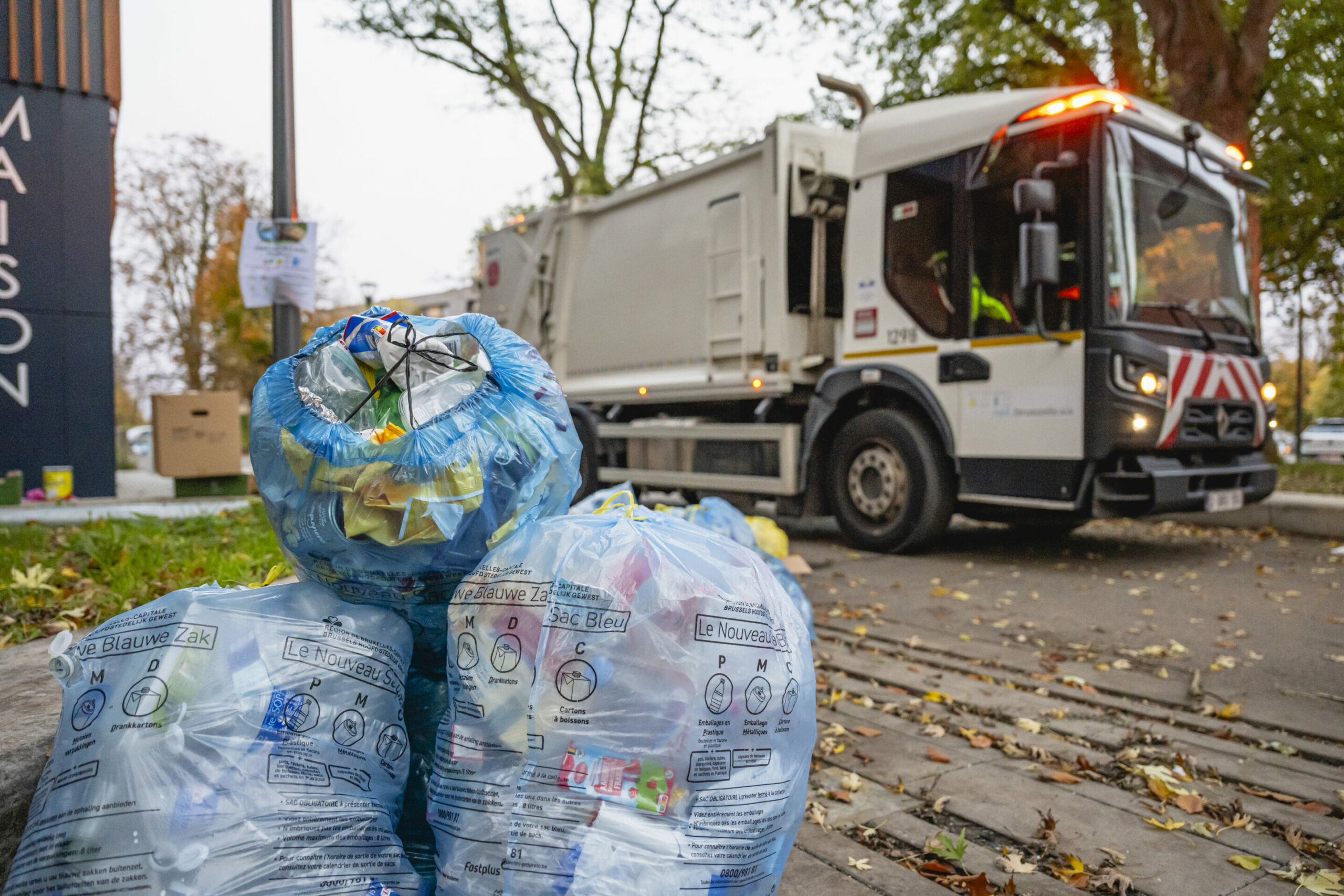
Rubbish bags waiting to be collected in Brussels. Credit: Brussels Cleanliness
"In a climate of shootings in the streets, drugs, and poverty, people often say there are more important things than rubbish. But it is all connected. Rubbish everywhere indicates that the government is not capable of keeping things under control, and that spirals into other, worse things."
In its coalition agreement, the new government has seemingly taken this into account. They laid out several repressive measures, such as more and higher fines – something the collective is in favour of – in addition to awareness campaigns.
"Both those things are important. Enforcement is very much needed, but so is an overall cultural shift," said Stainforth. "You can set up the most wonderful system in the world but if people don't respect it, it just does not work."
Since last week, the proposal has been the subject of a citizens' committee in the Brussels Parliament – bringing together selected residents and Brussels MPs to find solutions. The recommendations from that committee will be expected in early June.
"We will definitely be paying attention to those, and monitoring their implementation," Goncharova said. "Our work is definitely not done yet."
Related News
- The Brussels commune with a ‘cleanliness plan’ to sort out its dirty streets
- 'It's not rocket science': Brussels Times readers share their ideas on how to clean up the city
- 'Reached my limit': Rubbish piles up on streets of Brussels after bin strikes
- 'Disgraceful situation': New Brussels Government urged to tackle safety and cleanliness
- Why can't all Brussels residents put their rubbish in big plastic bins?
