While many European capitals are seeking to curb the influx of visitors, the majority of Brussels residents believe that their city is underrated.
Indeed, most would like to see more tourists discover it, leading to a situation where local authorities walk a delicate tightrope.
Far from viewing tourism as a problem, a large majority (79%) see it as an important source of revenue for the city, according to a representative survey of 1,000 Brussels residents in all 19 municipalities, conducted by the research institute iVOX for Ovide–Airbnb.
"Brussels residents do not see overtourism – they see opportunities," said Clément Eulry, Country Director for Airbnb Benelux & France.
When asked about the most pressing challenges facing their city, just 4% of surveyed Brussels residents cited short-term rentals (such as Airbnb) as a major concern, while overtourism was mentioned by only 1.1% of residents.
"These survey results confirm that residents want a framework that reflects their lived experience: simple, proportionate rules for those who occasionally rent out their homes, in line with European law," said Eulry.
Strict regulations and broken rules
For the majority of surveyed residents, Brussels remains an underrated destination: 74.6% of respondents said the city’s cultural heritage makes it an attractive tourist destination, and half of those surveyed cited gastronomy as a key draw.
Nearly four in five (79%) of the questioned Brussels residents called tourism essential to the city, more than 70% said it supports local shops and businesses, and 73.2% named it as a contributor to the city's budget.
According to Airbnb, these results call into question "the idea that tourism and short-term rentals require stricter regulation in Brussels".
A recent opinion from the Advocate General of the Court of Justice of the EU (CJEU) also called out local short-term rental (STR) rules as "disproportionate" and "lacking transparency" – challenging the Capital Region's requirement to obtain multiple authorisations (including a town‑planning compliance certificate) before renting out accommodations.
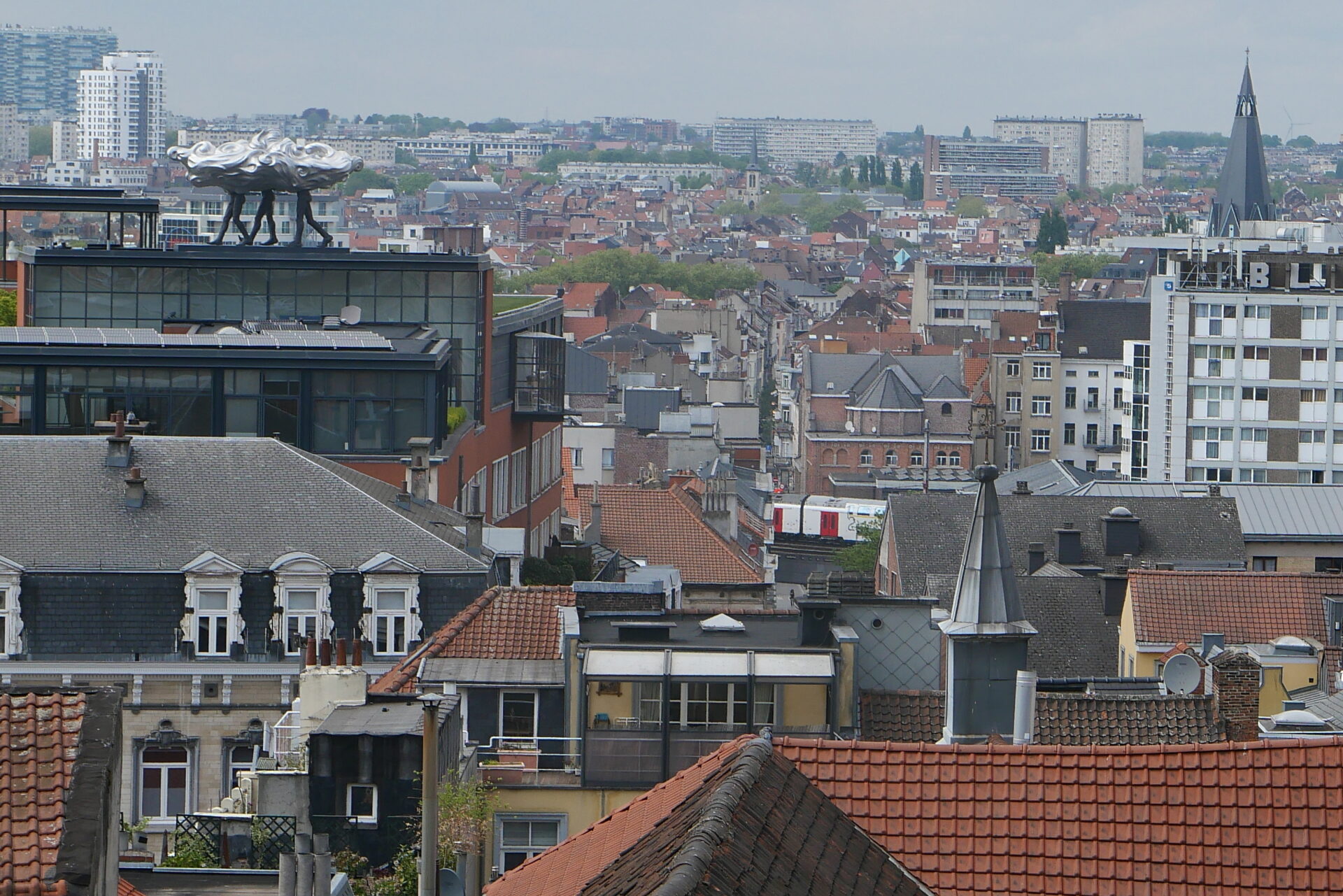
Central Brussels has the highest concentration of Airbnb listings, with more than 90% estimated to not conform with the proposed legal requirements. Credit: The Brussels Times
These procedures can indeed be quite difficult for those who want to rent out their entire property on platforms such as Airbnb. As a result, only one in ten hosts registers their property, making 90% of Airbnbs in the capital technically illegal, according to recent research by Bruzz.
Those who only want to offer a room in their home can obtain the necessary paperwork relatively easily (provided they continue to live there themselves), there are still several steps to complete before they can legally list a room on Airbnb.
Still, residents have repeatedly complained about what they call Brussels "broken" home-sharing rules – especially in light of the confusion that followed some 2,000 Airbnb hosts receiving unexpected fines last summer.
In recent years, several studies have shown that the presence of Airbnb significantly pushes up property prices in Brussels – making it more difficult for part of the population, especially for those with the lowest incomes, to find affordable housing.
No showcase for tourists
The city centre of Brussels, within the Small Ring Road, is particularly attractive to Airbnb and similar companies: between 15% and 33% of homes there have been converted into tourist accommodation.
"It is mainly large, professional landlords who rent out at least three properties who are responsible for this," Pieter-Paul Verhaeghe, a sociologist at the VUB, told The Brussels Times last year. "They could rent their properties to local residents, but they do not because they can generate more income through Airbnb. As a result, part of the rental market is disappearing."
In February, the City of Brussels (Brussels 1000) told The Brussels Times that it was trying hard to stop the proliferation of illegal or unregistered Airbnbs and other short-term rentals.
"We want to avoid what we see happening in other European cities at all costs," a spokesperson said at the time. "We do not want Brussels to become a showcase for tourists, while no actual Brussels residents live in the city centre anymore."
Airbnb, meanwhile, stressed that the results of its survey send a "clear signal" to the new Brussels Government that "residents view tourism and short-term rentals positively", and support a regulatory approach that is simple and effective.
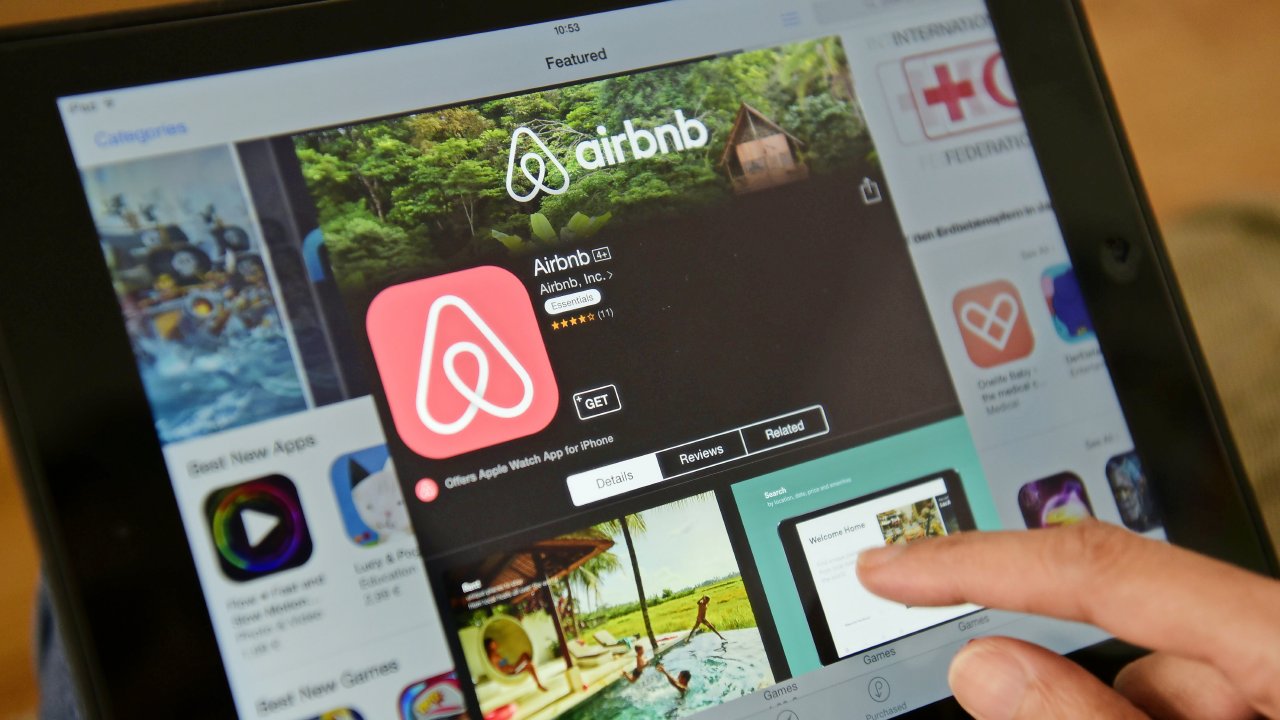
The Airbnb platform. Credit: Belga
Interestingly, new Minister-President Boris Dilliès (MR), who is responsible for tourism in the Brussels Region, is trying to strike a delicate balance: relaxing the rules for residents renting out a room in their own home to tourists, but making it more difficult to rent out entire properties.
"The procedures for complying with the rules governing tourist accommodation are complex and cumbersome," Lisa Saoul, Dilliès’s spokesperson, told Bruzz in April. "The government is therefore planning a reform to simplify this process. The aim is to introduce a single procedure, with a single point of contact."
This planned reform also aims to further clarify the distinction between renting out entire properties and renting out a room in the owner's home.
What these stricter or more flexible rules will entail is not yet clear.
