
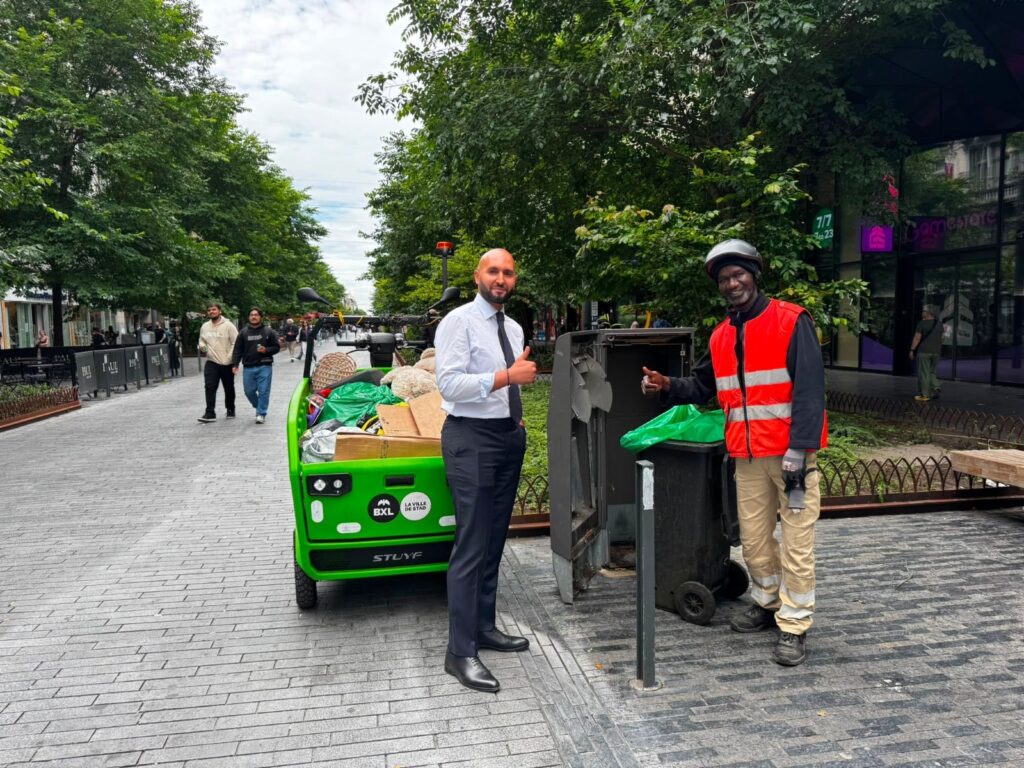
The City of Brussels is stepping up its efforts to keep the capital clean during the busy summer months with a new 10-point action plan that includes dozens of additional public bins, smart rat traps, more cleaning staff and stricter enforcement against littering and illegal dumping.
As terraces fill up, tourists flock to the city and major events return for the summer season, public spaces in Brussels come under increasing pressure. To cope with the seasonal surge in visitors and waste, councilman for Public Cleanliness Anas Ben Abdelmoumen (PS) has unveiled a package of measures aimed at improving cleanliness across the city centre.
“A livelier city also means more foot traffic, more litter and greater pressure on our public services,” Ben Abdelmoumen said. “With this summer cleanliness plan, we are putting resources where they are needed most: more cleaning, more bins, more prevention and, when necessary, stronger enforcement.”
48 mobile litters bins
One of the most visible changes will be the installation of 48 additional mobile litter bins across the busiest shopping and tourist areas, including the Grand Place, Rue Neuve and the pedestrian zone. The City will also increase the frequency of bin collections, particularly during busy weekend evenings, to prevent overflowing rubbish bins.
To reinforce street cleaning operations, 30 student workers will join municipal cleaning teams throughout July and August, helping clean streets and empty public bins during the peak tourist season.
Trapping rats and installing toilets
The City is also introducing new technology to tackle one of its persistent urban challenges. Fifteen connected “SmarTraps” will be installed along the Pedestrian Zone from early July as part of an ongoing rat control campaign. Unlike traditional methods, the smart traps capture and isolate rodents without leaving carcasses or poison in public spaces.
Public convenience is another focus of the plan. A new interactive online map will allow residents and visitors to quickly locate nearby public toilets, including facilities managed by other operators such as STIB. The initiative builds on the City’s existing network of 13 free public toilets, 22 public urinals and three newly installed self-cleaning smart toilets.
Education
The summer programme also includes educational initiatives. Children attending the city’s holiday playgrounds will participate in organised clean-up activities using litter pickers and rubbish bags provided by municipal services, while cleaning staff will visit to explain their work and promote respect for public spaces.
Additional cleaning crews will also be deployed around the annual Foire du Midi, which runs from 18 July to 23 August and is expected to attract up to one million visitors. Teams will focus on the fairgrounds, surrounding streets and access points to minimise disruption for local residents.
Alongside prevention efforts, the City plans to increase enforcement. Municipal officers will carry out daily operations targeting illegal dumping and other cleanliness-related offences, with some inspections conducted jointly with the Brussels-Capital Police zone.
The initiative will conclude in September with a week of awareness-raising activities around World Clean-Up Day.
Residents will be encouraged to take part in community clean-up events, while the iconic Manneken Pis will be dressed as a municipal cleaning worker in tribute to the people responsible for keeping Brussels clean year-round.
