
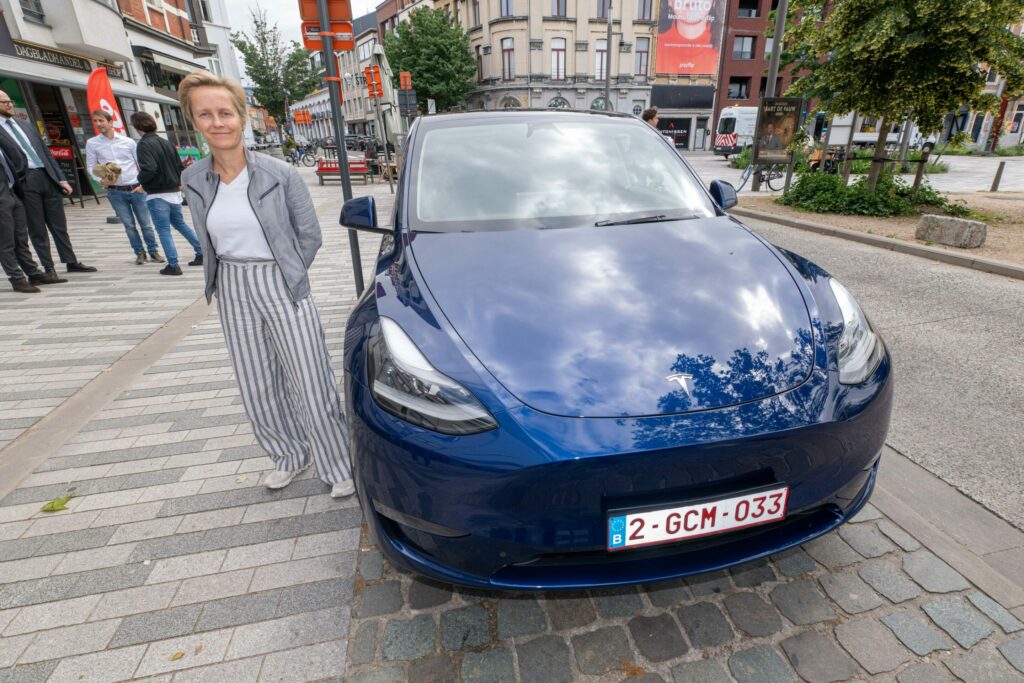
Now that Flanders approved the use of self-driving Tesla vehicles on its roads on Tuesday, could autonomous vehicles soon be driving through Brussels as well?
Regional Flemish Mobility Minister Annick De Ridder (N-VA) gave her green light to a law that would allow self-driving Teslas on Flemish roads. This is despite the Flemish administration's doubts about the readiness of the system – a decision that impacts the Belgian territory as a whole.
"Brussels is open to the technology, but on its own terms," Brussels Mobility Minister Elke Van den Brandt (Groen) told The Brussels Times.
She stressed that full automation would take away the human error factor of driving – such as speeding, drink-driving, distraction, or falling asleep behind the wheel – that can lead to fatalities and accidents.
"Self-driving cars respect speed limits, are never under the influence and park in the right place," Van den Brandt said. "But we must avoid a situation where they end up driving around empty, without carrying anyone, at a time when we want to give space back to people, especially pedestrians and cyclists."
Better technology than Tesla
With Brussels pursuing Vision Zero (zero deaths or heavy casualties by 2030), she stressed that the region "has every reason" to take this technology seriously.
However, Van den Brandt also noted that the Tesla 'Full Self-Driving' (Supervised) system – which Flanders has now approved – is, in fact, an advanced driver-assistance system, not autonomous driving.
This means drivers must stay attentive and ready to take over at all times. Additionally, they can still ask the system to go faster than the speed limit.
On top of that, the system is still making quite a few mistakes, she pointed out. "Apart from Tesla, there are also other players – most of them with better technology."
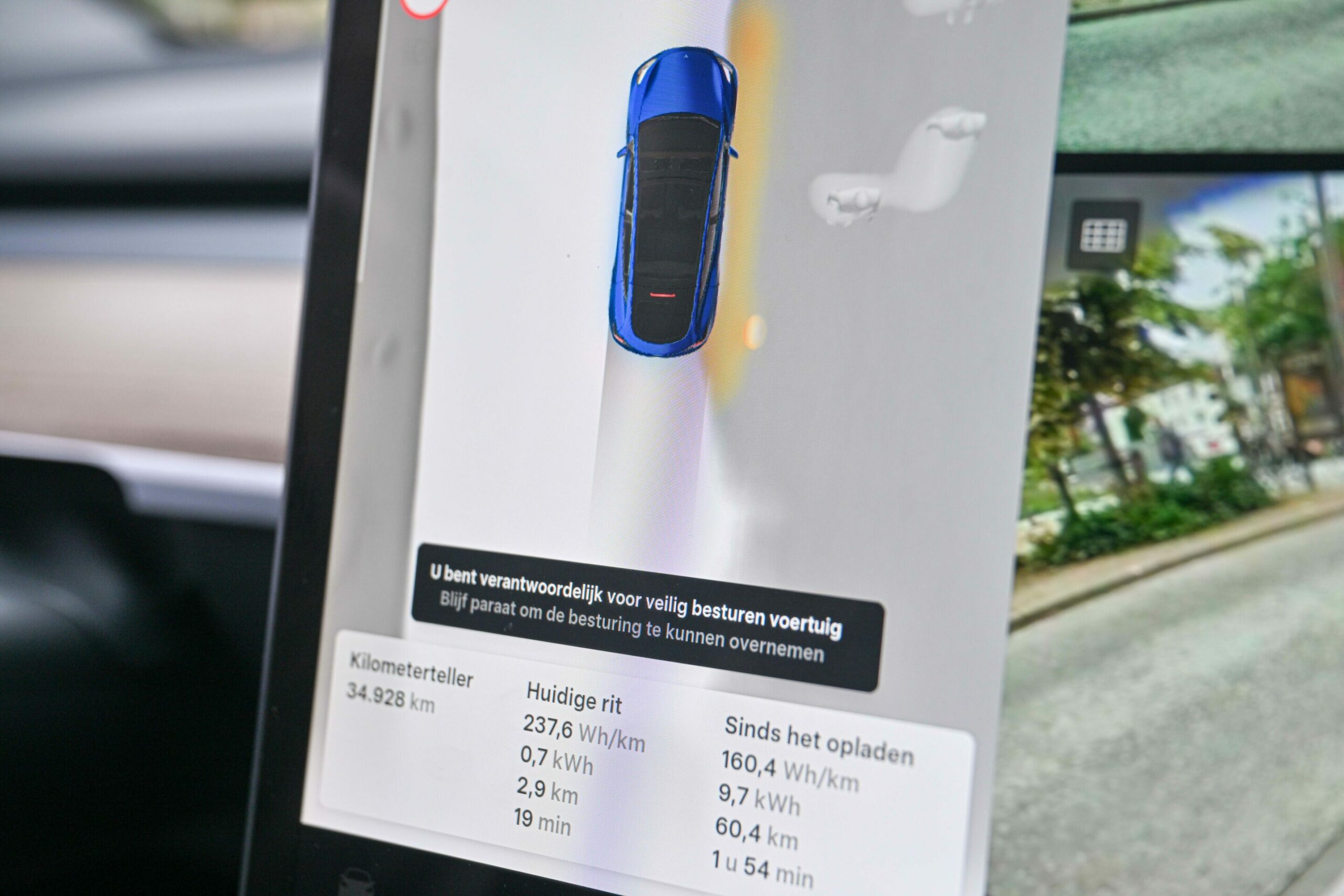
The interior of a Tesla is seen during a test drive of Tesla's first Full Self-Driving (FSD) models to have been type-approved, in Antwerp, Monday 15 June 2026. Credit: Belga/Jonas Roosens
Following Flanders' approval, however, it seems that whether or not Van den Brandt is in favour of already rolling out the technology across Brussels may, in fact, be irrelevant.
Road approval for new vehicles in Belgium works through a single application to a single Belgian authority, meaning that Flanders' recognition now applies to Belgian territory as a whole – including in Brussels. However, Van den Brandt's office highlighted that the Brussels Region was not informed of this matter before it became public.
Beyond the way the decision has been made, Van den Brandt also pointed to a recent Reuters investigation, which raises serious doubts about Tesla's headline safety claims for three different reasons: it gives a feeling of full automation without really being fully automated, the system still makes mistakes, and drivers can still choose to drive faster than the speed limits.
Meanwhile, genuine Level 4 cars (meaning that the driver does not need to keep their eyes on the road or hold the steering wheel) are running driverless services in London, Zurich and Zagreb, with Madrid and, reportedly, Munich next.
In Brussels, every system will be judged "based on evidence, not hype", Van den Brandt said. They will not let one company's timetable dictate Belgium's framework, she said.
'Urban caveat'
Additionally, the context of self-driving cars in a densely populated urban area like Brussels adds an extra layer of complexity, Van den Brandt's cabinet stressed.
Autonomous cars can actually increase traffic without the proper framework, as empty vehicles reposition themselves and cheap robotaxi rides replace walking, cycling and public transport, according to international modelling on the impact of autonomous vehicles in Brussels by 2035.
The question for Brussels, Van den Brandt stressed, is not "can the car drive itself?" but rather "does it help the city reach its goals and make it more livable?"
The minister is closely following the technology, she emphasised: Brussels Mobility is part of a task force with the Federal Government.
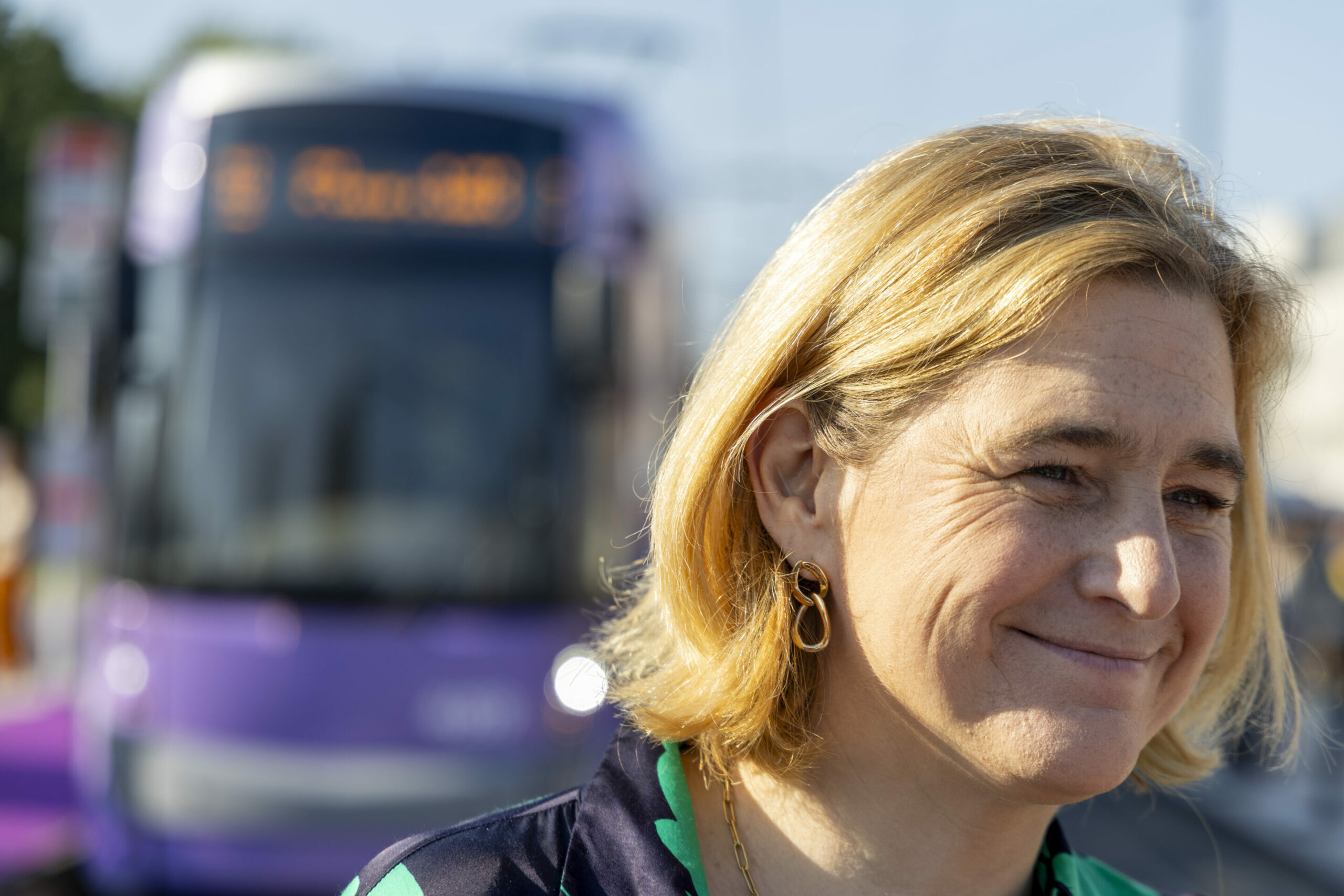
Brussels Mobility Minister Elke Van den Brandt. Credit: Belga/Nicolas Maeterlinck
Together with Belgium's three other mobility ministers, Van den Brandt approved a common roadmap in March 2026, and an interfederal working group is preparing the legal framework in two phases.
The first phase focuses on rules for testing autonomous vehicles by the end of 2026; the second one on rules for homologated vehicles – the step towards commercial roll-out – by the end of 2027, entering into force on 1 October 2028.
Additionally, Federal Mobility Minister Jean-Luc Crucke (Les Engagés) is also drawing up a federal strategy on autonomous vehicles, aiming to create a "clear, secure and predictable" framework for their deployment in Belgium, his office confirmed to The Brussels Times.
In particular, this strategy will address amendments to the Highway Code, issues of civil liability and insurance, cybersecurity, data governance, social acceptability, as well as coordination between the country's regions, European partners and industry stakeholders.
"Belgium cannot afford to remain a bystander to the major technological developments that will transform European mobility," he said. "It is not a question of simply enduring this technological revolution, but of anticipating it and harnessing it for the benefit of a genuine social project."
Sandbox
This summer, a political steering group with the four ministers' cabinets and administrations is also being added to speed up decision-making.
As part of this, Brussels is pushing for a so-called "regulatory sandbox": small-scale, strictly framed real-world deployments with rigorous shared data collection, so rules can be adjusted "based on evidence rather than marketing claims", Van den Brandt stressed.
For her, the greatest potential for self-driving technology lies in car-sharing and public transport. "Shared and collective use is where automation can genuinely reduce the number of vehicles in the city instead of adding to it."
Therefore, Brussels wants autonomous mobility developed first and foremost as part of mobility services, integrated with the public transport network. Brussels Mobility and STIB are partners in the pilot deploying two Level 4 autonomous shuttles, operated by De Lijn, in Leuven.
