
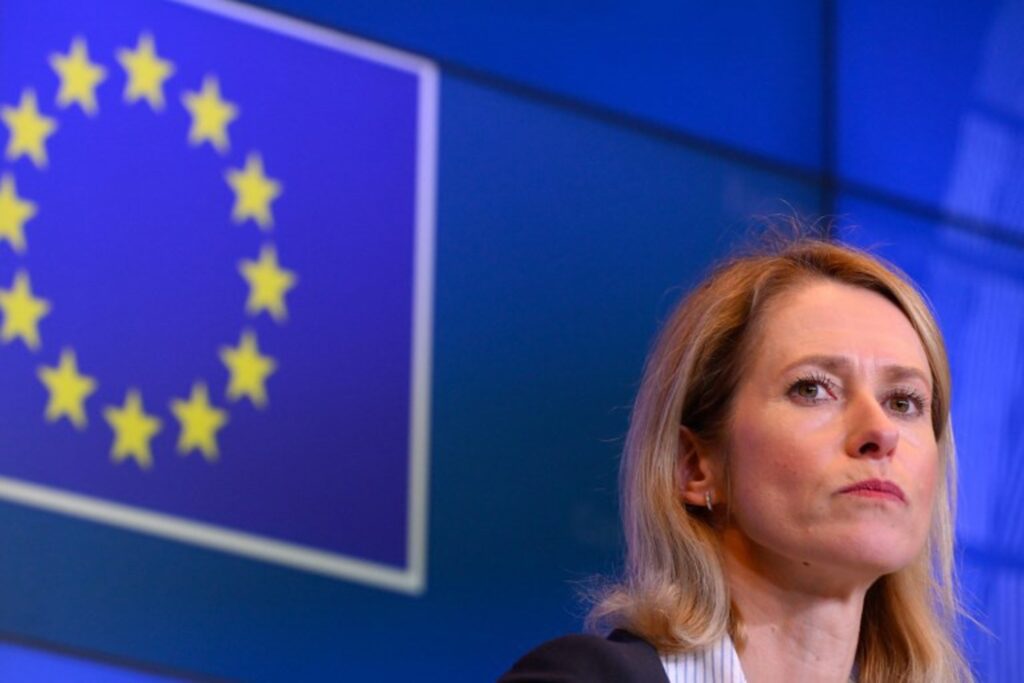
The European Union is examining all potential options to make optimal use of frozen Russian assets in Europe to bolster its support for Ukraine, EU Foreign Policy Chief Kaja Kallas announced on Saturday.
“It is vital to explore all possible avenues while minimising potential risks,” Kallas stated following a meeting of EU foreign ministers in Copenhagen.
Russian state assets abroad were frozen after Moscow’s invasion of Ukraine in February 2022. The majority of these assets, an estimated €210 billion, are held in Belgium, an EU member state. Initially, the EU decided to use the interest generated from these assets — amounting to several billion euros annually — to support Ukraine’s war efforts.
After months of debate, G7 leaders reached an agreement in October 2024 to utilise the interest from these assets to secure a €45 billion EU-backed loan for Ukraine.
However, several EU countries now argue for a more decisive move, advocating for the use of the assets’ principal, not just the interest. Others, including France, Germany, and the Netherlands, remain cautious, citing legal challenges and concerns that seizing the assets could deter future foreign investors and destabilise the euro.
Compromise proposals have emerged, such as Lithuania’s suggestion to treat the seized assets as a loan to Ukraine, earmarked for war reparations that Russia would eventually pay once the conflict ends.
“There is consensus on one point: given the devastation Russia has caused in Ukraine, it is inconceivable that this money could ever be handed back to Russia unless it fully compensates Ukraine,” Kallas told reporters.
Another proposal involves taking on higher-risk investments to generate greater returns from the frozen assets.
However, Belgium, particularly concerned about financial risks, expressed strong opposition to any changes in the existing strategy. “Changing the investment strategy is not an option, as it could increase legal, financial, and judicial risks,” Belgian Foreign Minister Maxime Prévot cautioned on Saturday during the Copenhagen meeting. He also restated Belgium’s firm opposition to seizing the assets outright.
“Let us work to mitigate these risks,” Kallas added, emphasising the need for a carefully balanced approach.
