
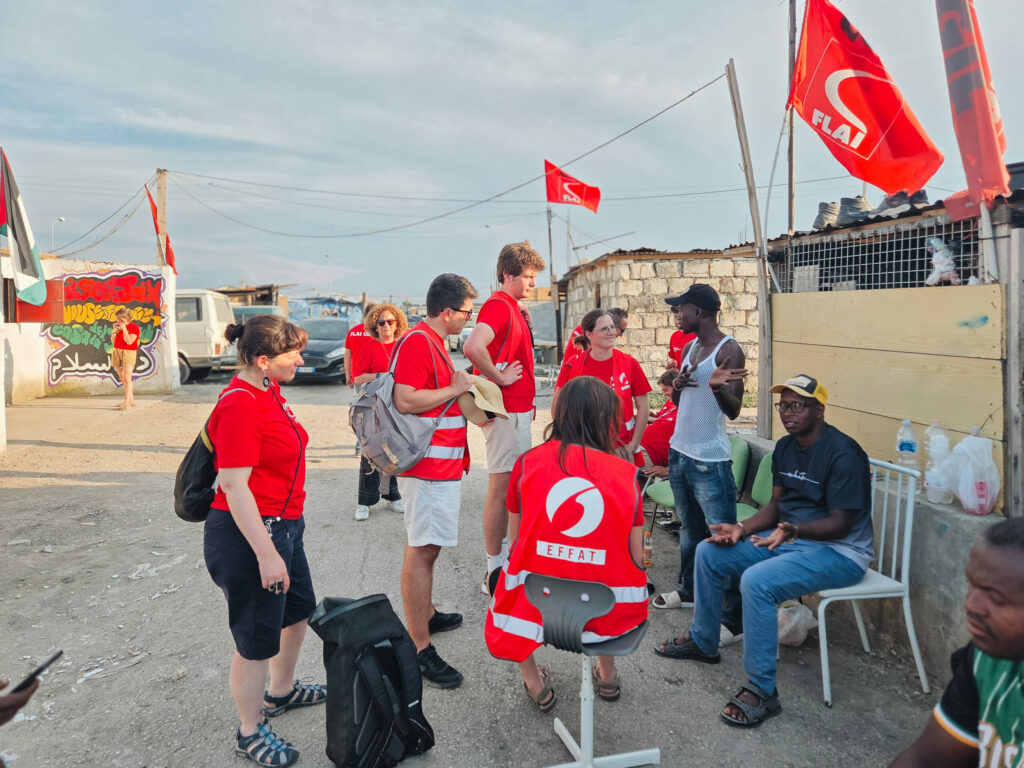
Who picks your tomatoes? EU officials went to southern Italy this week to meet the thousands of seasonal workers living in squalid shanty towns with no running water.
The delegation of EU officials included Members of the European Parliament (MEPs) as well as representatives from the European Commission. They travelled to the holiday destination of Apulia, southern Italy, to see how the other half live – those living in makeshift 'ghettos' who pick the continent’s tomatoes.
Across Europe, countless workers face exploitation and exclusion – particularly migrant and seasonal workers. Out of the 10 million employed in agriculture across the EU, 32% of them are working undeclared, according to data released by Brussels-based EFFAT, the European Federation of Food, Agriculture, and Tourism Trade Union.
With a reform of the EU’s embattled Common Agricultural Policy (CAP) on the cards, some major European trade unions are calling for a more "socially-orientated" reform, in a bid to rectify the deterioration of working and living conditions of seasonal agricultural workers in Europe.
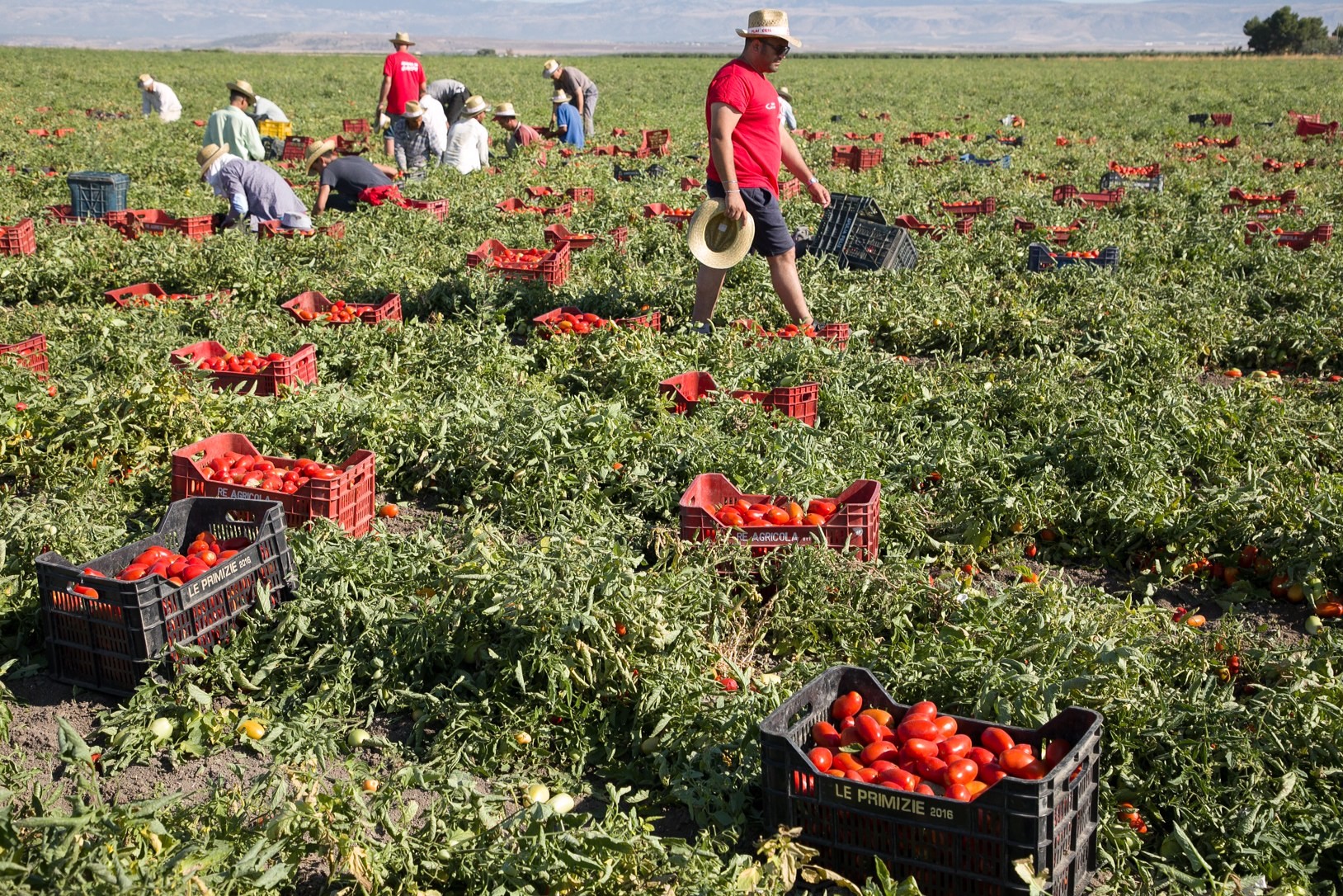
Officials visit a tomato picking field. Credit: EFFAT
Just last year, undocumented Indian labourer Satnam Singh died after having had his arm cut off by an agricultural machine just south of Rome. His employer, who receives CAP funds from the EU, hid his severed arm in a box for harvesting vegetables and instead of taking him to the hospital, dumped him outside his residence – out of fear he would be caught employing him irregularly.
This non-isolated case dominated national headlines last summer, once again drawing attention to the exploitation of migrants in the Italian countryside. However, these stories usually do not make it to Brussels. Now, there are renewed calls for these practices to be abolished, which was the subject of the EU official’s visit to Apulia this week.
Italy's largest ghetto
At the heart of the visit is the ghetto of Borgo Mezzanone – one of Italy’s largest informal migrant settlements. It is located between the Apulian provinces of Foggia and Manfredonia. During the summer, it is home to around 3,000 workers who arrive for the tomato harvesting season.
This makeshift city, located on an old former military airfield, was repurposed in 2005 into an asylum seeker reception centre (CARA). Since then, a vast informal settlement having since been established just outside the centre’s perimeter.
It is known for its inhumane conditions – where the smell of burnt plastic and mountains of accumulated waste engulf visitors upon arrival. It has been around for over 20 years, but is still relatively unknown.
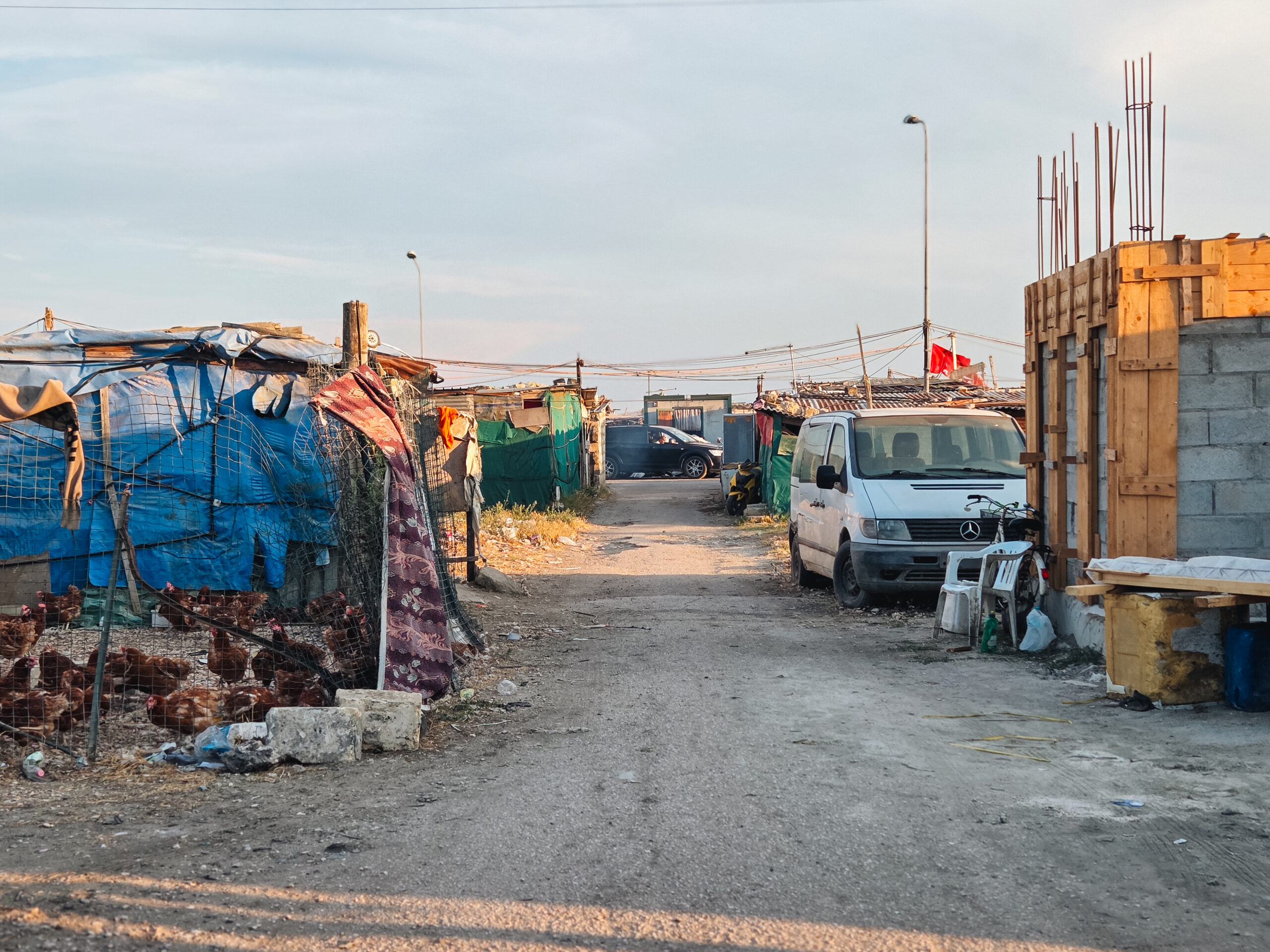
Inside the Borgo Mezzanone shantytown in Foggia, Italy. Credit:EFFAT
"It’s a neighbourhood with a population larger than the adjacent village but without essential services," says Daniela Campo, an InterSOS nurse who brings a mobile clinic daily to the former airstrip every day.
In the visit on Thursday and Friday, MEPs and officials took stock of the situation, meeting some of the workers living there, as well as local MPs, mayors and aid workers.
The initiative, entitled The fight for workers' rights in agriculture, from the fields to the EU, is organised by Flai CGIL and EFFAT.
Among the delegation was French-speaking Belgian MEP Estelle Ceulemans (S&D), who is also the coordinator in the Employment Committee of the European Parliament. She called out the scenes witnessed during the trip to the shantytown.
"It is shocking and unacceptable that in 2025, in the heart of Europe, human beings have to live, or rather survive, in shantytowns without water or sanitation," Ceulemans told The Brussels Times.
"People working in equally inhumane conditions for a pittance – €2/hour – without any rights and under the control of gangmasters. These lawless situations are unacceptable and light years away from the values of the EU."
Ceulemans points to the situation of gangmasters who employ and exploit farm workers, largely due to their irregular and socio-economic status. This is a result of southern Italian emigration which leaves huge gaps in the labour market, notably agriculture. Organised crime groups, who act as intermediaries providing labour, can exploit migrants desperate for work, and force them into these arduous and badly-paid jobs.
The hardships of going back to deplorable accommodation after long and difficult days harvesting under a scorching sun were apparent for the EU delegation. Ceulemans now hopes to draw attention to this message back in Brussels.
"It is clear that Europe must take decisions to put an end to these situations of exploitation, which affect the agricultural sector here but also exist elsewhere, in transport, logistics and construction," Ceulemans said. "There is therefore an urgent need for a directive to limit subcontracting and also to regulate the role of intermediaries – they operate like mafia systems with complete impunity."
Community, drugs and violence
Meanwhile, discussions on reforming the EU’s agricultural policy (CAP) is set to simplify bureaucracy. This could weaken the mechanism that links the disbursement of EU funds to compliance with the most basic labour standards in agriculture, as argued by the Secretary General of Italian trade union Flai CGIL, Giovanni Mininni.
The lack of State apparatus has been long decried as one of the reasons organised crime thrives in the south of Italy, exploiting the need for labour but without providing any duty of care towards vulnerable workers and families.
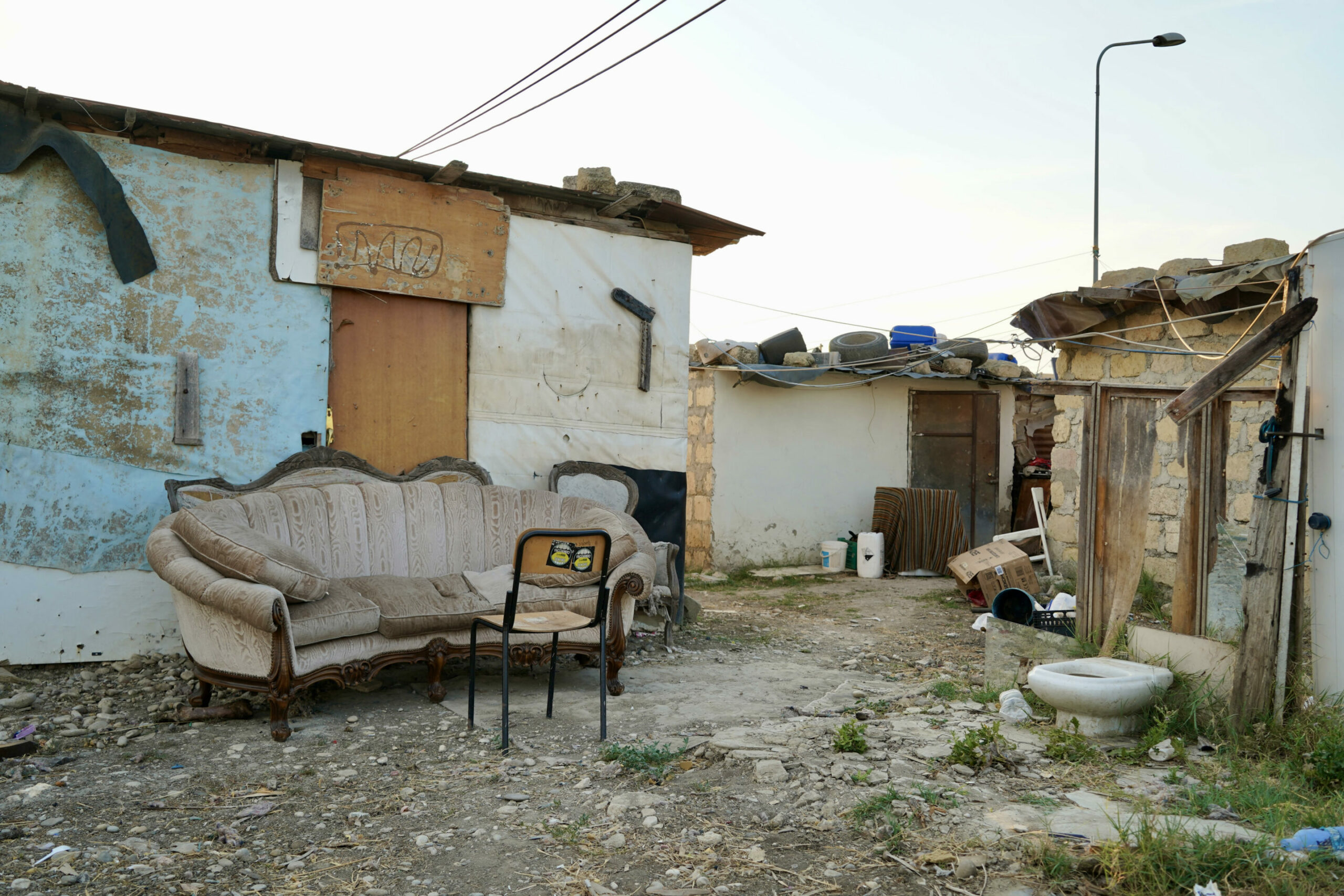
Inside the Borgo Mezzanone shantytown in Foggia, Italy. Credit: Leonardo Filippi, Flai CGIL
Despite these conditions, a strong sense of community has developed at Borgo Mezzanone, with makeshift grocery shops, garages, barbers, restaurants, butcher shops, and secondhand clothing vendors. There are also places to gather, talk, dance, and enjoy life together.
Yet the so-called 'ghetto' is also prone to drug use, violence and sex crimes, with women, members of LGBTQ community or those with mental or physical disabilities all facing discrimination, according to InterSOS aid workers.
InterSOS's mobile medical services treat farm labourers from the shantytown. They report labourers getting dropped off in white vans at the end of the working day, which quickly drive off, or instead they walk for kilometres to reach the shanty town from the main. At the clinic, medical staff treat open wounds from work tools, swollen eyes due to allergies, and body, back, or leg pain.
'Problem is gangmasters'
"What I have seen today is just unacceptable," Esther Lynch, General Secretary of the European Trade Union Confederation (ETUC). “Thousands of people are doing a backbreaking day’s work in the fields in dangerous temperatures and then coming back to sleep in wood or tin huts.”
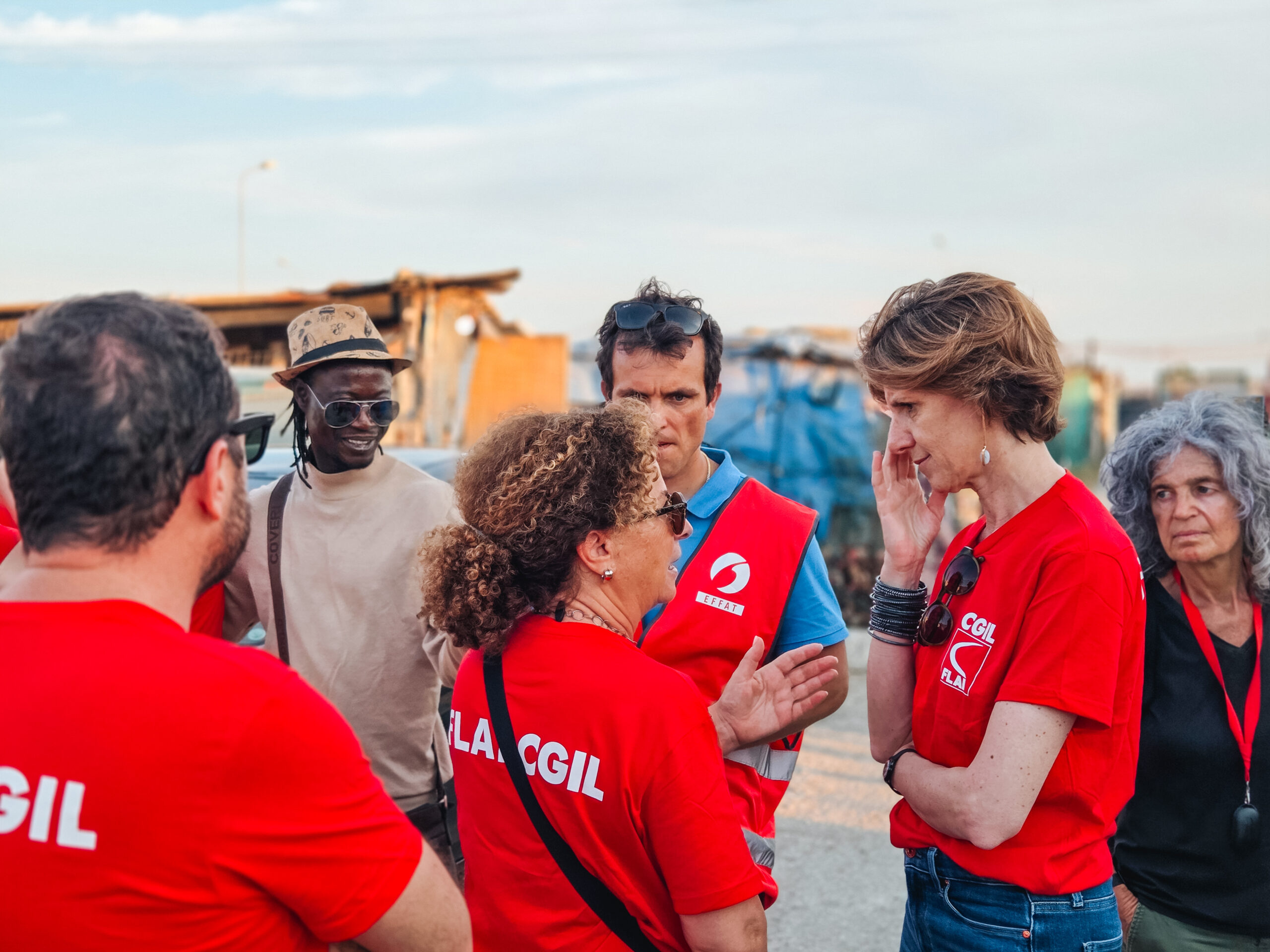
Credit: EFFAT
The next reform of the CAP should not allow EU countries to receive public money if they cannot guarantee decent living standards for farm workers, the ETUC leader said, a call echoed by EFFAT and its Italian affiliate, Flai CGIL.
"I have only respect for the workers who have found a way to build a life here," Lynch continued. "The problem here is with employers and their gangmasters who are prepared to exploit the most vulnerable workers.”
The EFFAT Secretary General, Enrico Somaglia, was one of the organisers of the trip, keen to raise awareness of the deterioration of agricultural work and living in deplorable conditions.
They are urging the EU to strengthen and enforce the hard-won social conditionality mechanism, as well as securing a strong CAP budget that rewards EU countries advancing the fight against undeclared work, promoting collective bargaining, and reducing workplace accidents..
"Addressing poverty wages, working in heat, gangmaster practices and the end of shantytowns is also an EU responsibility," Somaglia said. "We call on the EU institutions and national governments to use this CAP reform to help raise labour standards for millions of farm workers that are left at the very end of our food systems."
