
The European Commission published on Wednesday its proposal to the Council for the approval by the European Parliament and the ratification by the Member States of the EU-Mercosur Partnership Agreement (EMPA), assuring that previous concerns about its compliance with the EU deforestation regulation have been addressed.
Critics who opposed the agreement have cited risks to European agriculture, public health, the environment, and social and human rights. To address these concerns, the Commission outlined several protective measures.
First, preferential agri-food imports from Mercosur will be capped at a fraction of EU production—1.5% for beef and 1.3% for poultry.
Second, the agreement will put an end to unfair competition by Mercosur products that imitate authentic EU products by protecting 344 EU Geographical Indications. Third, to protect European products against any harmful surge in imports from Mercosur, the Commission also proposes a safety net with a capacity of €6.3 billion —doubling the current agricultural reserve.
In figures, the Mercosur agreement with Argentina, Brazil, Paraguay and Uruguay will create the world's biggest free trade zone, covering a market of over 700 million consumers. EU firms will enjoy first-mover advantage, benefitting from lower tariffs in a region where most other countries face high tariffs and other barriers to trade.
The Commission estimated that the agreement can increase EU annual exports to Mercosur by up to 39% (€49 billion) supporting more than 440,000 jobs across Europe. It will reduce often prohibitive Mercosur duties for EU exports, including on key industrial products, such as cars (currently 35%), machinery (14-20%), and pharmaceuticals (up to 14%).
EU agri-food exports to Mercosur are expected to grow by almost 50%, as the deal reduces high tariffs on key EU agri-food products, notably wine and spirits (up to 35%), chocolate (20%), and olive oil (10%). The deal will also support growth in exports of traditional, high-quality EU agri-food products.
The Commission described the agreement, together with the separate EU-Mexico Modernised Global Agreement (MGA), as landmark deals that form a critical part of the EU's strategy to diversify its trade relations and strengthen economic and political ties with like-minded partners around the world.
“The EU’s extensive network of free trade agreements, the world's largest, is a vital asset in ensuring we can maintain our economic edge. The two agreements stand out as strategic cornerstones,” said Maroš Šefčovič, Commissioner for Trade and Economic Security; Interinstitutional Relations and Transparency, when he presented them.
“In today’s complex geopolitical context, Europe needs alliances with trusted partners more than ever,” added Kaja Kallas, EU High Representative for Foreign Affairs and Security. “These agreements create stability in a world marked by uncertainty. It strengthens our strategic partnership and political cooperation with Latin American countries.”
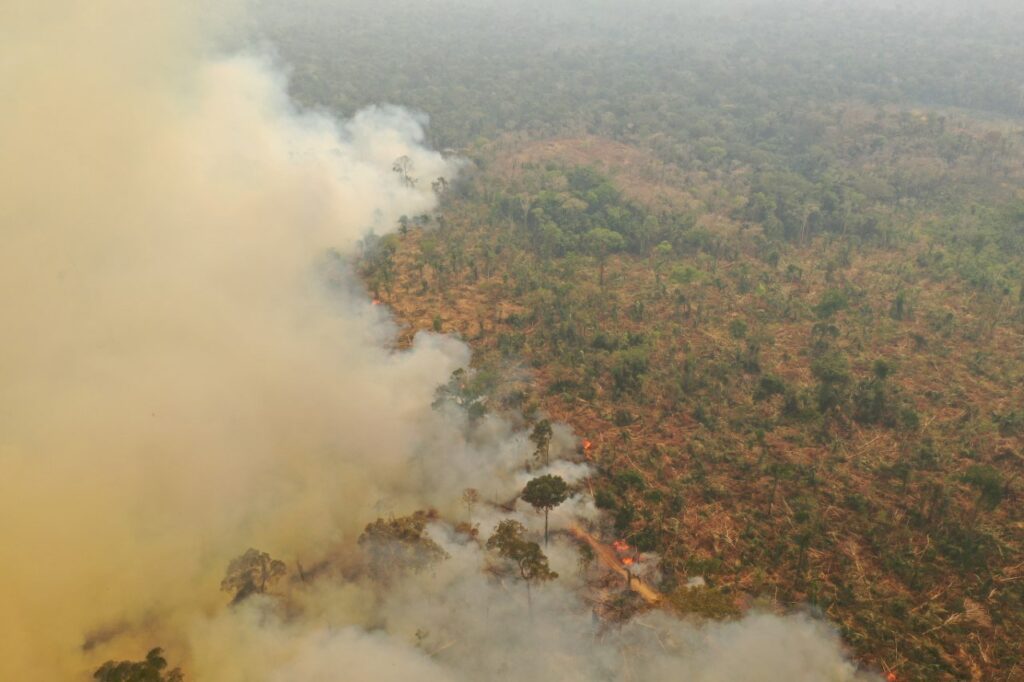
When the EU and the Mercosur countries reached a political agreement in December 2024, its compliance with the EU Deforestation Regulation was unclear. The regulation bans the import of deforestation-driven products to the EU, such as palm oil, beef, timber, coffee, cocoa, rubber, and soy.
The forest areas in the four Mercosur countries have decreased significantly in recent decades. Referring to the sustainable development chapter of the agreement, the Q&A in the Commission's press material says that the agreement "will also ensure concrete commitments to halt deforestation after 2030, in line with the National Determined contributions under the Paris agreement".
Does this mean that the Mercosur countries can continue to increase the area of deforested rain forest until 2030?
“The commitments on deforestation build on internationally agreed commitments such as the Sustainable Development Goals and the Glasgow Leaders’ Declaration on Forests committing to halting and reversing forest loss and land degradation by 2030,” a Commission spokesperson told The Brussels Times.
He added that achievement of these commitments will require action in the years leading up to 2030. The Glasgow Leaders' Declaration was signed by over 140 countries at COP26 in 2021, including the Mercosur countries.
A crucial issue in the deforestation regulation was the risk classification of trade partners. In May, the Commission adopted the Implementing Act on the country benchmarking system under the deforestation regulation.
Argentina, Brazil and Paraguay have been classified as standard risk countries for deforestation and Uruguay as low risk in the benchmarking implementing act, the spokesperson explained. This might have come as a surprise to NGOs that have monitored the deforestation in the Amazon.
“Having said this, the EU-Mercosur agreement will offer a valuable platform for discussing the implementation of the EUDR and, more broadly, actions undertaken to combat deforestation and forest degradation with Mercosur partners.”
