
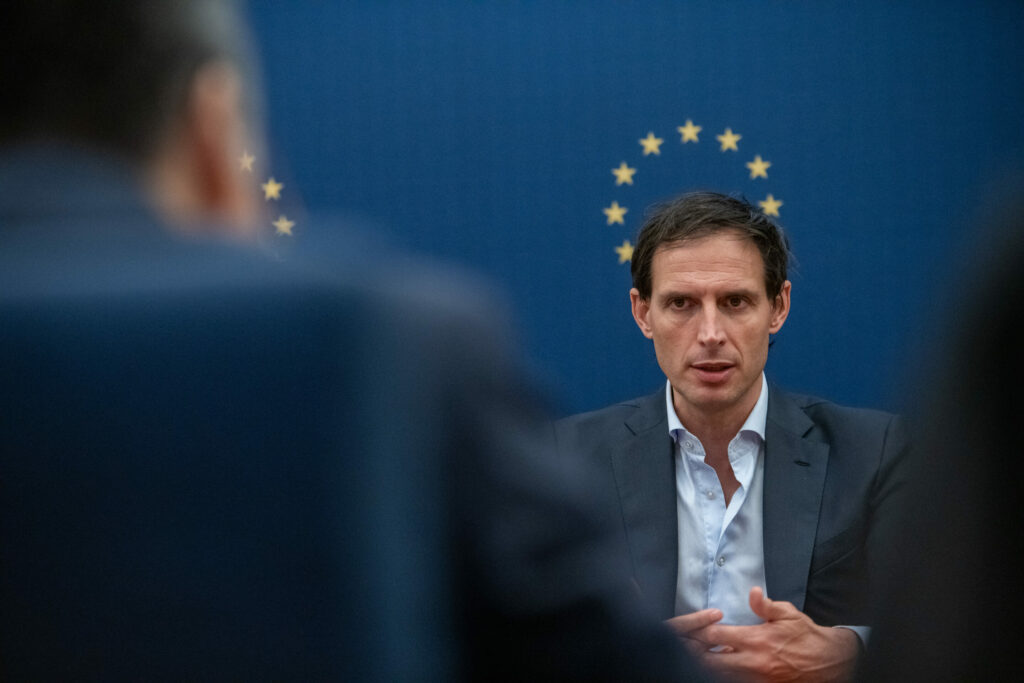
The European Union on Thursday criticised China’s new climate target as "clearly disappointing," after Beijing pledged to reduce its net greenhouse gas emissions by 7 to 10% by 2035.
The target, which is based on the year when China’s emissions are expected to peak—potentially 2025—falls "far short" of what is considered both achievable and necessary, according to EU Climate Commissioner Wopke Hoekstra.
In a statement, Hoekstra said: "This level of ambition is clearly disappointing and, given China’s significant carbon footprint, makes achieving global climate goals far more difficult."
This marks the first time the world’s largest polluter has committed to a quantified medium-term emissions reduction target, standing in contrast to recent climate backtracking by the United States.
However, the pledge reflects China’s traditionally cautious approach to targets and is seen as far less ambitious than what experts believe is needed to combat global warming effectively. Despite that, the statement underscores Beijing’s commitment to multilateral climate diplomacy.
Meanwhile, the United States’ withdrawal from the Paris Agreement leaves the EU navigating its own internal disagreements on climate goals.
In July, the European Commission proposed a 90% reduction in greenhouse gas emissions by 2040, allowing for some flexibility, although member states have struggled to unite behind this ambitious target.
This lack of consensus has sparked alternative proposals. On Thursday, Peter Liese, the European People’s Party (EPP) climate policy coordinator in the European Parliament, suggested considering an 87% or 88% reduction target.
He indicated that a majority in favour of such a goal might be achievable with support from major political parties including the EPP, S&D, Renew, and ECR, and possibly the Greens "if they are realistic and constructive". However, Liese noted that the EPP itself had not yet finalised its position.
Without an agreement on the legally binding 2040 climate target last week at the European Council, which would have shaped a complementary non-binding 2035 target under the Paris Agreement, the 27 Member States instead issued a general declaration.
This outlined a reduction range of 66.25% to 72.5% from 1990 levels. Liese argued that the upper figure—72.5%—should be the goal.
