
China’s recent expansion of export controls on rare earths has sent G7 capitals into a scramble.
The move exposed what was already long known in Brussels: over-reliance on Beijing’s raw materials threatens the EU’s strategic sectors and the technologies that keep them running, such as permanent magnets (also known as neodymium magnets), which have applications across electric vehicles, wind turbines, energy storage systems, and aerospace.
Now, the EU is drafting a plan to free itself from dependence on Chinese raw materials, as President Ursula von der Leyen announced in Strasbourg.
As Brussels looks for solutions, it should take a page from one of its like-minded allies, Japan. Both Brussels and Tokyo face the same uncomfortable truth: their industrial leadership depends on materials they do not control. That shared vulnerability also creates an opening to turn interdependence into strength.
Lessons from Japan
Japan recognised the risks of over-reliance on China earlier than the EU. The 2010 diplomatic dispute that disrupted rare earth exports to Japan served as a wake-up call, prompting Tokyo to make the diversification of its supply chains a national priority.
Since then, Japan has focused on the development of permanent magnet alternatives that can perform at a comparable level using reduced amounts of neodymium and heavy rare earths.
Simultaneously, Japanese firms are diversifying sourcing and processing operations abroad, securing access to rare earths from outside China, and building domestic processing capacity. In October, Japanese firm Sojitz began importing heavy rare earths from Australia – the first time Japan sources outside of China.
While these measures are not yet fully scalable, together they make Japan’s industrial ecosystem markedly more resilient than it was a decade ago.
European approach?
The EU faces a similar predicament. While it is strong in industries dependent on permanent magnets, its supply chains remain dangerously exposed, both through direct imports from China and indirectly via third-country intermediaries.
The European Commission has started to tackle this through the Critical Raw Materials Act, designed to secure and diversify access to raw materials across the bloc. It is also working to establish new Clean Trade and Investment Partnerships to build secure and sustainable supply chains with trusted partners – the first such agreement was signed with South Africa this year.
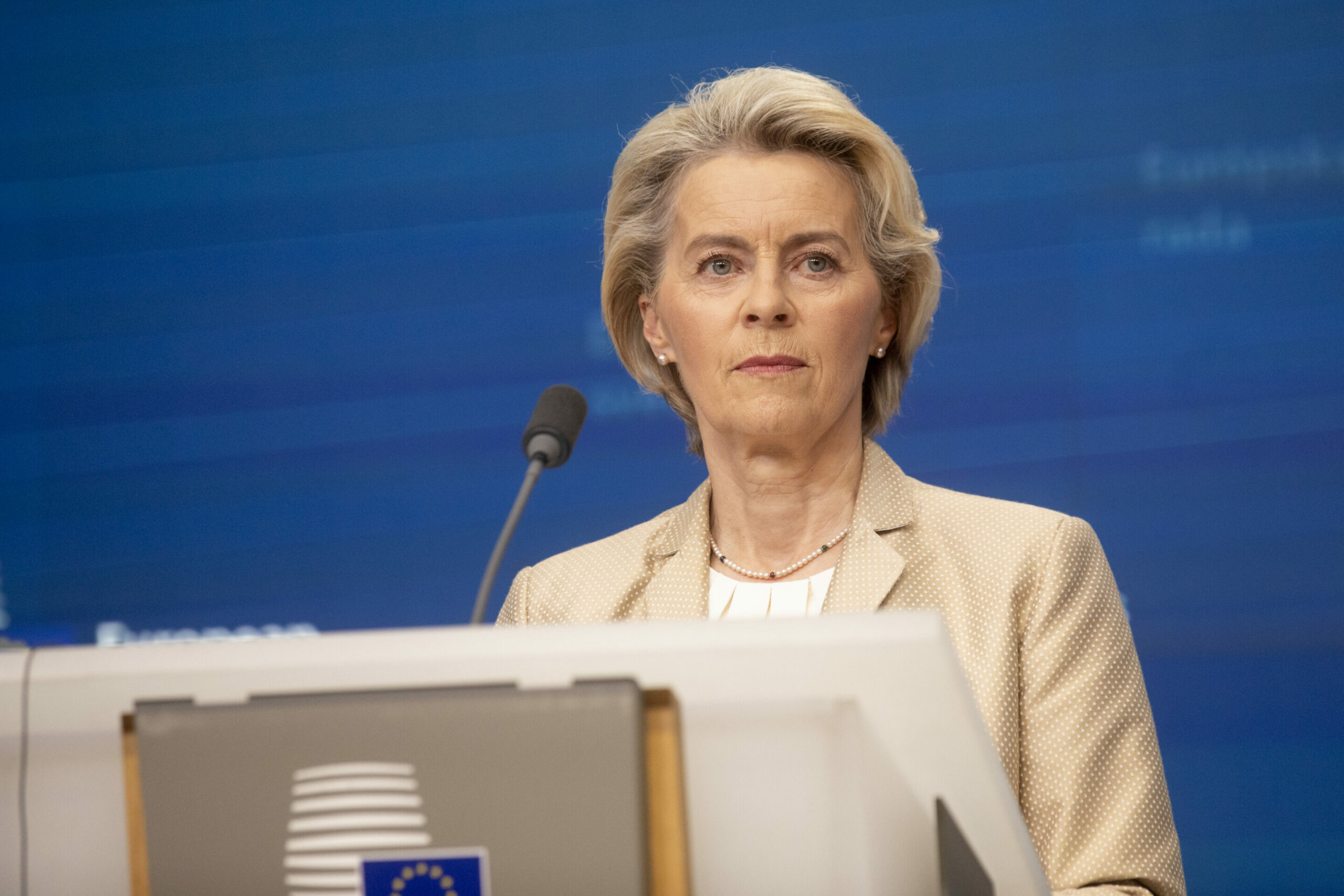
The European Union must redefine its global role amid shifting alliances and emerging powers. Credit: Belga
On the production side, the EU is also re-shoring parts of the magnet value chain.
A new permanent magnet plant is under construction in Estonia, backed by the Just Transition Fund and operated by Canada’s NEO Performance Materials, using Australia-sourced neodymium. These are promising steps toward greater autonomy, but Europe must avoid turning its localisation drive into a substitute for collaboration with allies like Japan.
Closer EU-Japan coordination
The measures taken by the EU and Japan are still in the early stages of providing real supply security.
Demand for rare earths is projected to surge as electric mobility and renewable energy scale up, leaving Tokyo and Brussels reliant on imports for years to come. To move towards resilience, they must build durable technological and industrial partnerships abroad.

Tokyo during the EU-Japan summit on 23 July 2025. Credit: EU
Industry Commissioner Stéphane Séjourné recently acknowledged that the EU should emulate Japan’s strategic foresight in planning industrial demand if it truly wants to reduce dependencies.
Closer EU-Japan coordination could combine their complementary strengths: Japan’s expertise in rare-earth-free technologies and the EU’s market scale, regulatory capacity, and investment power.
A partnership gaining traction
The allies already cooperate extensively on clean energy and digital innovation, providing a blueprint for work on permanent magnet technologies and rare earth alternatives.
In July 2025, the European Commission and Japan’s Organisation for Metals and Energy Security (JOGMEC) signed an agreement to coordinate critical raw material supply chains and joint investments. This cooperation extends to the private sector: InnoEnergy and JETRO, along with Japan’s GX Acceleration Agency, have launched a clean tech collaboration to channel investment into batteries, hydrogen, and next-generation solar technologies.
The EU and Japan are also active in the Minerals Security Partnership, a multilateral platform led by the EU, US, and Japan, whose goal is to co-invest in critical raw material projects in third countries. The Commission’s new EU Critical Raw Materials Centre, part of the Clean Industrial Deal, could become a natural hub for this cooperation, offering a mechanism for joint procurement with like-minded partners like Japan.
Shared goals
At the October plenary in Strasbourg, President von der Leyen told parliamentarians that "a crisis in the supply of critical raw materials is no longer a distant risk – it is on our doorstep."
After China’s export controls on rare earths made enough waves to prompt a new EU proposal on critical raw materials, Brussels is moving fast.
But it should not move on its own; if joined up, Brussels and Tokyo can set a global benchmark for how advanced economies manage critical dependencies without retreating into protectionism, on permanent magnets and beyond.
Clyde Kull is the former Estonian Ambassador to the EU.
