
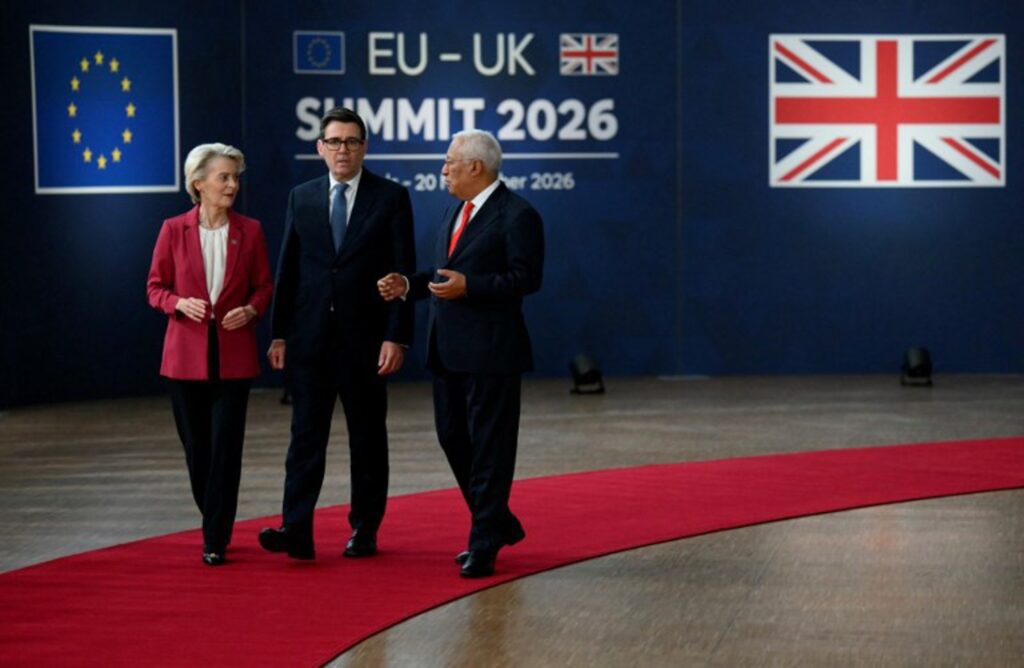
The European Union wants EU students to pay lower tuition fees to study in the United Kingdom, with both parties aiming to reach a deal on this within six months.
The plan was announced ahead of the EU-UK summit in Brussels, where leaders are seeking to reset relations more than a decade after the Brexit referendum.
British Prime Minister Andy Burnham was in Brussels on Friday for his first visit since taking office in July and for the second EU-UK summit since Brexit.
Talks on Friday focused on a package covering three main areas: cutting customs checks and paperwork for animal and plant products, linking the two sides’ emissions trading systems, and improving youth mobility.
Under the youth mobility strand, the two sides have already agreed in principle to issue 100,000 visas a year for young people from both the EU and the UK to work or study.
Related News
- 'Communities change history': A snapshot of Brazil in Saint-Gilles
- Boris of Brussels: The new minister-president on expats, locals, and the city's identity crisis
- The rise of Bancontact: How Belgium found itself at the forefront a new digital payment era
However, no agreement has yet been reached on tuition fees for students. According to a European source, those negotiations will continue in parallel with the signing of the other agreements.
Before any of the agreements can take effect, legal procedures will still have to be completed. The EU is aiming for the deal to simplify imports and exports of animal and plant products to enter into force in March 2028.
As part of that agreement, the UK would also gain access to certain EU food safety meetings, although without voting rights.
According to the BBC, Downing Street said both sides would continue talking in parallel on a small number of outstanding issues.
EU students in the UK currently pay higher tuition fees, as the EU wants to restore the pre-Brexit system under which they paid the same rates as domestic students.
