
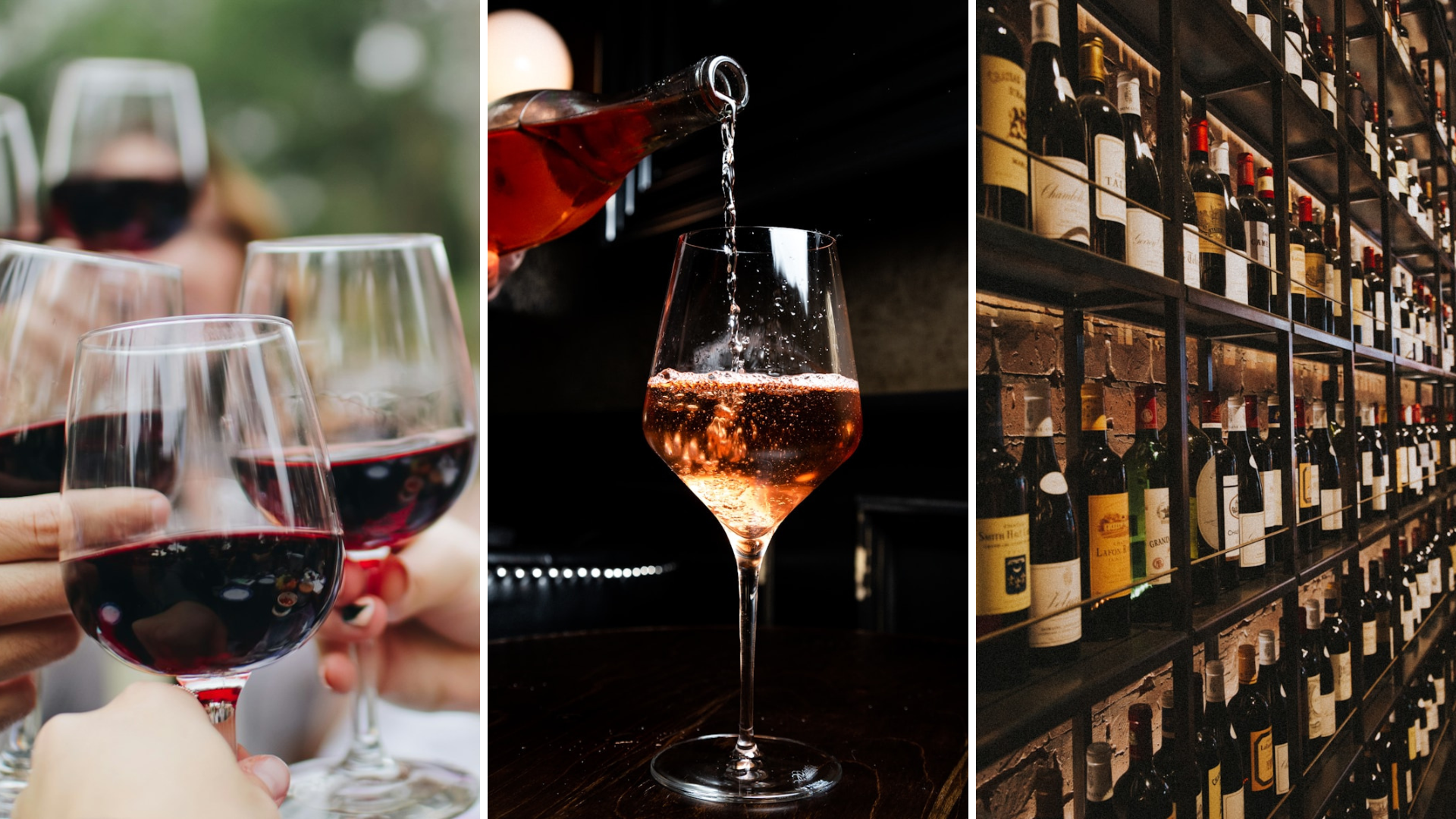
The headlines in the nineties and the noughties were pretty clear: go on, have that glass of wine, it's good for your heart, they declared. Weren’t we all very happy to oblige?
But then, in recent years, there has been a long, awkward spell of humming and hawing, and the tune has started to change. "A glass of wine a day" is now prefaced with, "Hmm...actually...maybe...it depends." No wonder everyone and their dog is confused.
Le paradoxe français
If we had to trace where it all started, we’d probably land in the early nineties, when researchers noticed something rather puzzling: France had some of the highest wine consumption in the world, yet surprisingly low rates of heart disease-related deaths. One influential study published in The Lancet medical journal in 1994 compared 21 affluent countries and again poured more fuel onto the belief that France’s love affair with wine might be the secret behind its healthy hearts.
The inevitable conclusion was drawn: c’est le paradoxe!
This immediately captured the imagination of Americans, already fascinated by the romance of Europe, particularly that of les Français. What was it that made wine an elixir? Speculation abounded: perhaps the alcohol in the wine raised the levels of 'good' cholesterol? Or maybe the polyphenols in the grapes, reduced inflammation?
After this ‘mystery’ featured on a US television news programme, French wine sales exploded. And so, the 'French Paradox' became firmly woven into the cultural imagination, living on for another 30 years.
That is, until one day someone said: hang on a minute. The French don’t just have wine. They also eat more vegetables, more fruit, smaller portions, less ultra-processed food, spend longer at the table, snack less and walk more. When these other pieces of the lifestyle puzzle are considered, the magical protective power of wine starts to look far less convincing.
A modern reappraisal
Which brings us to today. The scientific pendulum has swung. Current evidence suggests that alcohol, whether wine or any other form, does not improve heart health or overall health. In fact, the protective effect once attributed to moderate drinking completely pales next to other lifestyle factors. And even worse, more recent research has shown that even low levels of alcohol consumption may increase the risk of certain health problems, particularly some cancers.
In the main, it is the poor old liver, our largest internal organ, that gets the brunt of alcohol. I am perennially fascinated by this reddish-brown organ, tucked away under our ribs on the upper right side of our abdomen, just beneath the diaphragm and roughly the size of a football (I know! How can that be?!).
The liver is a bit like the housekeeping department of our body; constantly sorting, storing, processing and cleaning up. But that’s not all. It is also busy regulating our blood sugar, processing hormones, dealing with fats, making proteins that help our blood clot, and filtering out all sorts of substances our body would rather not keep, such as toxins from pollution. The poor thing already has enough on its plate, and then along comes alcohol.
Unlike protein, fat or carbohydrates, alcohol is not a nutrient. Our body treats it as a toxin, and the liver promptly puts drops everything else to deal with it first. The liver puts the engine into top gear and starts chug-chug-chugging to convert the ethanol in the wine into acetaldehyde, an unpleasant little character capable of damaging cells and DNA, which is one of the reasons alcohol is linked to several cancers. Thankfully, the liver quickly converts acetaldehyde into acetate, which can eventually be used for energy or broken down into carbon dioxide and water. But there are limits.
Most people can process roughly one standard drink per hour, give or take, depending on everything from genetics and sex to age and liver health. If you drink faster than your liver can keep up, ethanol and acetaldehyde simply hang around for longer, affecting your judgement, coordination, sleep and, inevitably, how you feel the next day. Neither coffee, nor a banana, nor any other hangover 'magic cure' will speed up the process. And the more regular the drinking, the more damage to the cells and DNA, and the more risk of disease.
Helping your liver by drinking in moderation
So yes, these days I think of my liver as my hardworking little (big) housemate, and I choose to drink with my eyes open. Essentially, I pause before I pour, and I ask: am I drinking on automatic? Does the cork come out each time I sit on the sofa? I don’t force myself to stop – that’s unachievable. So what I try to do is tweak the cue that starts the routine. For example, sometimes I pour sparkling water or water kefir in my favourite wine glass, so I have the same ritual without the alcohol.
This is not about scaremongering. If we have a glass every now and then, there is no need to feel guilty, especially when it is part of connection, or a special event, such as the occasional glass of wine shared with friends around a table. Let’s face it, we are on Earth for only a short while, and we are allowed to let our hair down every now and again.
What’s crucial is that we look at the bigger picture. How does my overall lifestyle look? Am I moving regularly, sleeping well, eating very little junk? Do I have a good network of friends and make time to socialise? Then that occasional glass of wine is not happening in isolation. It sits within a much bigger picture.
The bottom line is that the real ingredients of long-term health are not to be found in a bottle of Médoc. They are found in the conversation around the table, the laughter on the terrace, the evening walk home and the relationships that make life meaningful.
For this reason, your initial question has to be split in two: Is wine good for your body? The answer is no. Can wine good be occasionally good for my overall wellbeing – the answer is: maybe, in small doses.
If you choose to drink, keep it occasional and modest. Enjoy it with food, alternate with water, and remember that alcohol is more likely to disrupt sleep when it comes later in the evening. Let it remain a pleasure, not a daily ritual and above all drink because you enjoy the experience and understand the trade-off, not because someone once told you it was good for your heart.
