
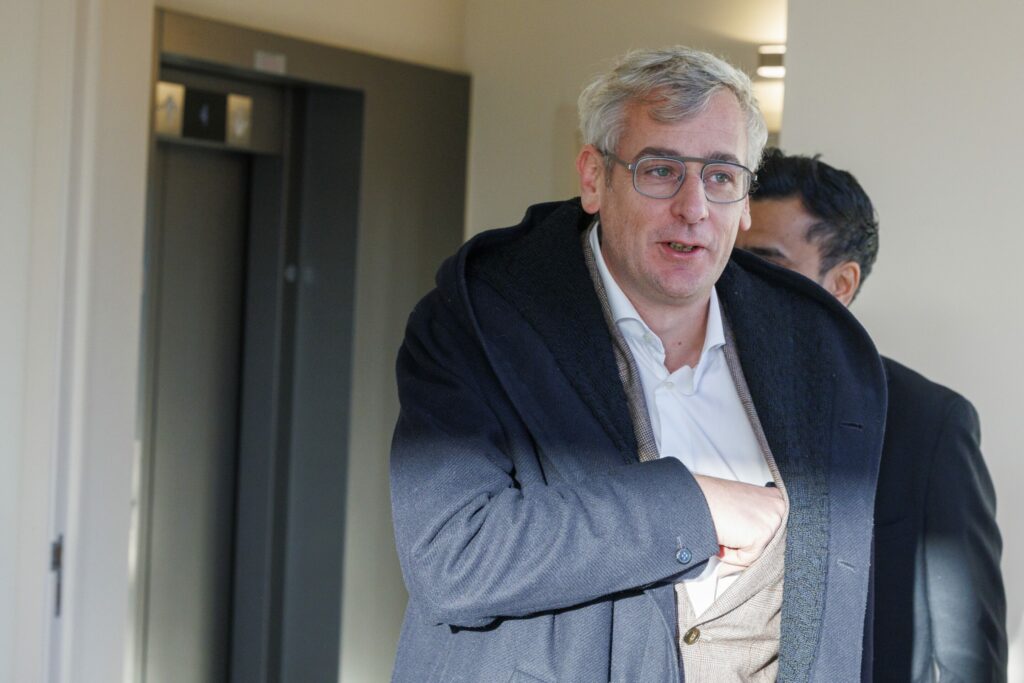
Dirk De Smedt (Open VLD), the newly appointed Brussels Budget Minister, has warned that the region is facing a "crisis of responsibility" as it struggles with growing financial pressures.
The former director of Brussels Finance, who also serves as negotiator Frédéric De Gucht’s sherpa in ongoing coalition talks, was sworn in on Friday.
"I'm absolutely looking forward to this ministerial post; otherwise, I wouldn't have taken it," De Smedt told BRUZZ after his appointment. "There's work to be done, I enjoy working, and above all, it's necessary."
A veteran of the city's finances, De Smedt said he was surprised by the state of Brussels' accounts. "I’m still shocked by what the tables sometimes show. Investment programmes approved without proper financing, or the metro project costing three times more than originally estimated," he said. "For me, every euro you spend must count. I’m old-school. We’re going for budgetary orthodoxy."
De Smedt replaces Sven Gatz, who resigned earlier this month after admitting he had failed to rein in the city’s spending. "A Minister of the Budget is never popular among ministers," De Smedt said. "He has to watch the pennies while others get to spend them. But I’m quite good at saying no."
He added that Brussels’s finances could no longer be allowed to drift. "The situation doesn’t allow for just minding the shop. The finances need to be put in order quickly," he said.
De Smedt urged his government colleagues to take collective responsibility. "If, as Minister of Budget, you’re constantly confronted with a fait accompli, you have to be assertive and collectively enforce a sense of responsibility," he said. "I fear that the multiple crises the region has faced in recent years have led to an erosion of norms and greater flexibility regarding budgetary orthodoxy. We’re now facing a crisis of responsibility."
As caretaker minister, De Smedt cannot introduce new policies and is expected to hold the position only until a new government is formed. However, he remains deeply involved in the coalition talks as De Gucht’s financial adviser.
"I believe it’s important to have a dialogue between the current financial management and the negotiators shaping the region’s future," he said. On claims that 80 per cent of the budget negotiations are already complete, De Smedt remained cautious. "There’s either an agreement on everything or there’s an agreement on nothing," he said. "I look forward to a global agreement on all areas, but I won’t make percentage estimates."
