
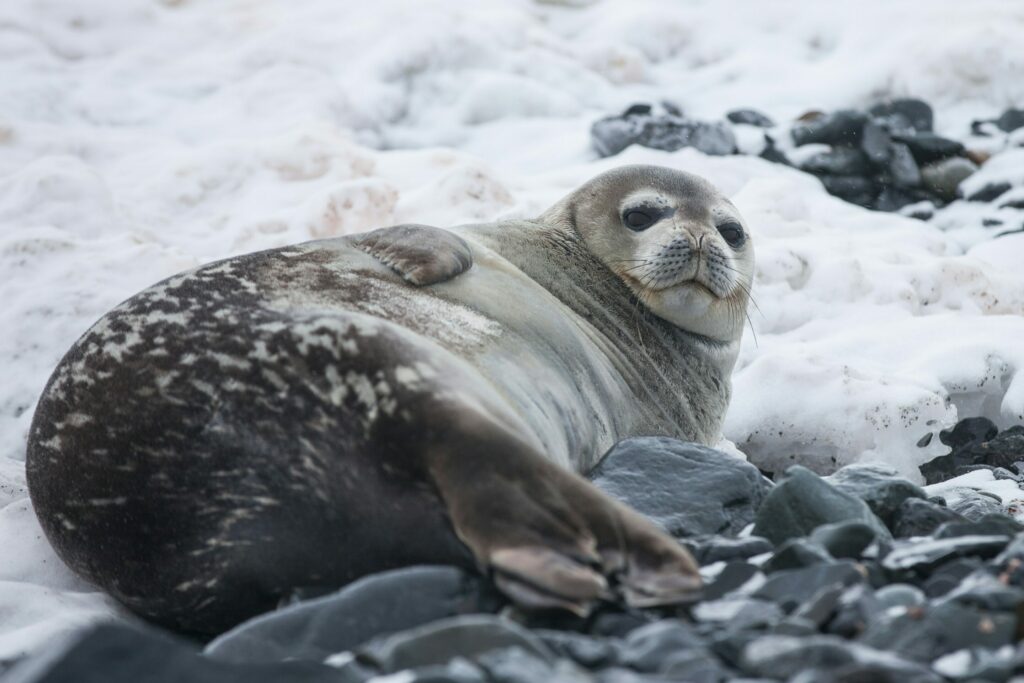
Seal pups adjust their calls to match those of other pups around them and even wait their turn before vocalising, according to new research by Belgian biologist Koen de Reus.
De Reus, affiliated with the Max Planck Institute, conducted the research as part of his PhD at the Vrije Universiteit Brussel (VUB) and Radboud University in Nijmegen, which he defended on 20 February.
"In the wild, pups call for their mother, for example, when they are hungry or separated," De Reus explained. Each pup has a unique vocal signature, allowing its mother to recognise and locate it after hunting.
However, observations of pups at the Seal Centre Pieterburen in the Netherlands showed their calls gradually became more similar over time, comparable to regional accents in humans.
Researchers also found the pups waited for one another to finish calling before responding.
"Just like humans, who wait until the other has finished speaking," De Reus said. "Seals appear to be much more social animals than we previously thought."
He said the findings challenge the idea that complex communication is unique to humans.
"People often think language is what distinguishes us from animals," De Reus said. "I wanted to show that we are not as unique as we think. Every species has its own communication system, and some of its features resemble ours."
He added that comparing these systems could help scientists better understand the evolution of communication, including human language.
