
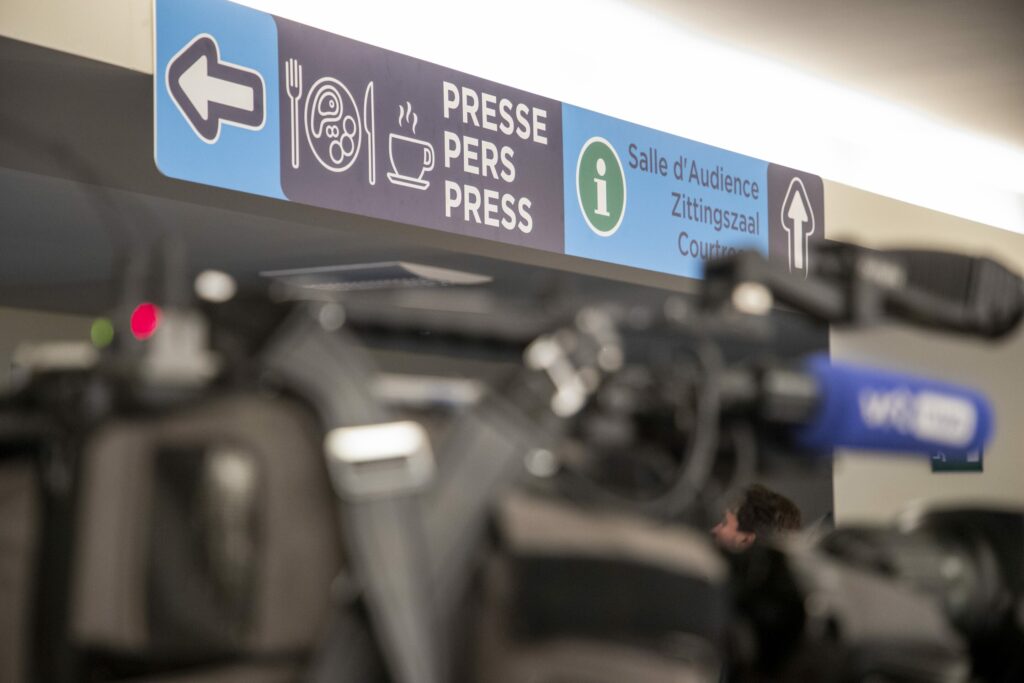
Ten years after the Brussels attacks, journalists are looking back at the unprecedented flood of images that reshaped how newsrooms report on terror.
The 22 March 2016 bombings marked a turning point, as reporters were confronted not only with breaking news pressures, but with a surge of raw, often unverified visuals circulating online, many filmed by survivors rather than professional crews.
"In all international attacks in democratic countries, we have seen issues linked to truth," said Benoît Grevisse, head of the Louvain School of Journalism. "A huge amount of information was coming in, especially images via social media, and many contained errors."
Some footage from Brussels Airport was later reused to illustrate the Istanbul Atatürk attack, while other clips falsely attributed to Maelbeek actually came from earlier incidents in Moscow.
Jean-Pierre Jacqmin, RTBF's head of news, said newsrooms were "quickly bombarded with false images", warning of attempts to manipulate media coverage. "This is part of what we call hybrid warfare, and we must remain vigilant," he said.
Beyond verification, journalists also faced difficult editorial choices. "The challenge is deciding what to show and what not to show," Grevisse noted, pointing to ethical questions around dignity, consent and the right to one's image.
According to Jacqmin, the attacks forced a deeper reflection within newsrooms, building on earlier experiences from Paris, Verviers and the rise of Islamic State propaganda.
"Showing mutilated bodies brings nothing, neither for victims nor the public," he said. "What matters is informing usefully, not sensationally."
A decade on, the legacy of the Brussels attacks continues to shape journalistic standards, drawing a clearer line between verified reporting and the chaos of unfiltered content online.
