
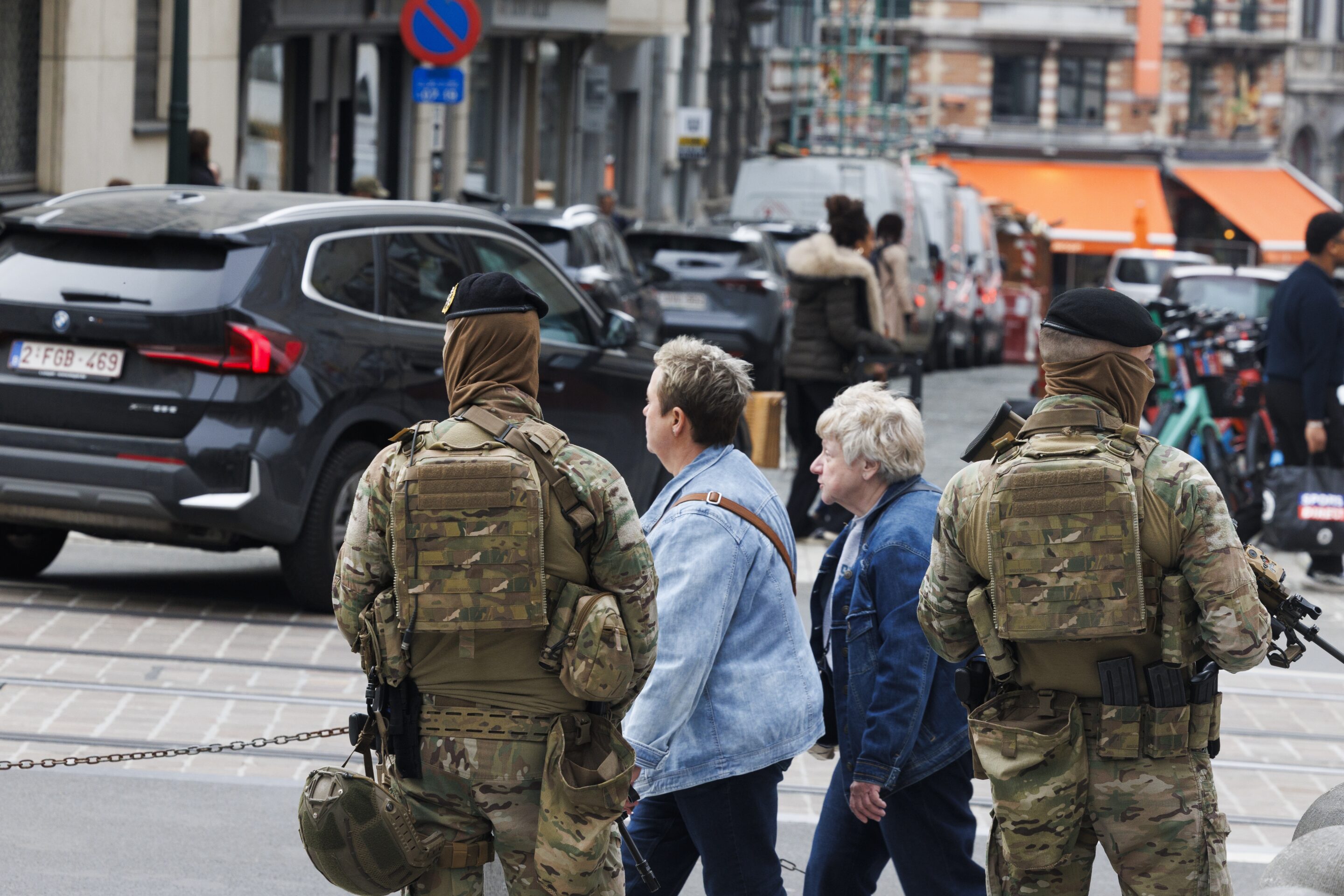
With antisemitic incidents rising in Europe, members of the small Jewish community in Brussels now have to be escorted to and from their synagogues by soldiers.
This month alone, there has been a spate of attacks against Jewish sites across the continent amid the ongoing war in the Middle East. On 6 March, four men were arrested in the UK, suspected of gathering information on synagogues and individual Jewish people, allegedly acting on behalf of Iranian intelligence.
In the following days, four youths were arrested on suspicion of exploding a device outside a synagogue in Rotterdam. The next day, a bomber struck a Jewish school in Amsterdam. On 9 March, the Liège synagogue was the target of a blast that damaged windows across the street.
In response to these incidents, on 16 March, Belgium's Defence Minister Theo Francken (N-VA) and Interior Minister Bernard Quintin (MR) announced the deployment of soldiers to monitor certain locations frequented by the Jewish community, particularly synagogues and schools.
The chief rabbi of Brussels, Albert Guigui, told The Brussels Times that "given the geopolitical situation we are facing, it is a very good thing that security around synagogues is being strengthened."
But what does the rest of the community think about the security situation in Belgium, and what is the daily reality of life in Belgium for ordinary Jewish people?
Attitudes towards the Jewish community in Brussels
The latest report published by the Belgian independent public institution that fights discrimination, Unia, reveals a staggering surge in antisemitism across the country, mainly after the events of 7 October 2023 and the subsequent war in Gaza. In total, 232 antisemitic acts were recorded in 2025, which is a rise of 80% in comparison to 2024, when 129 cases were documented.
At the request of Jonathas Institute, a centre for studies and actions against antisemitism in Belgium, an opinion poll was carried out by Ipsos in July, focusing exclusively on the capital.
The results show that several antisemitic stereotypes "inherited from the past" are still held by the Brussels population. It found that 40% of Brussels respondents agreed with the statement that Jews control the financial and banking sectors, and one in four even held them responsible for various economic crises.
One in five (22%) of respondents agreed with the statement that Jews are "not Belgians like the others," while 21% consider Jews to be an "unassimilable race."
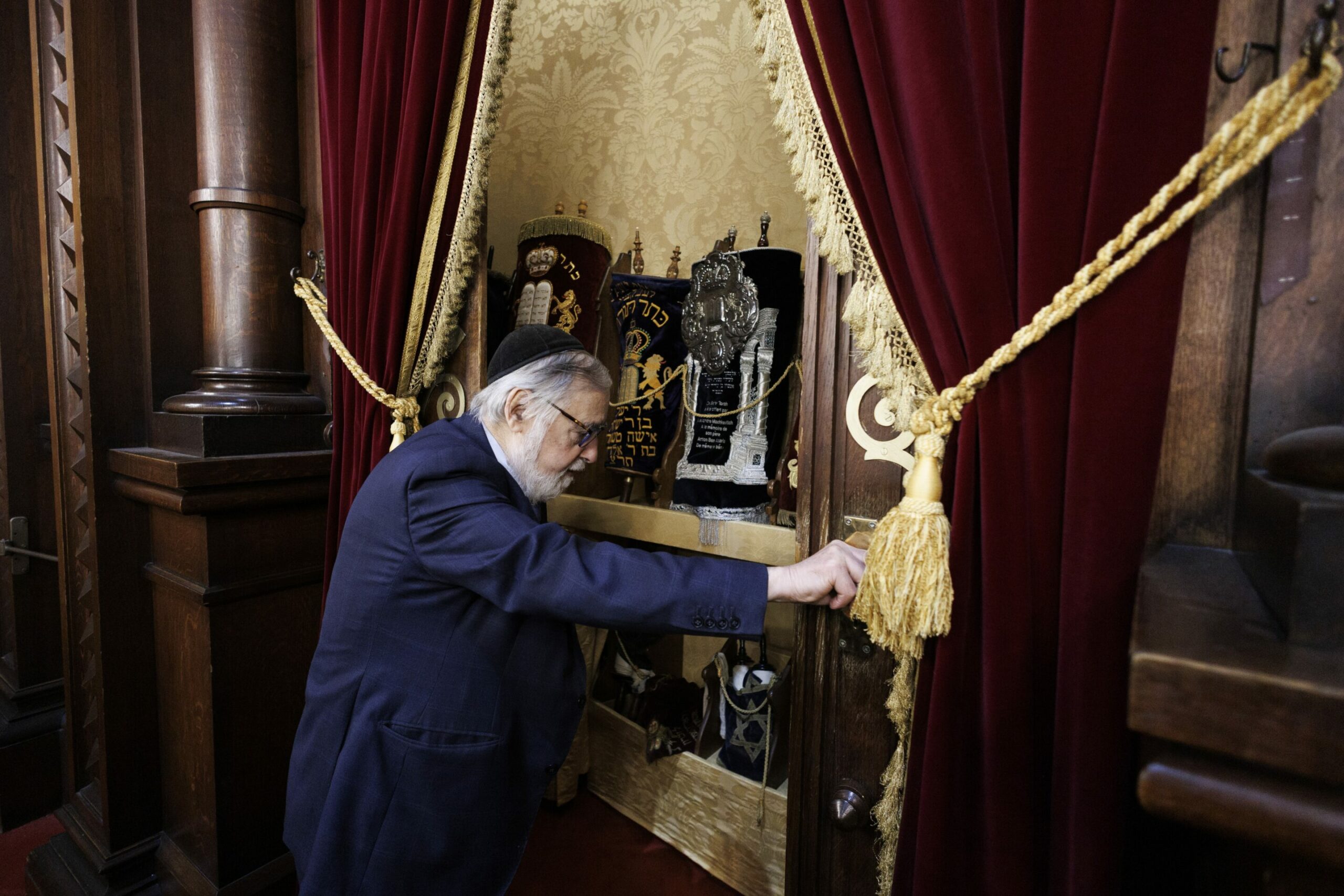
Chief Rabbi Albert Guigui pictured during a visit to the Great Synagogue of Europe (formerly known as the Great Synagogue of Brussels) in relation to the recent deployment of troops. Credit: Belga/Nicolas Maeterlinck.
Life in Brussels
Avi Tawil, Director of the European Jewish Community Centre (EJCC) and long-time Brussels resident, laments recent trends within his community.
He told The Brussels Times that people are "becoming increasingly wary" of going to synagogue on Saturdays. Some, he says, do not come anymore. He claims that people remove any visible signs of Jewishness – no David star necklaces, no kippahs – and make a forced effort to melt into the crowd.
Tawil describes the fear of "becoming a target" once a Jewish person sets foot outside in Brussels. "Even those who come to the synagogues, although they do not express it openly, are thinking about exit doors and windows while worshipping," he said.
Choosing to participate in Jewish community life in Brussels is a dangerous activity, he added. "Maybe like bungee jumping."
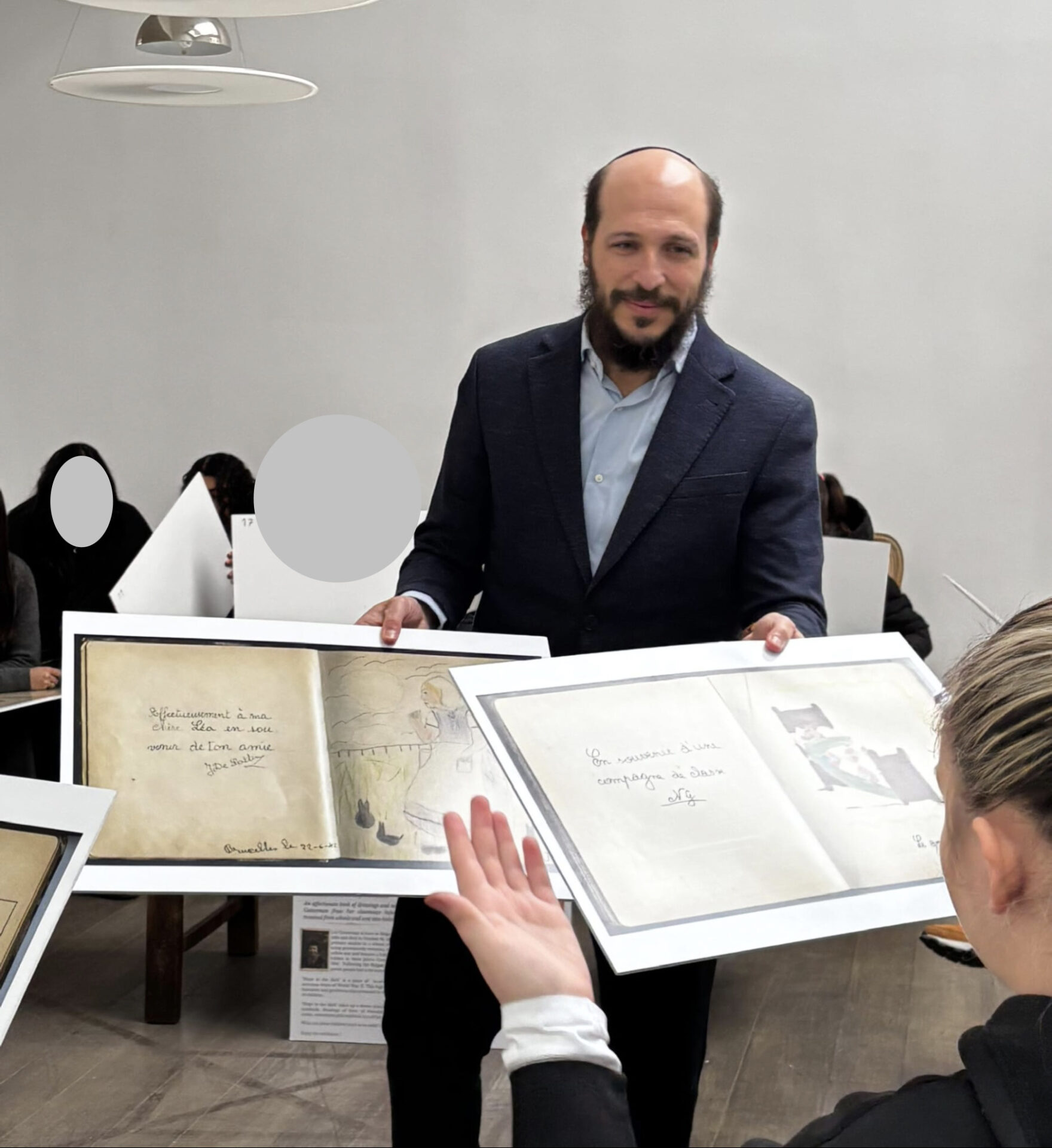
"I am Belgian. I pay taxes. I own my home here. I feel responsible for every person walking in my city, regardless of their background or the school they attend," says Avi Tawil. Credit: The Brussels Times
Tawil himself says he has been insulted "many, many, many" times and has even been physically attacked. His wife, Nehama, told us that 22 years ago, when she arrived in Brussels, the first time she set foot in Grand Place with her baby, she was assaulted.
"I was holding him in the baby carrier. A man aggressively approached me and said, 'You are Jewish, I can tell, your husband is wearing a kippah, I hope your daughter dies,' and spat on me. That was, in a way, my welcome to Brussels."
'My children will not stay here'
The Tawils are concerned about the "normalisation" of violence in society. "We do not buy toy guns or anything normalising violence, and yet, our children are growing up seeing soldiers and weapons daily; it becomes normal, even though it goes against our values," said Nehama.
"As a mother, if you have a child who goes to school in Brussels and you are offered more security, in the current climate, you can only be relieved," she added. "But at the same time, it is very sad that our children have to go through what feels like a fortress just to enter their school."
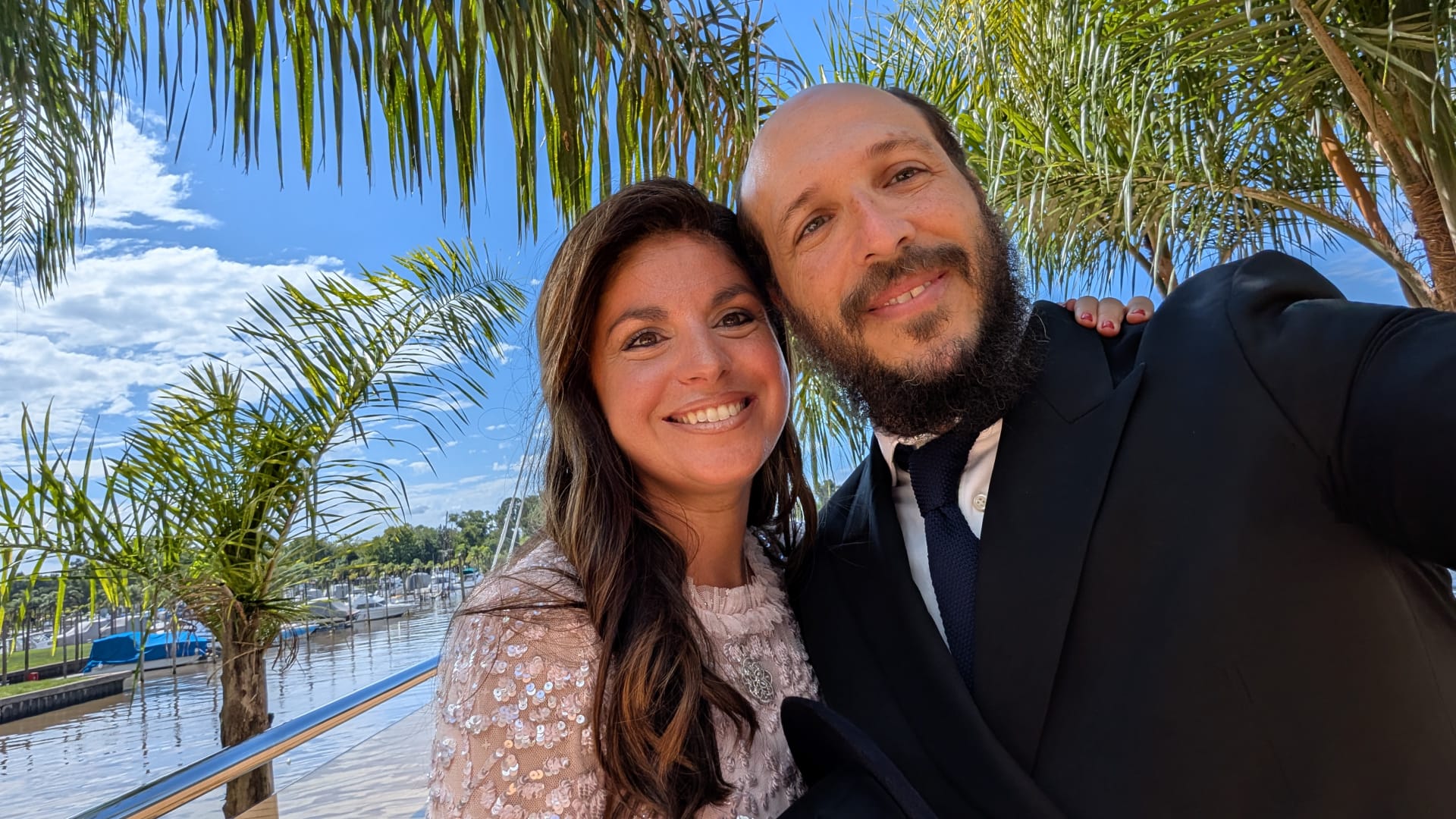
The Tawils. Credit : Handout
Nehama's growing anxiety about the future has led her to rethink her family's decision to remain in Brussels. "Before, when people asked me if I liked Brussels, I would say I loved it. Now I struggle to say that. It does not sound true anymore," she said.
What is frustrating to her is what she sees as the lack of nuance in public debate and human consideration that has driven some of her children to leave the country. "My four children will not live here. They have already left or are planning to leave," she said.
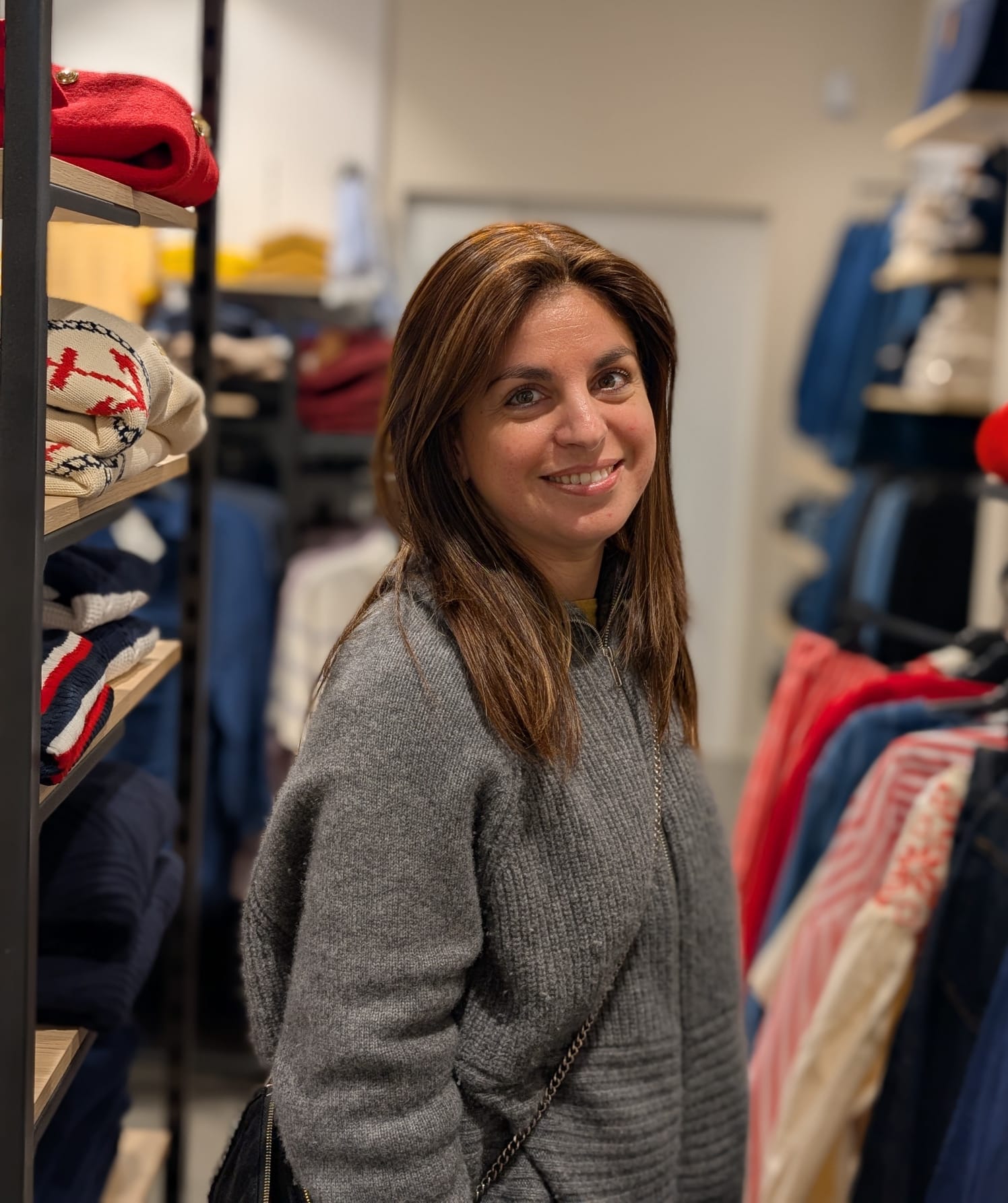
"There have been so many incidents, so many demonstrations, and sometimes media narratives that I find deeply troubling," said Nehama. Credit: Handout
Maurice Tal, shop owner and head of the Moroccan Jewish community in Brussels, bluntly told The Brussels Times that it is easier to walk around wearing a kippah in Morocco than in Brussels.
On his desk sits the Moroccan flag next to the Israeli one, and he thanks the Moroccan king for maintaining a clear message about Jewish safety. "The King has always insisted that Jews must be safe. He repeated it recently: no one should touch a Jew," he said.
The Jewish community in Brussels is small and less visible, Tal explains – not like the Orthodox community in the Jewish quarter in Antwerp, where they have been settled since the Middle Ages.
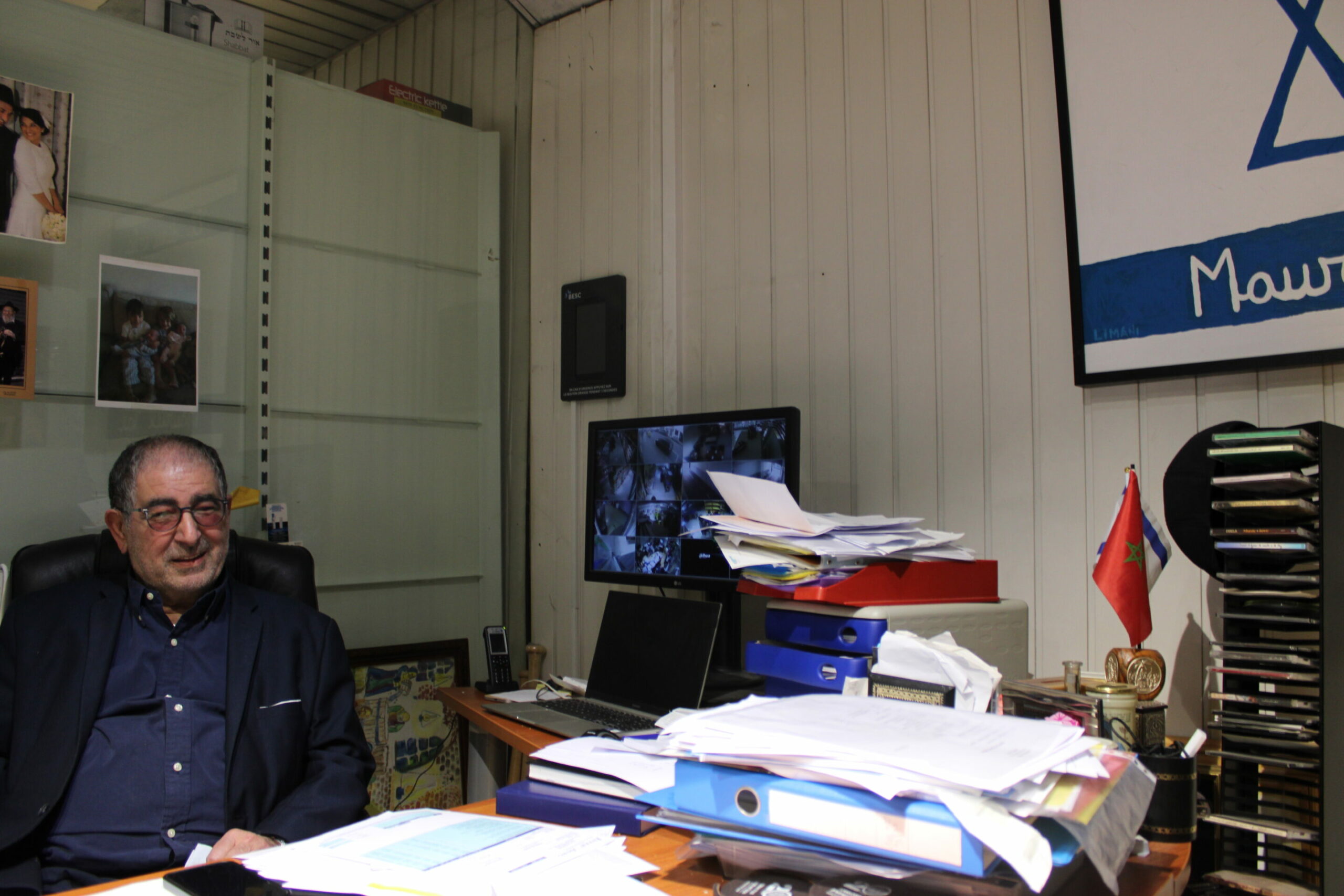
"Some people avoid speaking Hebrew in the street because others have been attacked just for being heard speaking Hebrew," says Maurice Tal. Credit: The Brussels Times/Anas El Baye
As a result, the scale of Jewish presence is often misunderstood, he argues, but when their presence is noticed in certain areas of the capital, it can be risky.
"It depends on where you go," said Tal. "If I go to Brussels-Midi wearing a kippah, I am not saying I would risk my life, but I might get insulted. That is the problem."
"The conflict in the Middle East is always imported here. And because people are badly informed, they confuse everything: Jew, Israeli, Jew, Israeli. For them, a Jew is automatically an Israeli."
'Education has to be at the heart of the response'
Based on its own research, the Jonathas Institute has two key recommendations. Firstly, it recommends strengthening historical education, digital literacy, and vigilance against discourse that justifies symbolic or physical attacks.
Secondly, the institute also advocates for the formalisation of the International Holocaust Remembrance Alliance's (IHRA) working definition of antisemitism to better distinguish "legitimate criticism of Israel" from "forms of anti-Zionism that revive antisemitic patterns."
However, the IHRA's definition is highly controversial. In April 2023, more than 100 Israeli and international civil society groups warned UN Secretary-General António Guterres against adopting it, saying that it is being "misused" to protect Israel from legitimate criticism.
However, the IHRA's definition has been adopted by almost all EU Member States, including Belgium.
Robin Sclafani, the executive director of CEJI-A Jewish Contribution to an Inclusive Europe, is developing and delivering anti-bias training programmes for various target groups. She told The Brussels Times that proper education is key.
"Antisemitism is antisemitism in any context," she said. "Whether it appears in relation to Israel, Holocaust denial, religious practice or the way people dress, the question is always whether the rhetoric or behaviour is antisemitic."
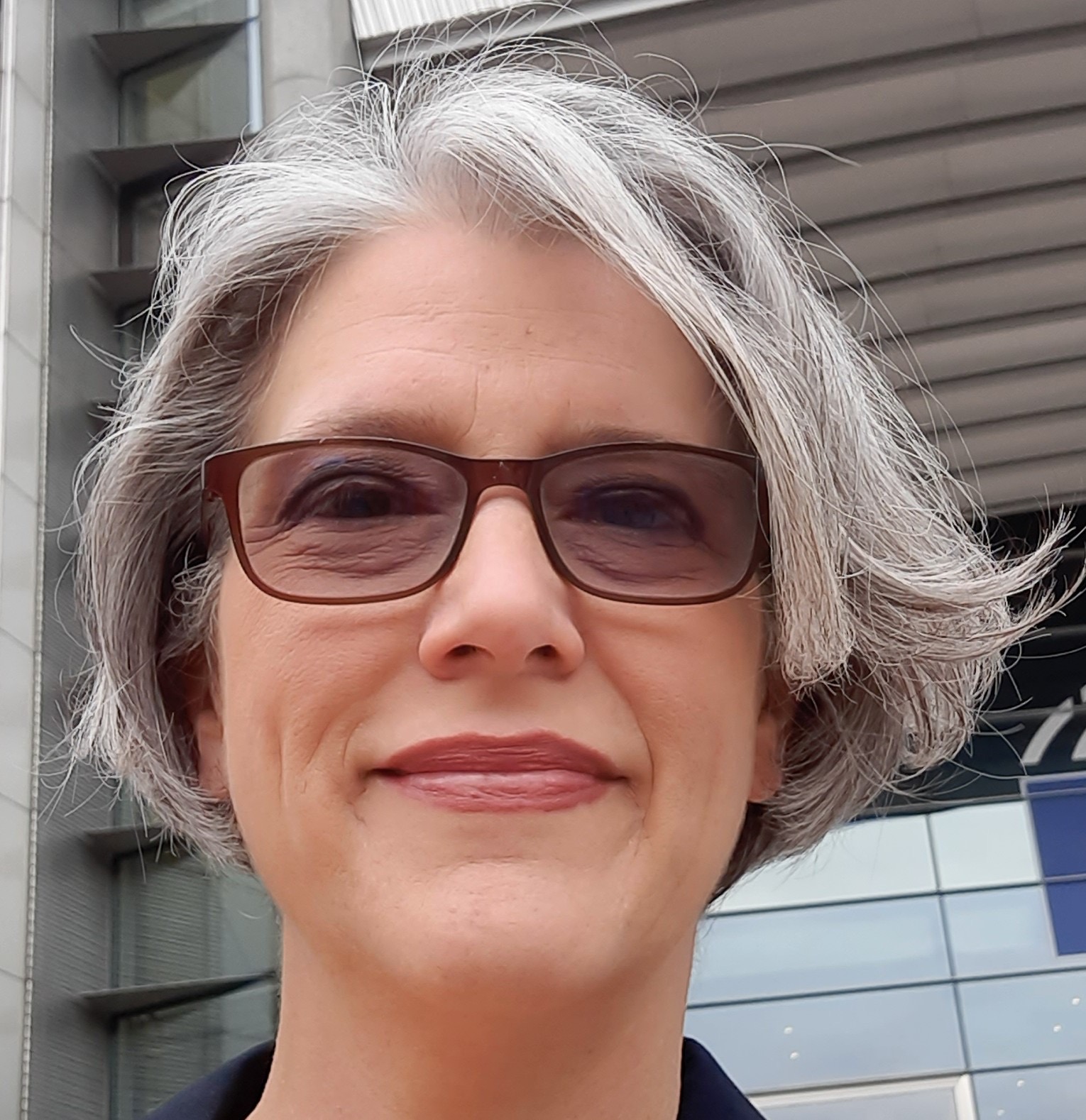
Robin Sclafani uses training and facilitation as methods for transforming social conflict into opportunities for social cohesion. Originally from New York City, she came to Brussels in 1998 as a Fulbright Scholar to the European Union. Credit: Handout.
"There is a lot of distortion, a lot of malevolent actors, and a lot of ways in which information is manipulated," she said. "That often blends with tropes and coded messages which evoke antisemitic ideas people have absorbed through culture, religion or language, sometimes explicitly and sometimes by omission."
She believes one of the biggest failures in current public discourse is that Jewish identity is too often reduced to conflict, victimhood or Israel.
"In our trainings, even Jewish participants sometimes come out saying that, before this, the only things they associated with being Jewish were the Holocaust, Israel and antisemitism," she said. "But Jewish life is so much more than that. We need to expand those notions."
