
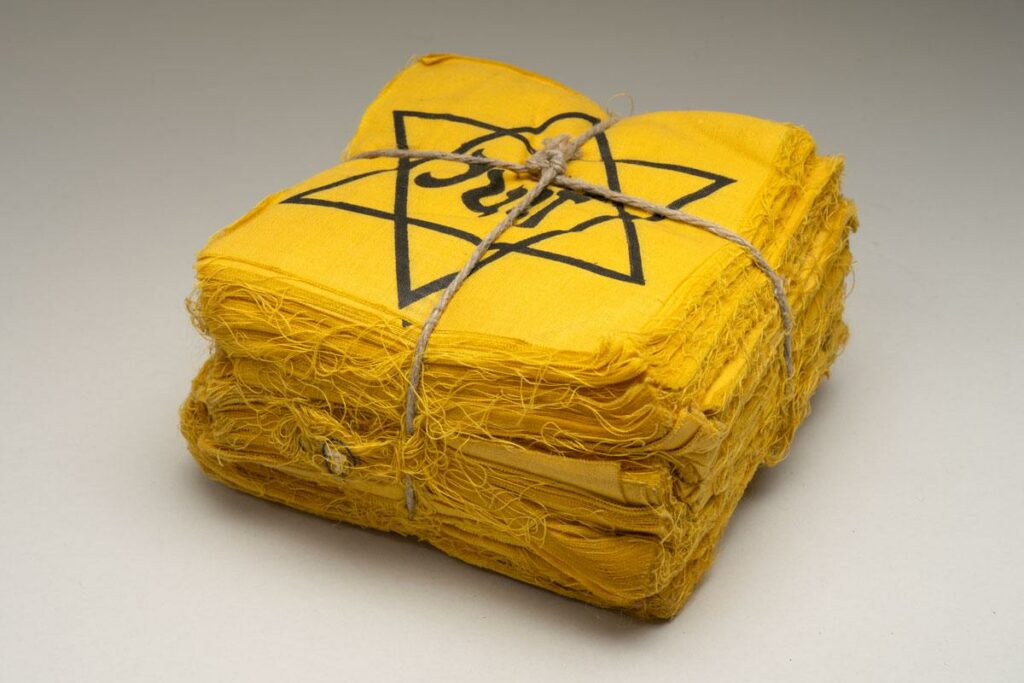
The International Holocaust Remembrance Day which was commemorated on Tuesday is about remembering the past and take action to combat rising antisemitism and ensure that such atrocities will never happen again to any nation and persecuted minority.
As previously reported, the Remembrance Day was commemorated with a ceremony in the European Parliament. The European Commission and the Cyprus EU Presidency hosted the annual Holocaust Remembrance Conference ahead of the day (14 January).
The Conference was opened by Commissioner for Internal Affairs and Migration, Magnus Brunner, together with the Vice-President of the European Parliament, Pina Picierno. Katharina von Schnurbein, the Commission's Coordinator on combating antisemitism and fostering Jewish life, engaged in a conversation with Alfred Garwood, a Holocaust survivor.
“Our future – and the future of our democracy – depends on our collective ability to remember and learn from the past,” the Commissioner said. “With time, the last living witnesses to the atrocities of the Holocaust are passing away. To ensure that we never forget, we are developing new ways to remember.”
As part of EU’s strategy on combating antisemitism, the Commission has launched the European Network of Sites of Holocaust Memory to enhance and strengthen Holocaust remembrance in a time of rising antisemitism. The network creates synergies among the more than 44,000 memorials across Europe.
The Commission published also a new Eurobarometer survey on perception of antisemitism. A growing majority of Europeans consider antisemitism a problem in their Member State and think that the conflicts in the Middle East have an influence on the perception of Jewish people in their country.
“Jewish culture is woven into the fabric of European history,” commented the Commissioner. “We must protect and nurture this today and well into the future. Remembrance ensures that we never forget historical truth. We remember, together.”
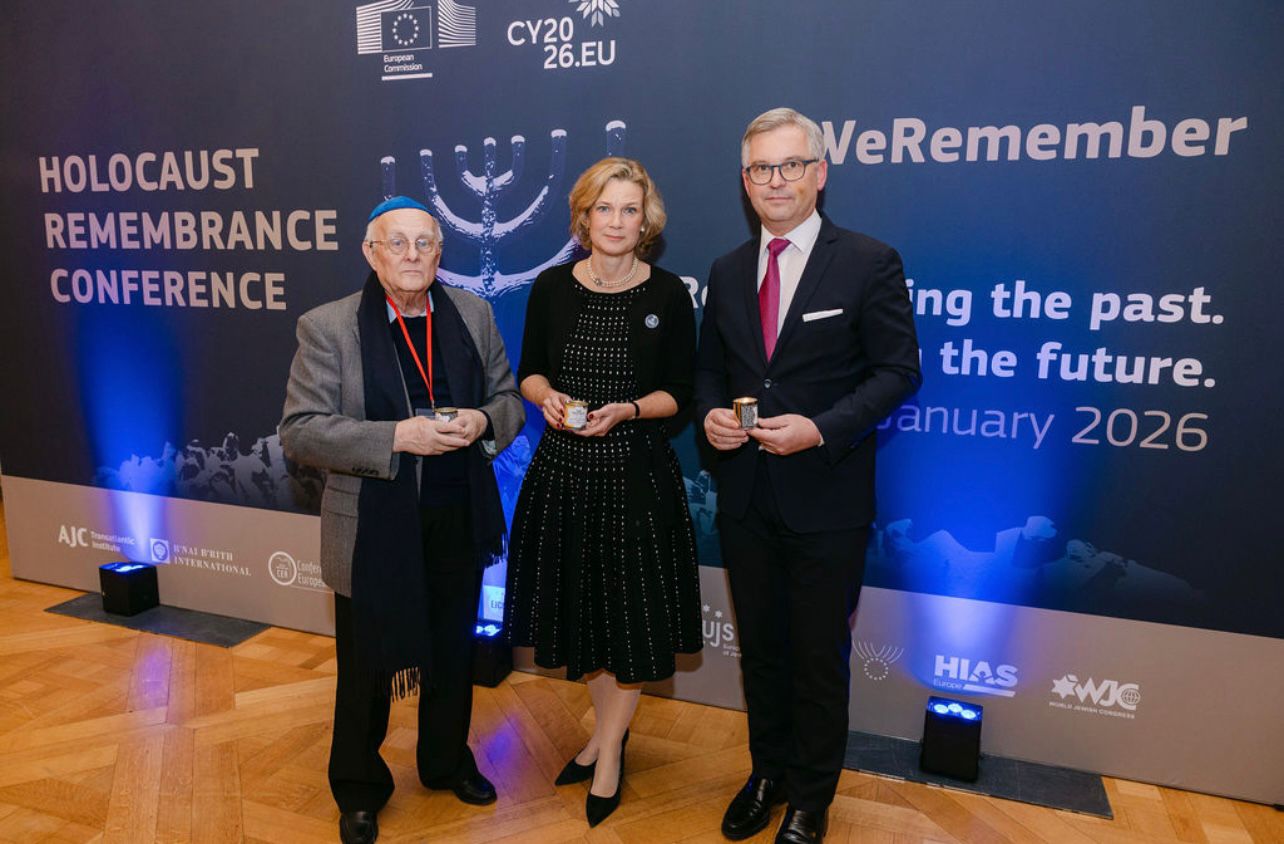
Katharina von Schnurbein, the Commission's Coordinator on combating antisemitism and fostering Jewish life, surrounded by Holocaust survivor Alfred Garwood and Commissioner Magnus Brunner, credit: EU
In a speech on 7 October 2025 in the European Parliament he warned against holding Jewish Europeans responsible for the war in Gaza. “This conflation is unacceptable. There is nothing wrong with criticizing the actions of any government, but there is everything wrong with blaming Jews here in Europe for the actions of the government of Israel.”
The line between antisemitism and legitimate criticism of Israel and its government is often blurred and has been politicized by the Israeli government. Since 7 October 2023, there has been a clear shift in norms regarding what is permissible to say about Jews in the media and at demonstrations.
The Brussels Times asked Dani Dayan, the chairman of Yad Vashem, the World Holocaust Remembrance Center in Jerusalem, about the significance of the Remembrance Day. This year, Yad Vashem marked the Remembrance Day with a series of events guided by the central theme, “The Jewish family during the Holocaust”.
The theme explores how Nazi persecution shattered family life, forced impossible choices and role reversals, and shaped daily struggles for survival, while also highlighting the strength of family bonds and the postwar effort to rebuild family life as a foundation for recovery and Jewish continuity.
One item in the exhibitions is a farewell letter from 17-year-old Pinchas Eisner to his brother, Mordechai."My dear brother, hello! […] Remember what I said to you: if you live — I would live within you." Approximately one month after writing the letter, Pinchas and another seventy Jews were led to a nearby forest and shot to death.
What is the main message or lesson learned from the Holocaust on this year's Remembrance Day? "There is no single lesson to be drawn from the Holocaust, yet every morally responsible person can learn something from it,” he replied.
"But as we move toward a world without living Holocaust survivors and firsthand witnesses to the atrocities committed by the Nazis and their collaborators, we must recognize that we are becoming the custodians of this memory. Memory does not preserve itself, and remembrance is not automatic. It must be actively and deliberately passed on to future generations."
What has caused the surge in antisemitism in Europe? "Antisemitism never disappeared. It's an ancient poison that takes new forms, be it religious, racial or political.”
“And today, sadly, it is thriving. It has become the shared language between extremist groups across the world - the radical left, the radical right, and radical Islamists. Groups that are diametrically opposed to each other, when it comes to the state of Israel and the Jewish people, their shared hatred suddenly allows them to agree with each other and even to cooperate."
Israeli Diaspora Affairs minister Amichai Chikli invited far-right parties who shared his views, including from Belgium, to a conference this week on combating antisemitism despite protests from Jewish communities. What is your reaction to the conference?
"Yad Vashem has not changed its position regarding the far-right parties on the rise in Europe. Extremist parties, which often have clear Nazi roots and whose ideology is deeply troubling, must not be normalized. Yad Vashem, and I personally, have not hesitated to make our position clear, both here in Jerusalem and with European leaders."
