
Holocaust Memorial Day is marked on 27 January every year, falling on the day of the liberation of the infamous Nazi concentration camp Auschwitz-Birkenau by Allied Soviet troops in 1945.
Today, the world remembers the six million Jews murdered by the Nazi regime, alongside the countless individuals of other minority groups who were also killed during the Second World War and under Nazi rule.
Nazi Germany's persecution of Jewish people took place throughout Europe between 1933 and 1945. In Belgium, Jews were persecuted by the occupying Nazi regime and its far-right Belgian collaborators after the 1940 invasion.
Between October 1940 and June 1942, 17 anti-Jewish ordinances were issued by the Nazis and executed by Belgian institutions, depriving Jewish people of their rights and freedoms, according to Belgium's Centre for Research and Documentation on War and Contemporary Societies.
From August 1942, some 25,490 Jewish men, women and children were deported almost exclusively to Auschwitz-Birkenau – only 5% survived.
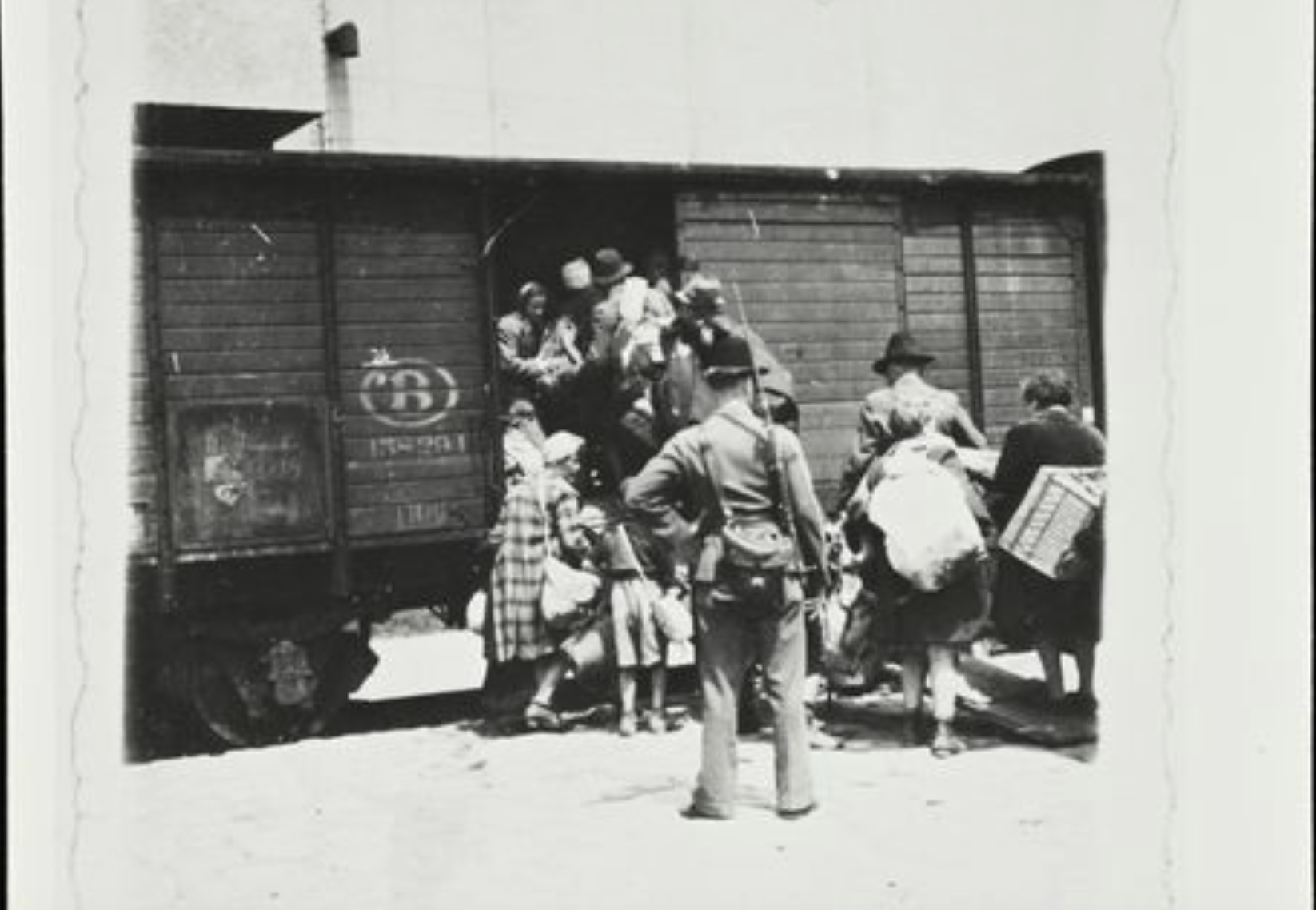
Jews being deported from Belgium during the Second World War
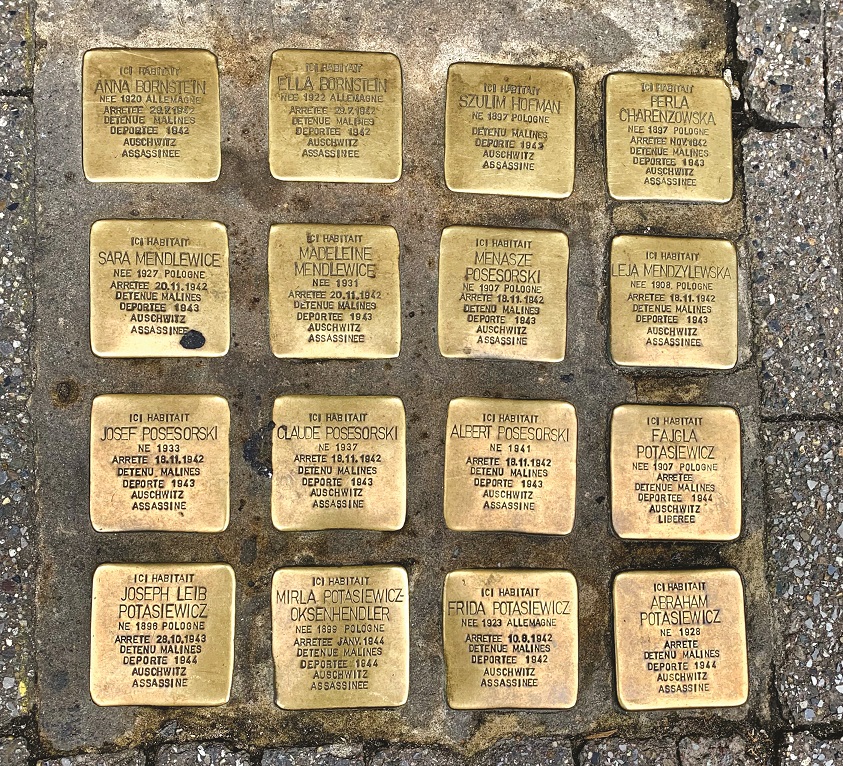
Across Brussels, golden "stepping stones" (Stolpersteine) are laid outside houses where Jewish families were arrested for deportation. The project, by Berlin artist Gunter Demnig, began in 1995 and is featured in many European cities.
Other groups also experienced violent persecution by the Nazis, including Roma and Sinti people, black people, people with disabilities, LGBTQ+ people, political opponents, resistance members and ordinary civilians.
Holocaust Memorial Day is also designed to pay tribute to the victims of other genocides in Cambodia, Rwanda, Bosnia and Darfur – a reminder that there is still much work to be done in the prevention of genocide.
Adopted by the United Nations General Assembly in 2005, at the request of the Israeli government, the day is a sombre reminder of the need to learn lessons from history.
It rejects any denial of the Holocaust as an event and condemns all manifestations of racism based on religious intolerance, incitement, harassment or violence against persons or communities based on ethnic origin or religious belief.
Survivor to address MEPs
On Tuesday, the European Parliament will hold a plenary session in Brussels to commemorate Holocaust Memorial Day, with Parliament President Roberta Metsola opening the solemn ceremony.
A speech by Holocaust survivor Tatiana Bucci will follow at noon. It will conclude with a minute’s silence in honour of the victims of the Holocaust and a second musical interlude.
Tatiana was born in 1938 in Fiume, a town then in northern Italy and now in modern-day Croatia. In 1944, the Nazis arrested her and her family, imprisoning them at Risiera di San Sabba, a transit concentration camp in northern Italy.
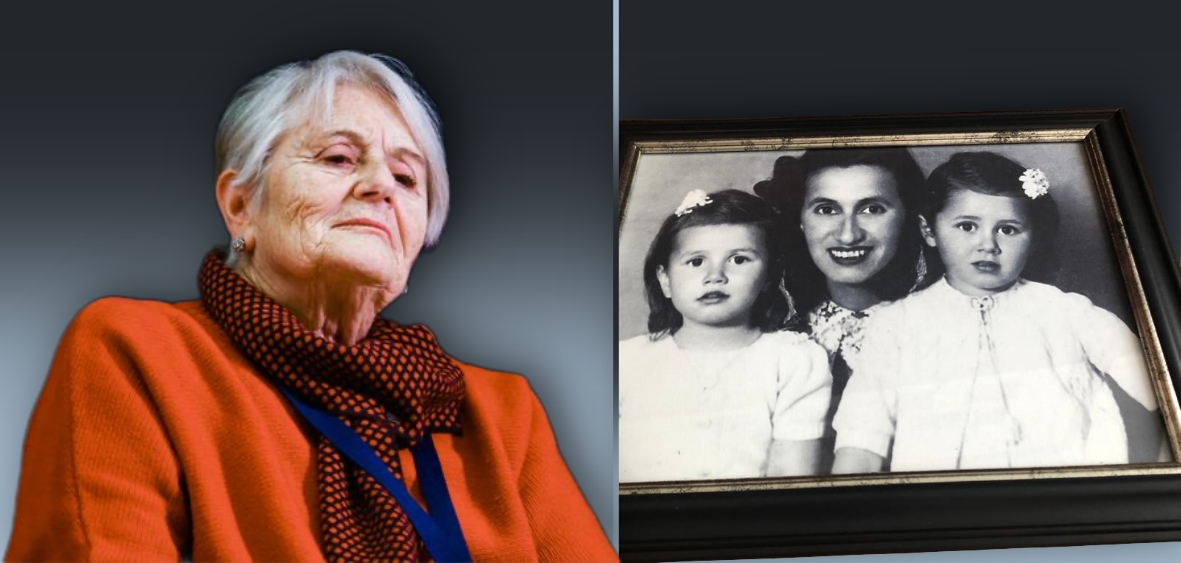 Tatiana BucciShe was just six years old when her four-year-old sister Andra, and their mother, aunt, grandmother and cousin were deported to Auschwitz on 4 April 1944. The sisters spent 10 months in Auschwitz.
Their mother was transferred from Auschwitz to Germany for forced labour in a munitions factory, while their father was a prisoner of war in South Africa during the war. Tatiana and Andra Bucci are among the youngest child survivors of Auschwitz who have memories of their experience.
"Remembrance is not a given. It depends on us," said European Commission President Ursula von der Leyen on Monday ahead of the memorial.
"We must pass on the lessons of the Shoah and build a Europe free from antisemitism and all forms of hatred. Holocaust remembrance must remain accurate, relevant and meaningful."
