
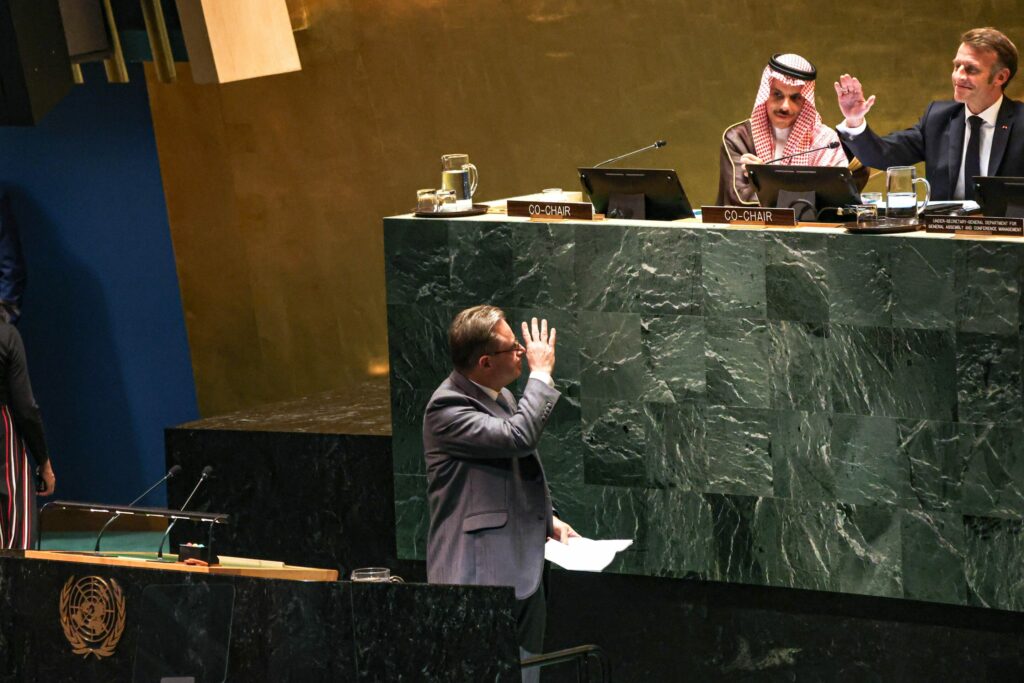
Belgium’s Prime Minister Bart De Wever announced his country’s political recognition of Palestine during a speech at the United Nations' General Assembly in New York on Monday.
However, Belgium’s recognition is only political and will not become legal until certain conditions are met.
These conditions include the return of all Israeli hostages and the disarming of Hamas, as agreed by Belgium’s federal coalition during the political crisis at the beginning of September.
Legal recognition means passing it through parliament, which allows formal diplomatic relations to be established, such as opening embassies or signing international agreements.
De Wever’s UN speech on Monday hailed this political and diplomatic signal, but emphasised that recognition should not be seen as a "reward for Hamas".
He highlighted the major obstacles to a two-state solution. These included the expansion of Israeli settlements in the West Bank, the military operation aiming for full control of Gaza, and the worsening humanitarian crisis as well as the UN-declared famine.
'Somewhere in the middle'
Belgium’s move was described as a "de facto political recognition" by Foreign Minister Maxime Prévot.
French President Emmanuel Macron has acknowledged Belgium’s decision to step forward on the diplomatic stage, Prévot noted during a press conference with De Wever.
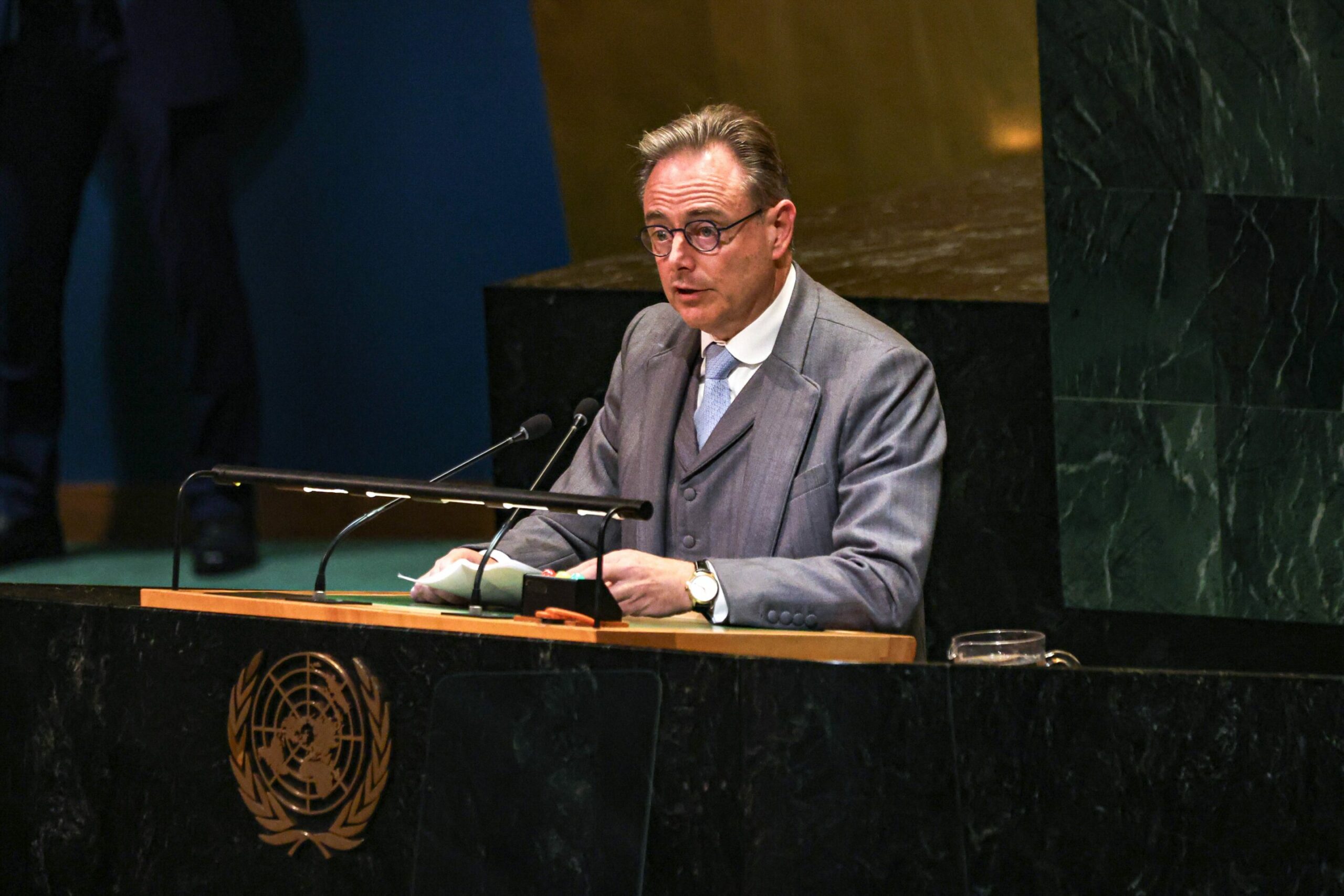
Prime Minister of Belgium, Bart De Wever, speaks at the High-Level International Conference for the Peaceful Settlement of the Question of Palestine, co-hosted by Saudi Arabia and France. Credit: Belga
The Belgian Prime Minister also addressed differences in approaches among nations, with some using recognition as a tool for leverage, while others, like Germany, are insisting all conditions be met beforehand. "Belgium is positioned somewhere in the middle," he said.
However, he poured doubt on the progress of this measure if Israel, with US backing, "continues its current path", fearing tensions surrounding the conflict could escalate further.
"I don’t believe these political tensions will ease in the near term," De Wever concluded.
Alongside Belgium, France, Luxembourg, Malta, Andorra and Monaco announced their recognition of a Palestinian state on Monday.
The United Kingdom, Canada, Australia and Portugal have also made the same step.
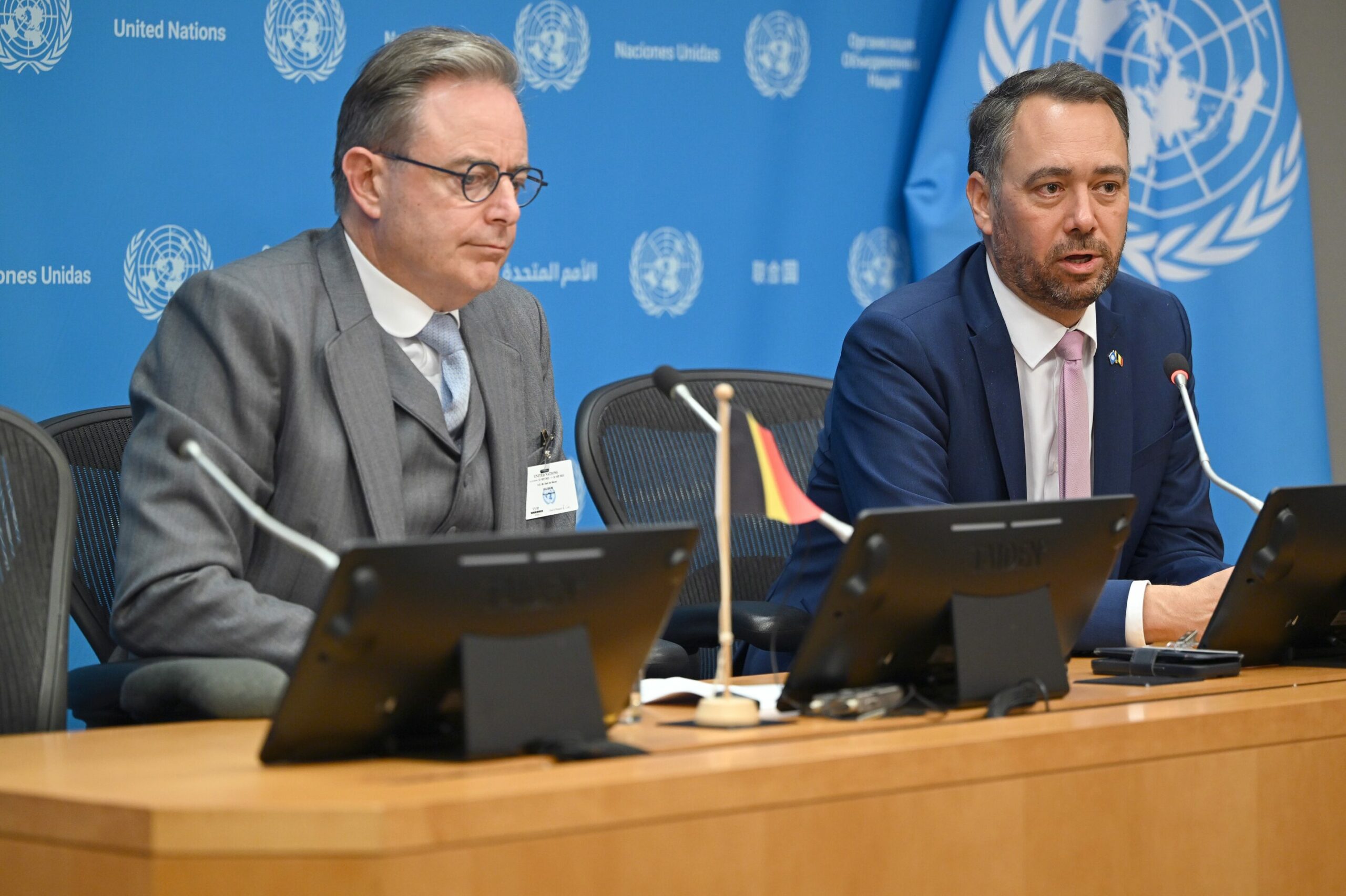
Belgian Prime Minister Bart De Wever and Minister of Foreign Affairs Maxime Prevot pictured during a press conference of the two-ttate-solution, during the 80th session of the United Nations General Assembly (UNGA80), in New York City, United States of America, Monday 22 September 2025. Credit: Belga
The event inside the UN’s General Assembly hall was organised by France and Saudi Arabia, and boycotted by both the United States and Israel.
It aimed at reviving the two-state solution in Israel and Palestine, and was held a day before the start of the 80th General Assembly, which also marks 80 years since the UN's founding in New York.
Israel and its key ally, the United States, have already expressed dissatisfaction with recent recognitions by France and others. US President Donald Trump is set to address the UN on Tuesday, with Israeli Prime Minister Benjamin Netanyahu scheduled to speak on Friday.
Nearly 80% of UN countries now recognise Palestinian statehood, amid hopes that the internationally-backed two-state solution can be revived.
UN Secretary-General António Guterres warned that the process is "at risk of vanishing altogether." Political will to achieve the goal, he said, "feels more distant than ever".
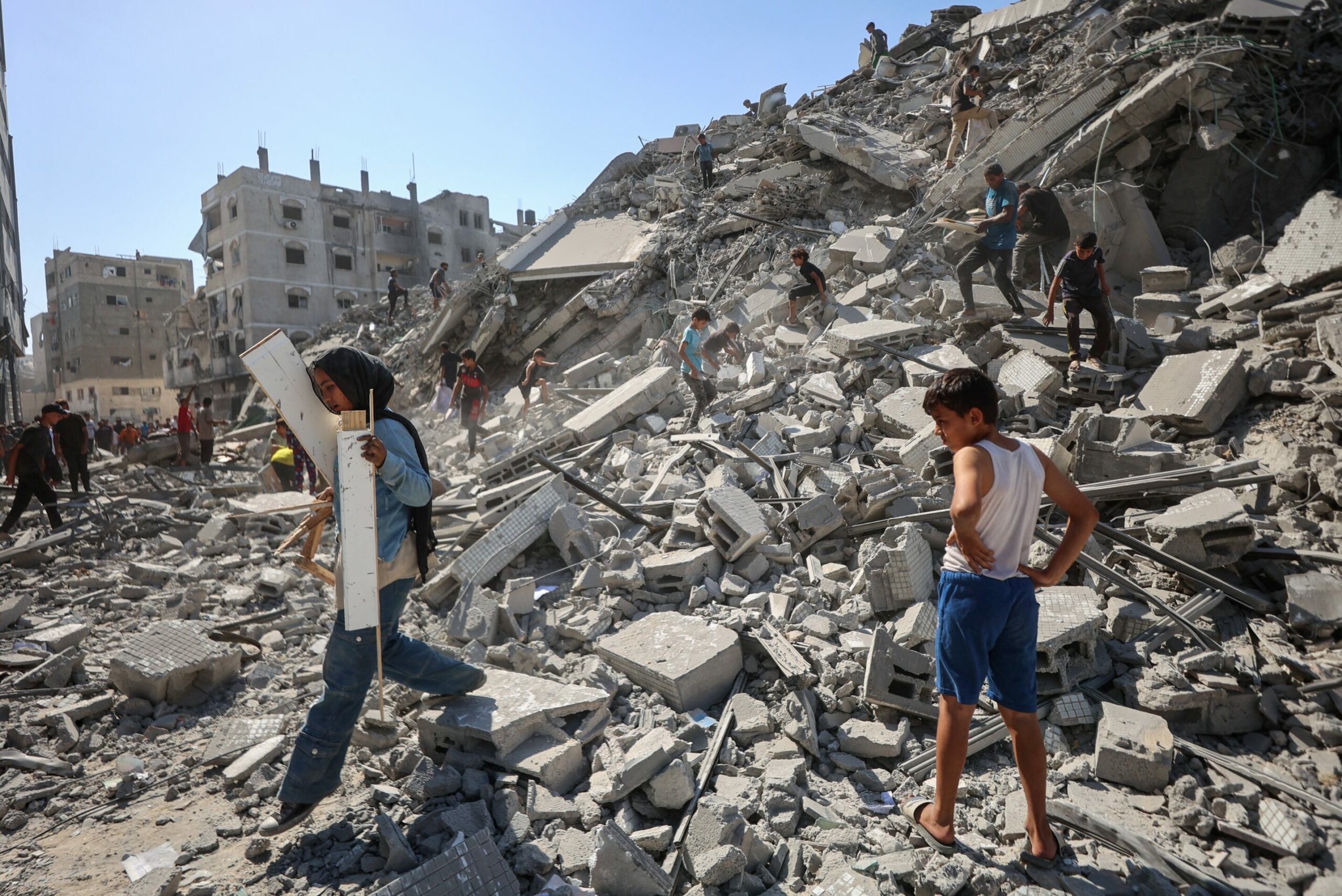
Palestinians search the rubble of al-Ghafari tower after its destruction by Israeli airstrikes in Gaza City on September 15, 2025. Credit: Belga / AFP /
Omar Al-Qattaa
However, in a recent exchange with reporters, the UN chief asked: “What is the alternative? Is it a one-state solution in which either the Palestinians are expelled or the Palestinians will be forced to live in their land without rights?”
Belgium at UN
A Belgian delegation, led by Prime Minister De Wever, has travelled to New York for the UN General Assembly's High Level Week, which starts this Tuesday.
Prime Minister Bart De Wever arrived in New York on Monday and will leave on Thursday 25 September. During his visit, he will deliver the Belgian statement in the general debate of the General Assembly, meet with the UN Secretary-General and open a Belgian-led event on organised crime.
His programme also includes events aimed at promoting Belgian leadership in areas such as energy, logistics, health and innovation, with a strong emphasis on transatlantic partnerships.
