

Belgium is stepping up its efforts to protect consumers from cashless payment systems at music festivals, that are "unfriendly" at best and at worst leave them out of pocket. But there are still several issues left to address, warns consumer protection organisation, Test Achats.
As the Summer festival season gathers pace in the country, Belgium's festival-goers will be forced to grapple with what has become a staple of the scene: complicated cashless systems. This is where payments must be made, not through normal mobile phone or contactless card methods, but through specific digital coins or tokens loaded onto a wristband or a card.
While it has become the norm at many festivals, it has garnered criticism in recent years: From accusations of "excessive" refund fees for retrieving unused credit, to the convoluted nature of some systems, and the lack of options to pay directly with bank cards or cash.
Promising to tackle concerns, Federal Consumer Protection Minister, Rob Beenders (Vooruit), sat down with representatives of the sector to draw up a new code of conduct to protect music fans. So far though, only Live Nation’s Rock Werchter and Graspop have signed the agreement, according to Beenders’ spokesperson, Jef Beckers.
Refund? Pay up
The code of conduct, finalised on 4 July, is a four-article document. One of the main outcomes is the abolition of a minimum top-up value. "If a soft drink costs €3.50 and you still have €3.40 on your card, you should be able to top it up with just €0.10 so you can buy one last drink," said Beckers.
While this in theory eliminates the need for a refund, those who simply want to recover unused credit can still be charged a refund fee. However, Beckers notes this is capped at the price of one token.
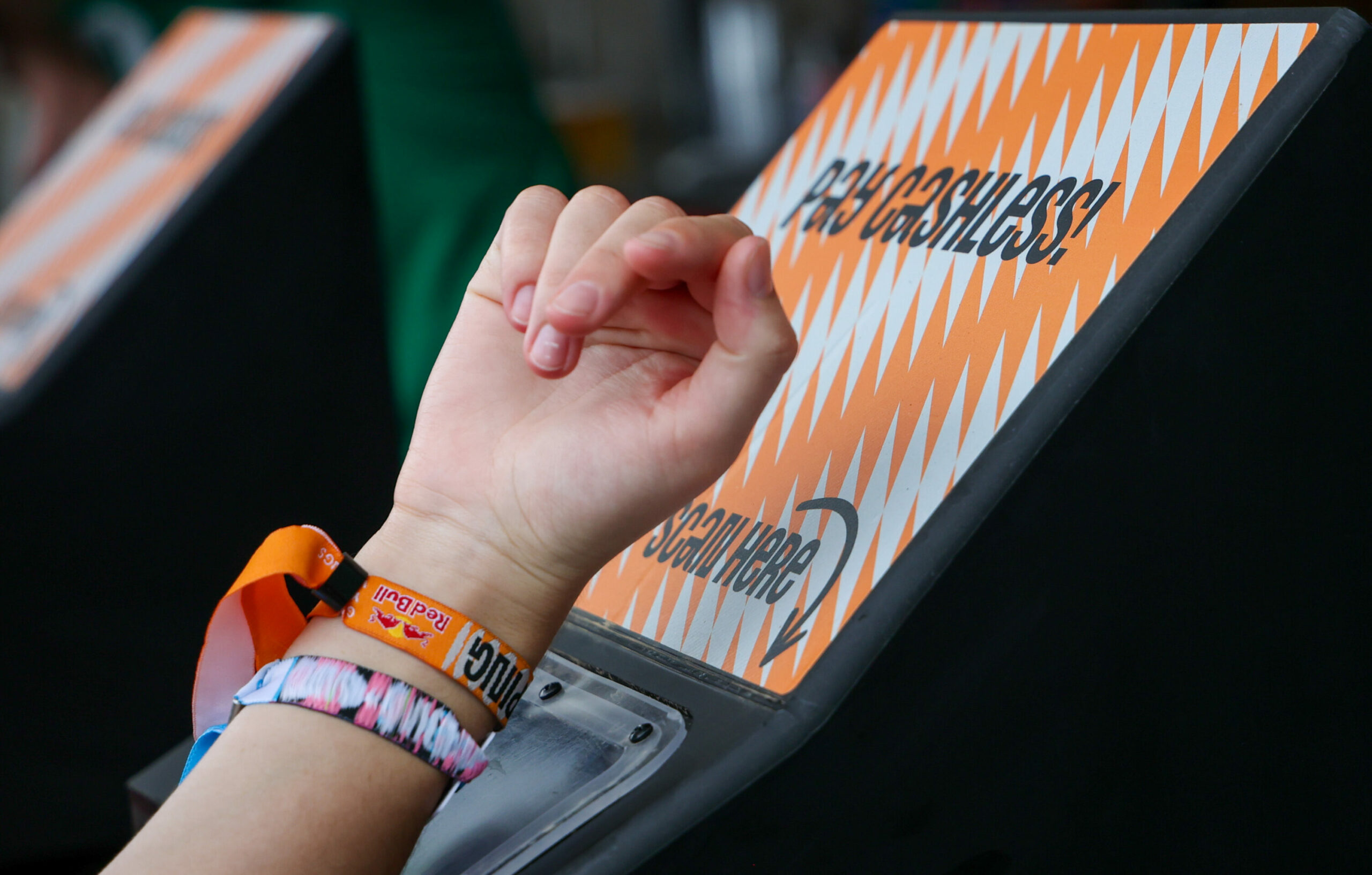
Credit: Belga
The Brussels Times investigated the policies of seventeen music festivals taking place in Brussels this summer. The refund fees varied greatly: from €3.50 at ‘Rock Werchter’, to €1.50 at ‘We can dance’, to no fees at ‘Ronquières’(although refunds were only possible if at least €3 were left in the wristband).
According to several festivals, the fees are a necessity to help cover costs associated with the systems used for the transactions.
Although refund fees to a certain value are legally considered fair by the Ministry of Economy, Test Achats criticises the principle as a whole. "This is really not okay to ask €3.50 for something if that actually is a service that you oblige consumers to use," said Test Achats' spokesperson, Laura Clays.
Additionally, Clays questions the lack of clarity regarding the real administrative costs associated. "If some can do it for free while some ask for €3.50 from all of their 80,000 visitors, what is the cost of the service actually?"
‘We’re counting on goodwill’
Prior to the new code of conduct, the Ministry of Economy already laid out laws and guidelines for events using cashless systems.
However, last year, Test Achats filed a complaint with the Ministry against 10 out of 13 festivals investigated for unfriendly consumer practices or breaking laws. For five festivals, this specifically concerned cashless systems.

People at a festival. Credit: Belga/Marius Burgelman
In light of such non-compliance, although Clays believes the new code of conduct is a "step in the right direction", she warns that the impact it’ll have is unclear, as it doesn’t hold the same weight as a legal change. "It’s not imposing something on festivals," she said. "I think the [festivals] will only sign it if they comply with it and if they don't, well then they don't sign it," she said.
However, the choice of creating a code of conduct rather than pushing for new legislation was intentional, according to the minister’s spokesperson. "We want to maintain close dialogue with the sector. That way, solutions can be found in consultation with the sector, rather than through a unilateral and mandatory approach on our part," said Beckers.

People at a festival. Credit: Belga/Marius Burgelman
Beckers further noted that Beenders and his cabinet believe that change could still be seen without enforcing new laws. "We're counting on the goodwill of the festivals," he said.
According to Beckers, there is no deadline for this "goodwill" to kick in before other approaches are used.
Cashless culture
At several festivals, even when cashless systems were compulsory, festival-goers tend to have the option to add money onto their wristbands via a bank card or cash at "top-up" points on site.
According to several festivals, the cashless system is preferred to bank cards for its stability. "This [cashless system] requires, unlike payments with apps and credit cards, no permanent stable internet connection," said Rock Werchter’s spokesperson, Nele Bigaré.
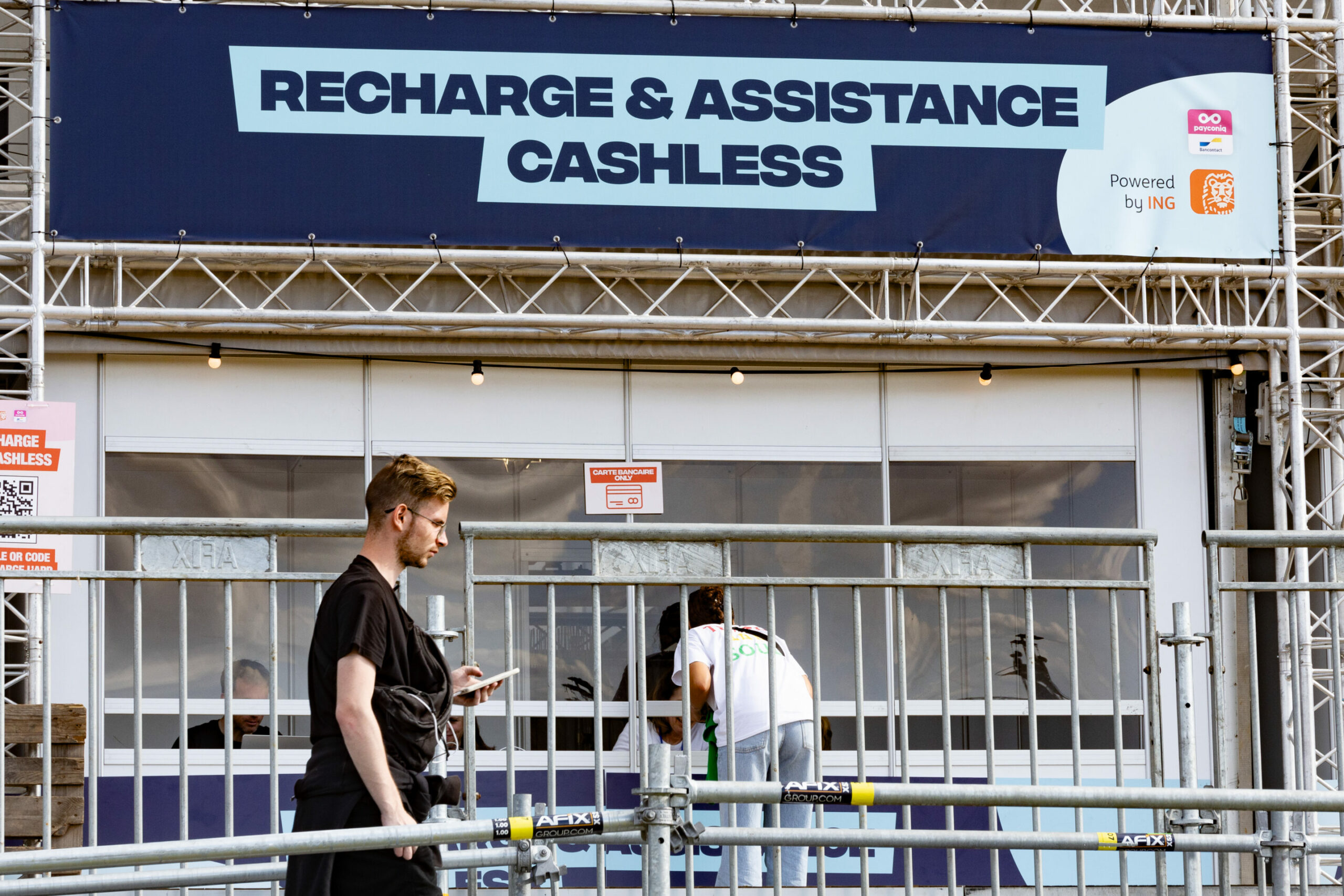
The offices of the cashless payment system pictured on the first day of the Les Ardentes in 2023. Credit: Belga/Bruno Fahy
The system is also preferred over direct cash payments on-site for security reasons, explained a spokesperson at Ronquiéres. Nonetheless, looking at festivals outside of Belgium, there are many examples where cash is widely used, as well as the normal contactless methods like cards or phones. For instance the UK’s largest music festival, Glastonbury, allows cash to be used for purchases from vendors on site.
But Paradise City’s Gilles De Decker says Belgian festivals operate in different circumstances. "Glastonbury is not the perfect example for all other festivals," he said. "Glastonbury is very big and has a lot of economies of scale."

People at a festival. Credit: Belga/Marius Burgelman
Additionally, De Decker criticises the negative attention many festivals have recently received due to the cashless systems when he believes the majority are using it in a relatively fair manner.
He added that many festivals are struggling to stay afloat and that attention should be brought to other challenges in the scene. "If we want to save festivals maybe we should really look at the big issues and not look at this cashless system that for me is a very fair system."
Never let go?
Clays notes that the cashless models are not bad per se. "It's not that we're completely against the cashless systems," she emphasised, stressing that the systems just need to be clear, easy to use, and allow credit to be easily recovered.
According to Beckers, more consultations with the festival sector are planned for after this summer. However, these will focus on the challenges preventing the wider use of bank card payments at festivals.
In the meantime, it seems cashless systems are here to stay. "It's something that has historically grown," said Clays "Festivals will not easily let that go."
