
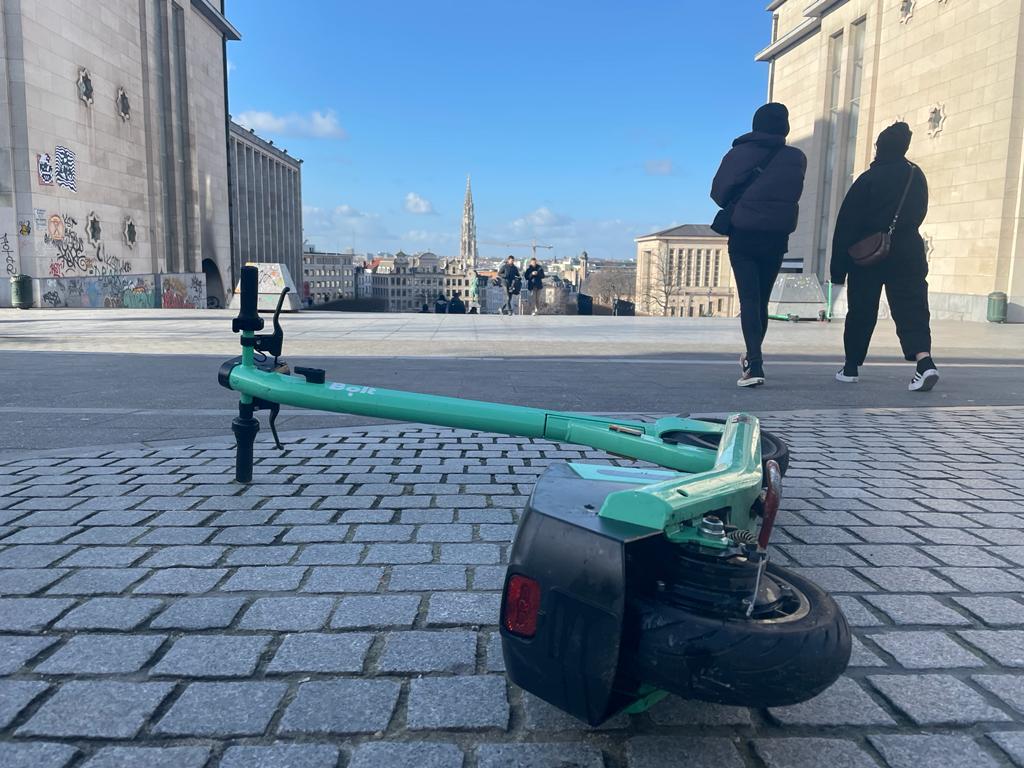
Both in Belgium and elsewhere, the public backlash against electric scooters has been fierce. In Paris, rental scooters were outright banned. Across the island of Malta, the two-wheeled rental vehicles also vanished in 2024. Other cities place strict rules on their use. But are scooters the victim of an unwarranted witch hunt in the age of micro-mobility? In Brussels, Europe’s de facto capital, the struggle for the future of shared mobility is already well underway.
First appearing on Brussels' streets sometime in summer 2016, rental e-scooters have quickly revolutionised the way locals move around the capital.
In 2022 alone, rental scooters from Estonian mobility company Bolt travelled over 4 million kilometres around the capital.
The following year, micro-mobility brand Lime transported over 3 million passengers with its fleet of 3,000 scooters and 2,500 e-bikes.
Today, it is estimated that there are around 700,000 Brussels residents who are “regular users” of the capital’s fleet of nearly 19,000 rental scooters.
According to figures from Way To Go, there are now 7.8 scooters for every 1,000 residents in the Belgian capital.
New era of mobility
From their arrival in Brussels, the two-wheeled vehicles became extremely popular, and micro-mobility companies entered into a fierce battle for market share. With free unlocks, special offers, and season passes, numerous companies, both start-ups and global corporations, competed for passengers.
Micro-mobility firms innovated to provide the most comfortable user experience. From barebones metal frames, the scooters quickly evolved to include phone chargers, indicators, improved suspensions and even digital displays.
Rental scooters quickly became an integral part of the city’s mobility. The rental scooters were a powerful incentive for many to ditch their cars, promoting interoperability with public transportation. In many places, the scooters addressed issues that Belgian public transport providers had long neglected.

Scooters in Ixelles, covered by snow overnight. Brussels, 1 April 2022 Credit: The Brussels Times
Mobility companies expanded their coverage beyond the city centre. Soon, the scooters could be found in locations with limited public transportation options, such as those with statistically the lowest levels of public transportation, such as Forêt de Soignes, Neerpede, Vivier d’Oie, Saint-Job, and Saint-Alix.
The floating fleet of rental scooters answered a question that public transport had long tried, and failed, to answer: how to promote interoperability between its services and provide ‘last-leg’ connections to and from transit points across the city.
By 2022, the number of rental e-scooters in the capital peaked at a combined fleet of 23,500, following a 220% explosion in deployment in 2021. But as the number of scooters rose, so too did the complaints, and accidents.
Growing anger
Municipal and regional authorities faced a surge in complaints from their electorate about the micro-mobility companies and their scooters. Many complained of a perceived nuisance from “wild” parking. One of the biggest selling points of the e-scooters was their ease of use.
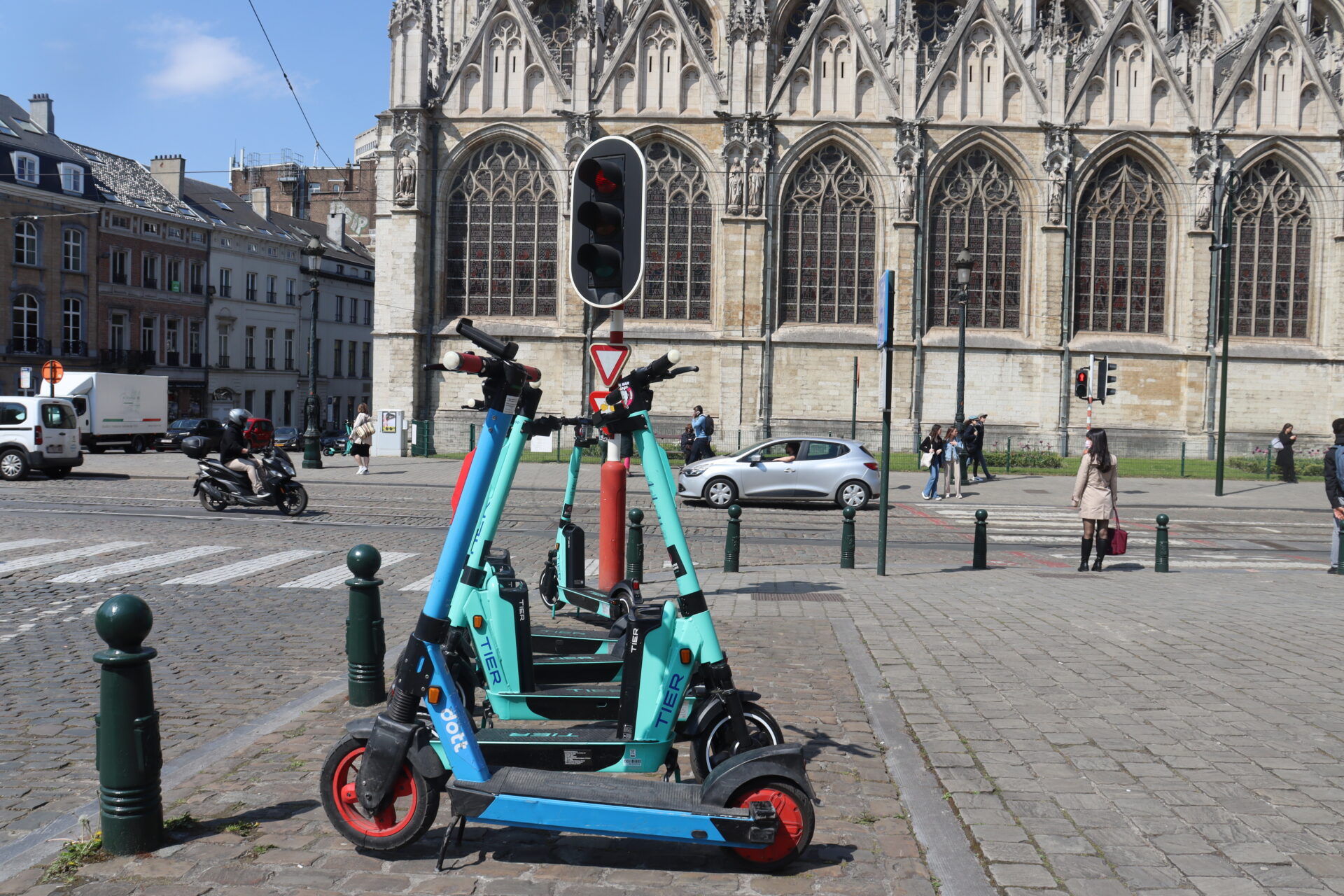
Unlock, ride, and drop. The two-wheeled vehicle could simply be parked wherever convenient. As it turned out, this often ended up being in places deemed inconvenient for pedestrians.
In high-demand areas, the scooters were frequently left stacked haphazardly, thrown into lakes, or ditched on private property or flower gardens. Those with reduced mobility also complained that the wild parking turned pavements into an obstacle course.
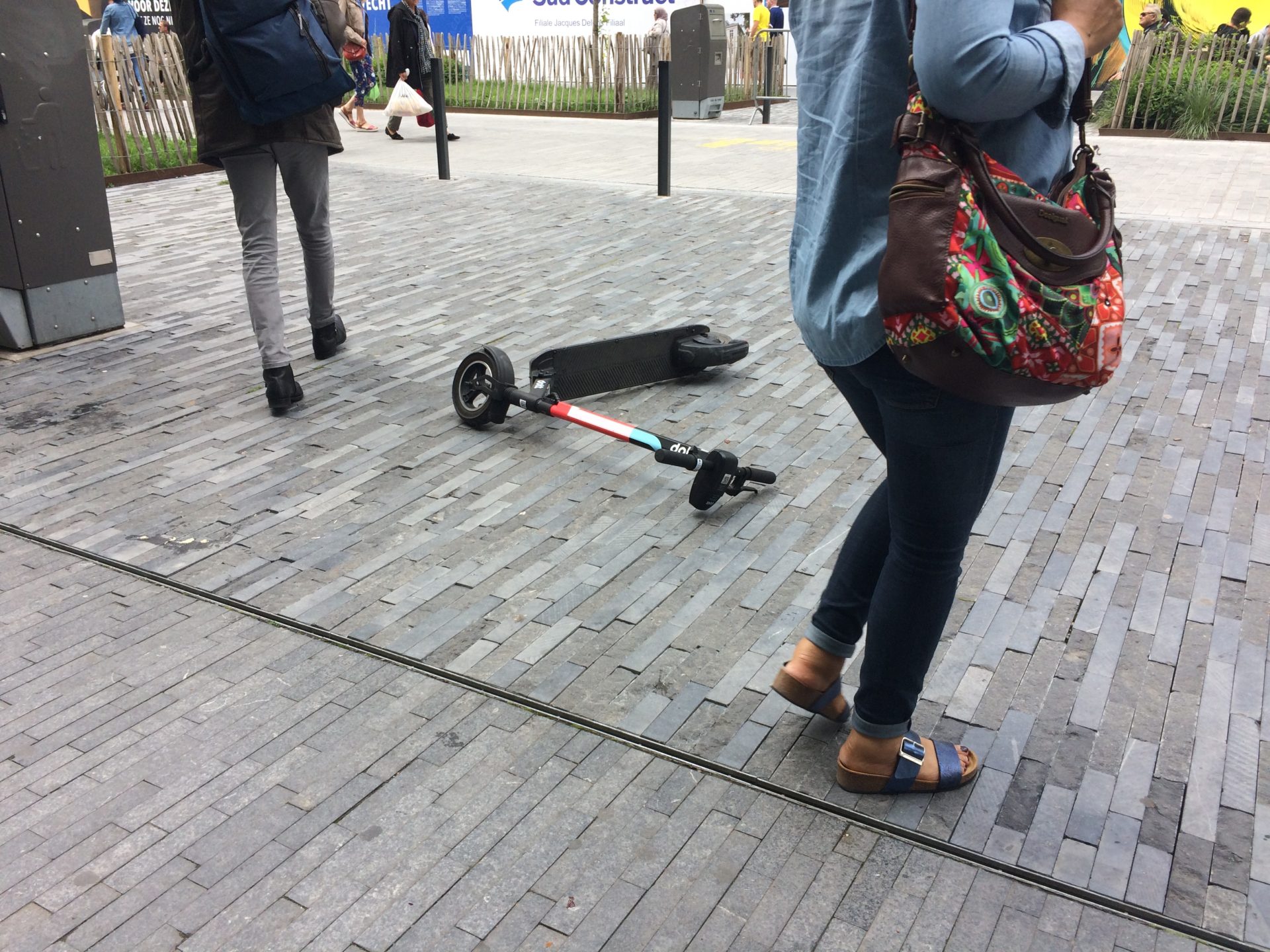
An improperly parked e-scooter. Credit: The Brussels Times
Then came the reports of accidents. Incidents involving collisions between e-scooters and pedestrians regularly made headlines in Brussels. In 2022, a woman was run over on Boulevard Anspach in a hit-and-run, facing serious injuries.
In June 2025, a 12-year-old child died after being hit by a police car in Ganshoren. Local media periodically pick up stories of fatal accidents involving scooters and cars. Brussels hospitals decry an uptick in accidents from e-scooters, notably severe facial lacerations from those who fail to wear a helmet.
Certain communes, such as Uccle and Ixelles, were the first to crack down on rental e-scooters, first returning improperly parked scooters to the corporate owners, issuing fines, and then ultimately banning their parking throughout the municipality.
Shortly after, the Brussels region, faced with growing public pressure, sought to regulate the use of rental e-scooters. It notably implemented speed controls.
From a previous speed limit of 25 kilometres per hour, the Brussels region set a global speed limit of 20 km/h across the capital, with some pedestrian zones limited to just 8km/h.
Credit: Belga
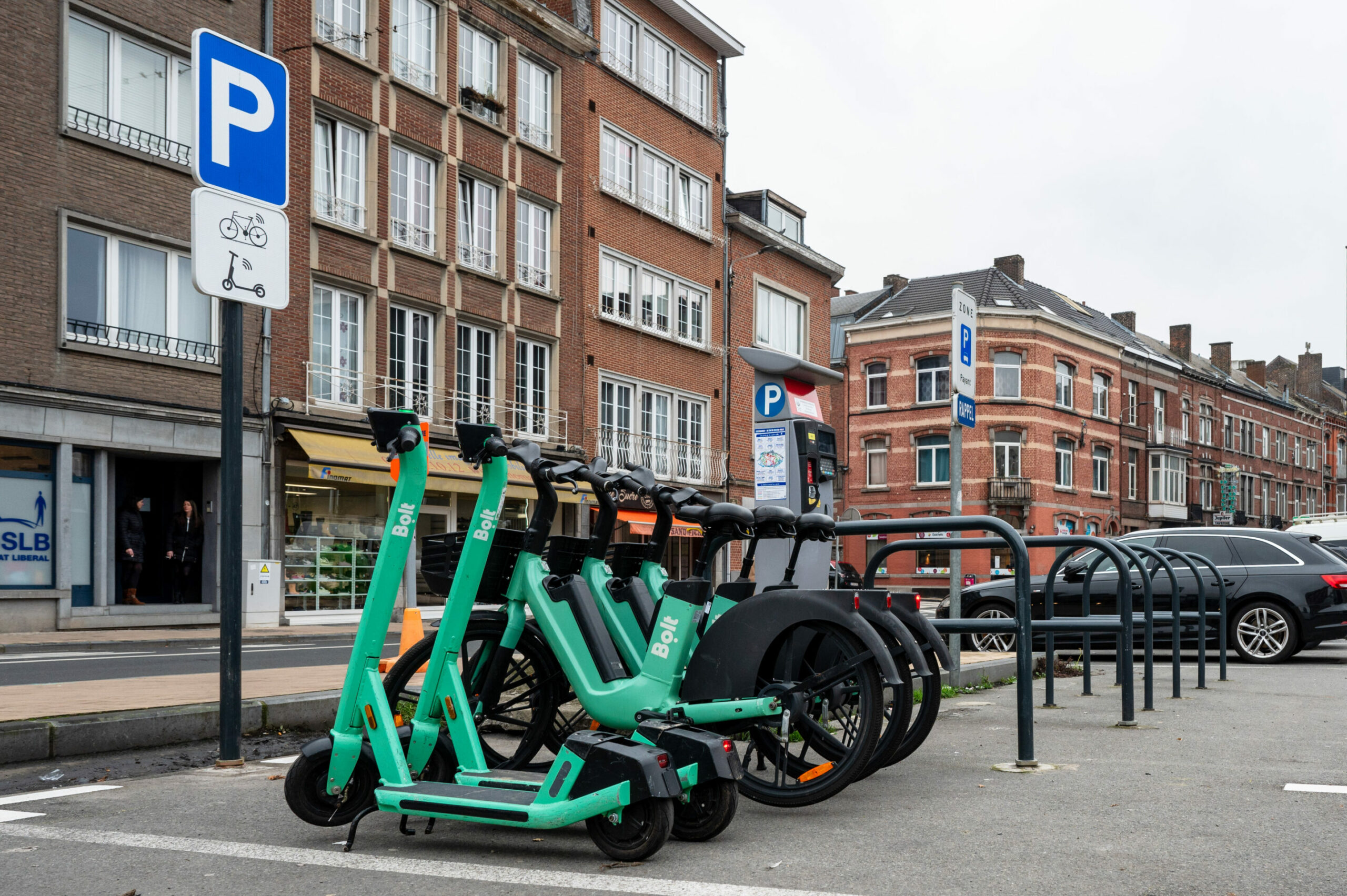
Another major overhaul to rental scooters in the capital was a ban on “wild” parking, forcing the vehicles to be parked in designated spots across the capital.
Today, there are more than 2,200 such parking spots across the Brussels-Capital region. The move was generally well-received. Now, micro-mobility companies must ensure that their scooters are properly parked or face fines.
Despite adapting successfully to these policy changes, the Brussels government launched its most direct intervention yet in December 2024. To reduce the number of e-scooters on its streets, it intervened directly in the market, permitting only two operators, Bolt and Dott, to operate e-scooters in the capital.
Lime, after receiving a last-minute license from a competitor, is still active in the e-scooter market, but only until December, from which point it will need to withdraw its fleet. The company has decried the decision as heavy-handed and has been in fierce legal battles with the region to keep its e-scooters on the streets.
Risk vs reality
From a transport solution once touted by the media as a revolution in personal transportation, the scooter market in Brussels now resembles a ghost of its former self. Following Brussels’ direct intervention in the market, the number of scooters on the streets is expected to slump to just 8,000 this year, operated by the two remaining operators.
After several rounds of legislation, the question now remains whether the opposition to the electric scooters is justified. The new rules have prevented micro-mobility companies from operating under normal market conditions, leading to lost investment, perhaps reflecting a broader Belgian tendency towards knee-jerk reactions.
"In our view, there is certainly a disproportionate focus on e-scooters as a mode of transport from regulatory bodies and the media, likely due to their relative novelty on city streets," Sofie Staelraeve, government relations manager for Lime, told The Brussels Times. "This attention obscures the broader dangers presented by the prevalence of cars in cities, which account for the overwhelming majority of safety incidents, including the most serious and damaging crashes, as well as their contributions to poorer air quality, greenhouse gas emissions and use of public space."
Of all road accidents, e-scooters accounted for 13% of injuries in 2020-2023, against 23% for bikes and cars, respectively. Of these accidents, scooters accounted for just 16% of serious injuries and deaths, against 18% for bikes and 20% for mopeds or motorbikes.
The number of accidents involving e-scooters is around half the number recorded for cyclists in 2024. Few studies attempt to compare the number of e-scooter accidents with other modes of transport.
Credit: Belga / Eric Lalmand
In 2024, the Brussels-Capital region recorded 525 scooter riders injured on Brussels roads, a figure down 2% from the average of 2021-2024. Meanwhile, there were 944 injuries last year for cyclists, with the number of accidents also following a downward trajectory.
These figures only account for accidents registered with police and recorded by Brussels Mobility, but also include injuries from the largely unregulated private e-scooter market, where users are known to purchase e-scooters with unrestricted speed limits, despite laws to the contrary.
The entire picture of accidents involving e-scooters is likely more complicated. Most small spills and tumbles go unrecorded, both for scooters and bikes. Lime, who will operate in Brussels until the end of the year, revealed that only 0.01% of trips in Paris resulted in an accident, of which 87% were minor and required no medical treatment. 79% of accidents only affected the rider, and just 2% involved another pedestrian.
Bolt, one of the largest operators in Europe, reported that in 2023 there were 16 injuries for every 1 million rides on its scooters across the 250 cities it operates in. In 2022-2023, it also reported a drop of 40% in serious injuries from its scooters.
Dott said that in 2024, there were 3.6 injuries from its scooters per million kilometres ridden. It aims to reach 0 injuries requiring medical treatment by 2030.
What future for rental e-scooters?
The industry association representing rental scooter companies, Micromobility for Europe, reported a large drop in e-scooter accidents requiring medical treatment between 2021 and 2024. It credits this success, in part, to “educational campaigns” aimed at “raising awareness regarding safe driving, and using vehicles properly”, notably through the dissuading of drunk driving.
“Shared e-scooters and e-bikes are proving that they are not just sustainable, but increasingly secure,” said association boss Christy Pearson. “A nearly 30% drop in injuries since 2021 shows that investments in infrastructure, rider education, and better vehicles are delivering real results.”
Both the mobility companies and medical professionals acknowledge that the use of alcohol and e-scooters is most typically associated with accidents.
A study by CHI Saint-Pierre concluded that one-third of accidents are linked to night-time use and alcohol intoxication. Similar statistics for bicycles, which are more numerous in the capital, do not yet exist.
The Vias road safety institute, based on surveys with five hospitals, believes that roughly one person is admitted to emergency services every week for a scooter accident and that drugs and alcohol generally didn't "constitute a major problem", except late at night.
E-mobility apps have sought to tackle this issue. During the evenings, Bolt requires users to complete in-app sobriety tests before using their e-scooters. Dott, the other remaining operator in Brussels, is yet to have implemented this feature.
Credit: The Brussels Times / Lauren Walker
Despite these figures, an entrenched distrust between Brussels’ populace and the two wheeled vehicles remains. According to Cyclomedia’s 2024 Urban Road Safety Index, around 50% of Brussels residents surveyed believed that road safety was getting worse because it is “not equipped for new forms of urban transportation."
Related News
- Helsinki had zero traffic deaths last year – Can Brussels do the same?
- Young man dies after falling with e-scooter
- Lime must withdraw scooters from Brussels ‘immediately’ following ruling
Further legislation targeting micro-mobility may yet be on the horizon. French-speaking conservative party Mouvement Réformateur (MR) is calling for a law to force the companies to register the scooters in the same way as other vehicles.
MR Federal MP Vincent Scourneau, author of the proposal, said that the current system prevents “road users injured in public spaces or suffering material damage” from "identifying the perpetrators of dangerous behaviour.” The party wants the scooters to require “mandatory insurance”, and registration, akin to mopeds or other vehicles.
“The law is a concrete response to the expectations of many citizens and mayors who denounce the deterioration of security and civility in public spaces,” added MR chamber leader Benoît Piedboeuf.
Lime says that the Belgian government should instead focus on protecting vulnerable road users, including e-scooter riders by "opening up more space for dedicated travel lanes and nurturing successful shared micromobility programs."
Whether the backlash against e-scooters is proportionate or political, the facts suggest a more nuanced reality. Accident rates are falling, safety features are improving, and companies have largely complied with new rules.
Yet public distrust remains high, driven by visibility, inconvenience, and a perception of chaos that often outweighs actual harm. In the court of public opinion, the image of a discarded scooter on the pavement speaks louder than statistics.
