
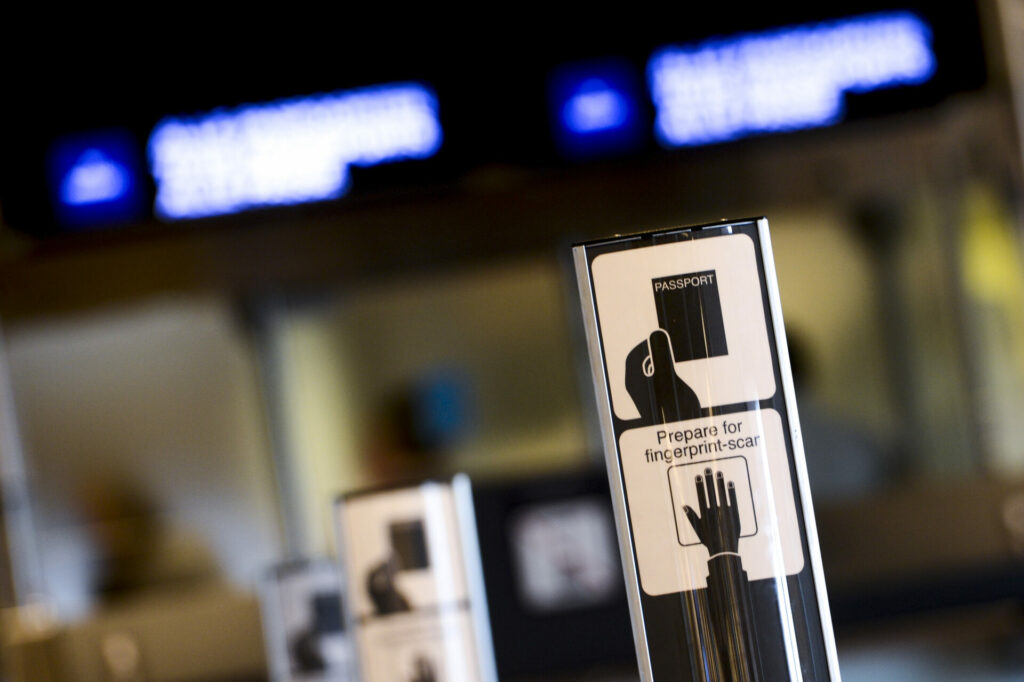
The European Commission has set the launch date for the start of its Entry/Exit System (EES) for 12 October 2025. From then on, the EES will be progressively rolled out at the external borders, over a period of six months. Here is everything you need to know.
The EES is an advanced IT system that will digitally record the entries and exits of non-EU nationals travelling to 29 European countries (the EU minus Cyprus and Ireland, but including Iceland, Liechtenstein, Norway and Switzerland), for short stays.
From 12 October, these countries will introduce the system gradually at their external borders. This means that data collection will be progressively introduced at border crossing points, with full implementation by 10 April 2026.
With the launch date less than two months away, travellers can expect to start seeing information campaigns and awareness-raising activities at border crossing points (including airports), as well as at consulates in non-EU countries.
What is the EES?
The Entry-Exit System is an automated control mechanism for citizens from non-EU countries entering or leaving the Schengen area (as well as Liechtenstein and Switzerland) on short-stay visas.
Under the system, travellers will be required to provide data (for the first time, this data will include their biometric information, such as fingerprints and facial scans), as well as their passport and other travel information, including their arrival and departure dates and places.
Credit: Belga/Benoit Doppagne
The purpose of the EES is to make border checks quicker and more efficient, reduce queues and improve security within the EU. Additionally, by acting as an identity verification tool, it should help combat terrorism, serious organised crime and identity fraud.
By accurately tracking data, the Commission stated that it will also help prevent irregular immigration, identify overstayers, and reduce identity fraud. Importantly, they added that the EES meets "the highest standards of data and privacy protection," ensuring that travellers' personal data remains "protected and secure."
How will it work?
European countries will introduce the different elements of the EES in phases, including the collection of biometric data.
This means that travellers' facial images and fingerprints might not be collected at every border crossing point right away, and their personal information may not be registered in the system. Until then, passports will continue to be stamped as usual.
This progressive roll-out will give border authorities, travellers and the transport industry more time to adjust to new procedures.
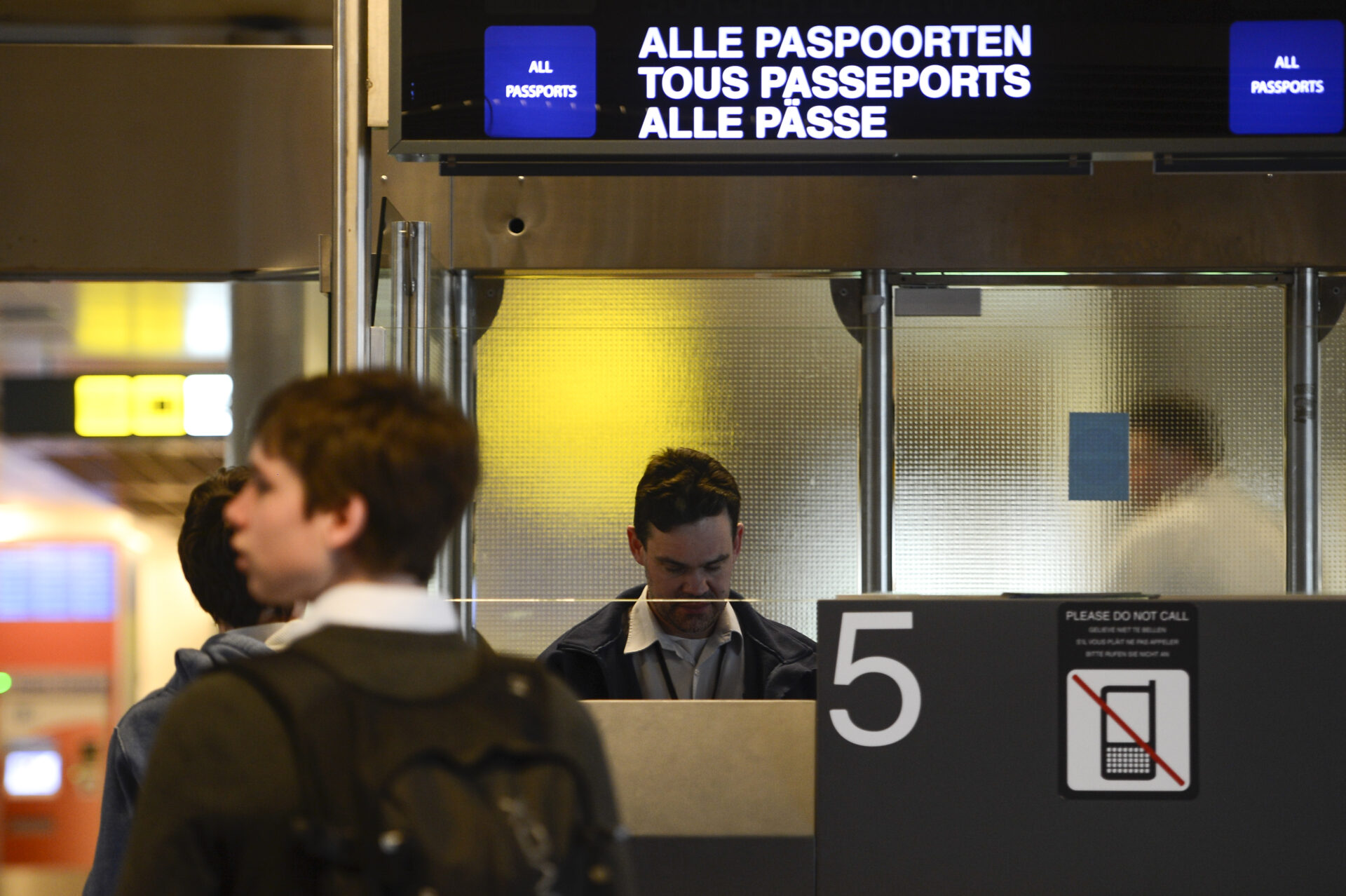
Border control at Brussels Airport in Zaventem. Credit: Belga / Dirk Waem
Once in place, it will apply to non-EU nationals travelling to a participating European country for a short stay who possess a short-stay visa or who do not need a visa to stay for a maximum of 90 days in any 180-day period.
If someone overstays the period they are allowed, the system will identify them and record this information. Additionally, in the event that the authorities refuse a person entry, the system will also record this information.
How does the data collection work, and what happens to it?
The data will be collected and registered electronically in the system. Which biometric identifiers the EES will store depends on whether or not the travellers need a short-stay visa. Currently, the fingerprints of children below 12 years old are not scanned.
- Travellers who need a short-stay visa: the system will store only a facial image (their fingerprints were already registered when they applied for a visa).
- Travellers who do need a visa: the system will store four of their fingerprints and their facial image.
People who refuse to provide their biometric data will be denied entry.
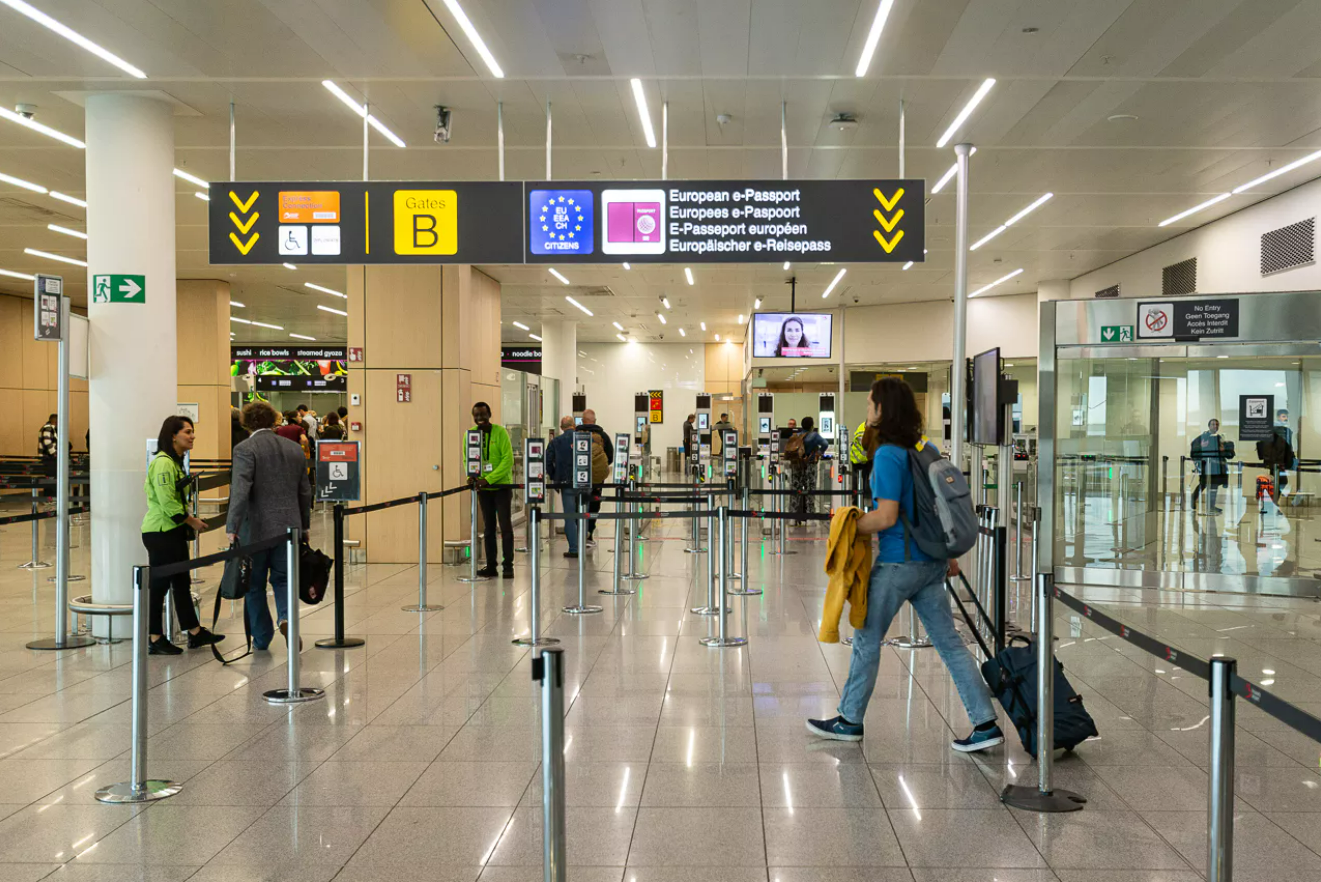
Credit: Belga/James Arthur Gekiere
Facial scans and fingerprint data taken during the first registration will be stored in the EES database for three years. During this period, travellers will only need to provide a fingerprint or photo at the border when entering and exiting, which will be matched against stored data.
The European Commission recognised that collecting biometrics "can have an impact on travellers' privacy," they stressed that the technology used in the EES "ensures that people's fundamental rights are protected."
They added that storing this biometric data can increase security by preventing children from going missing or becoming victims of trafficking, reducing the risk of people being wrongfully apprehended and arrested, and helping fight serious crime and terrorism.
Will the new system cause delays at the border?
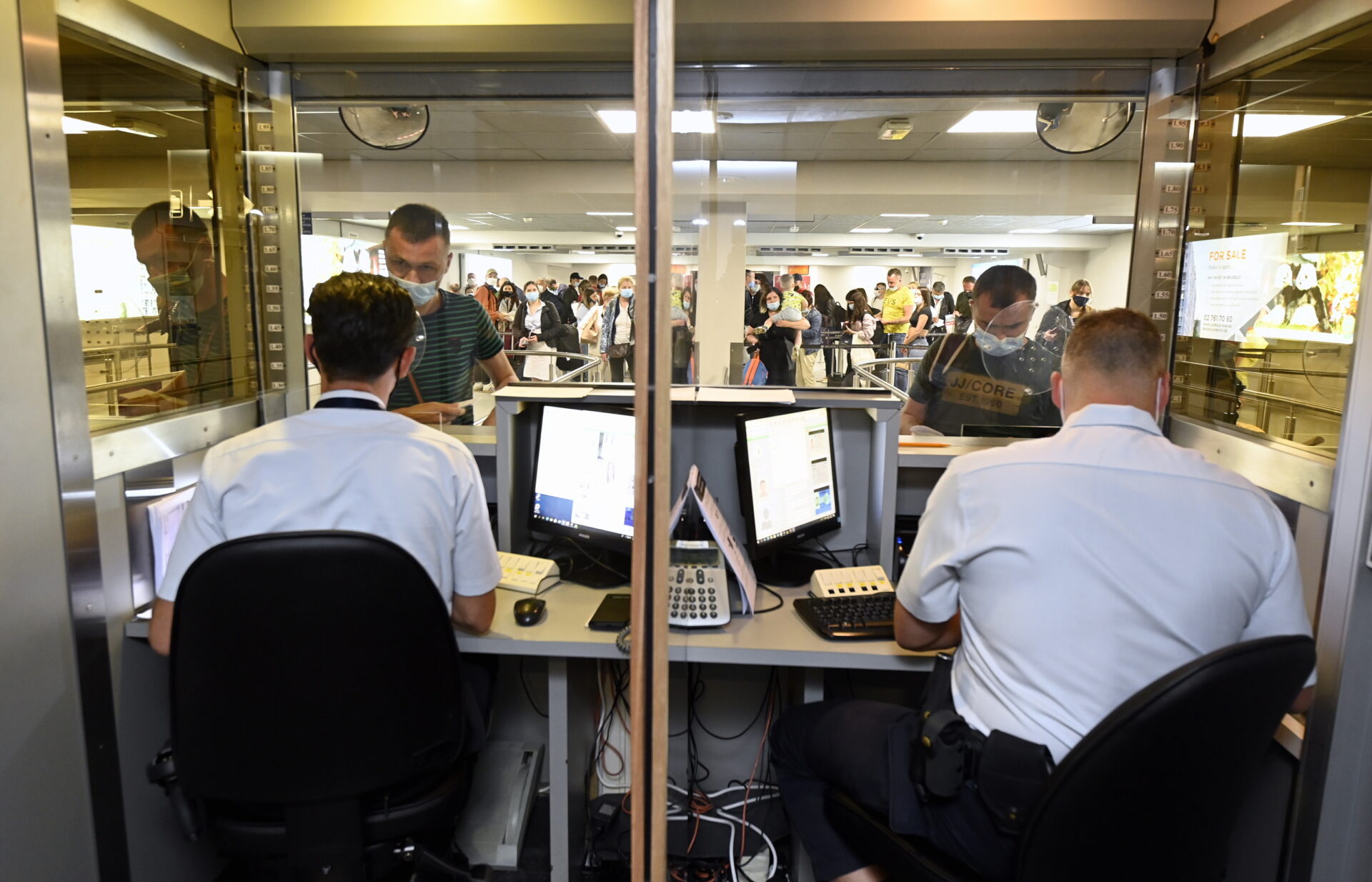
While one of the aims of the new system is to reduce queues at borders by making the checks more efficient, travellers fear that the implementation of the EES will actually increase waiting times.
Passengers will have to navigate the new scanning technology, which is being installed at all international crossings (land, sea and air) in the Schengen Area.
Meanwhile, the cross-Channel high-speed train service Eurostar has already taken precautions to counter expected delays by allowing passengers to board trains earlier (30 minutes before departure), and planning to double the number of border staff and manual booths.
Credit: Belga/ Eric Lalmand
The Commission stressed that it will keep working closely with Member States to ensure a "smooth and effective deployment of the system."
Additionally, the idea behind gradual implementation over 180 days is to prevent a simultaneous launch in all countries from compromising the system. "During the roll-out period, the launch could be temporarily suspended if waiting times become too long or there are technical issues."
After one month, 10% of crossings must be recorded in the system. After three months, 35% must be recorded. After six months, all travellers from outside the EU must use the system. In exceptional cases, such as long queues, Member States may temporarily suspend the system.
First EES, then ETIAS next year?
After the EES is introduced, it will be followed by the European Travel Information and Authorisation System (ETIAS) in late 2026. However, there will be a transition period of at least six months – meaning it will not be compulsory until 2027.
Travellers from 60 non-EU countries will need to comply with the ETIAS. It will require non-EU travellers who do not need a visa to get authorisation before entering the Schengen Area by completing an online application, providing personal details, answering security questions, and paying a €20 fee.
While the fee will be waived for under-18s and over-70s, they will still need to apply for authorisation.
This authorisation will be linked to travellers' passports and will be valid for three years (or until the passport expires).
More information on the EES can be found on the EU's website.
