
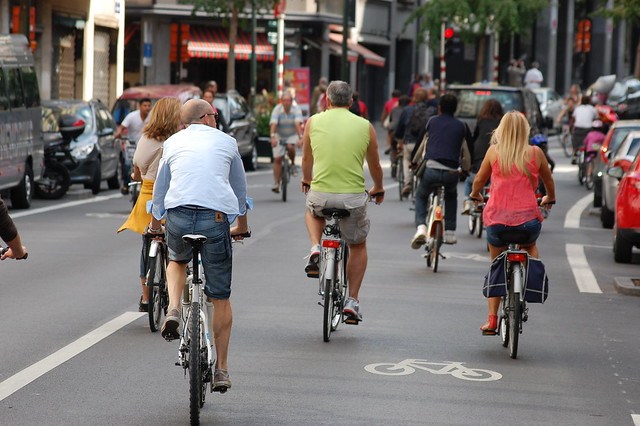
Today, Brussels will once again fall silent - at least in terms of engines. For one day, the entire Brussels-Capital Region will be closed to private cars, leaving the city open to pedestrians, cyclists, and public transport.
What began as a European experiment in 2000 has since become a Brussels tradition. Car-Free Sunday is eagerly awaited by some, and approached with caution by others.
A day for fresh air
Data from past editions show how profound the impact of reducing traffic for a day can be. During last year's event, the Arts-Loi monitoring station showed concentrations of nitrogen oxides (NO and NO₂) dropped by 88% and 62% compared to an average Sunday.
Against weekday levels, the difference is even starker, with drops of 94% and 74%. Noise pollution follows the same trend: at stations near the E40 in Woluwe-Saint-Lambert and the E411 in Auderghem, sound levels decreased by 99% on Car-Free Sunday.
For Brussels Mobility, these results highlight the impact of road traffic on air quality and health in the capital. According to the European Environment Agency, nearly 5,000 premature deaths occur each year in Belgium due to air pollution, more than 5,000 linked to fine particles, 1,400 to nitrogen dioxide, and 310 to ozone.
“The initiative is about showing what a city without cars can feel like, while raising awareness on sustainable mobility,” explains Camille Thiry, spokesperson for Brussels Mobility.
Residents divided between enthusiasm and caution
On the streets, reactions are mixed. Nadia, who plans to take part with her family, is enthusiastic: “It’s just one Sunday a year. So we can plan our shopping and everything. I think it should happen more than once a year, but every month might be a bit too much. It’s nice, it gives you room to breathe.”
Arlette, who lives in Molenbeek and has never owned a car because she says it’s too expensive, sees the day as a chance to enjoy the city differently while running her usual errands. “I will spend my Sunday at a small market in my neighbourhood with my sister,” she says.
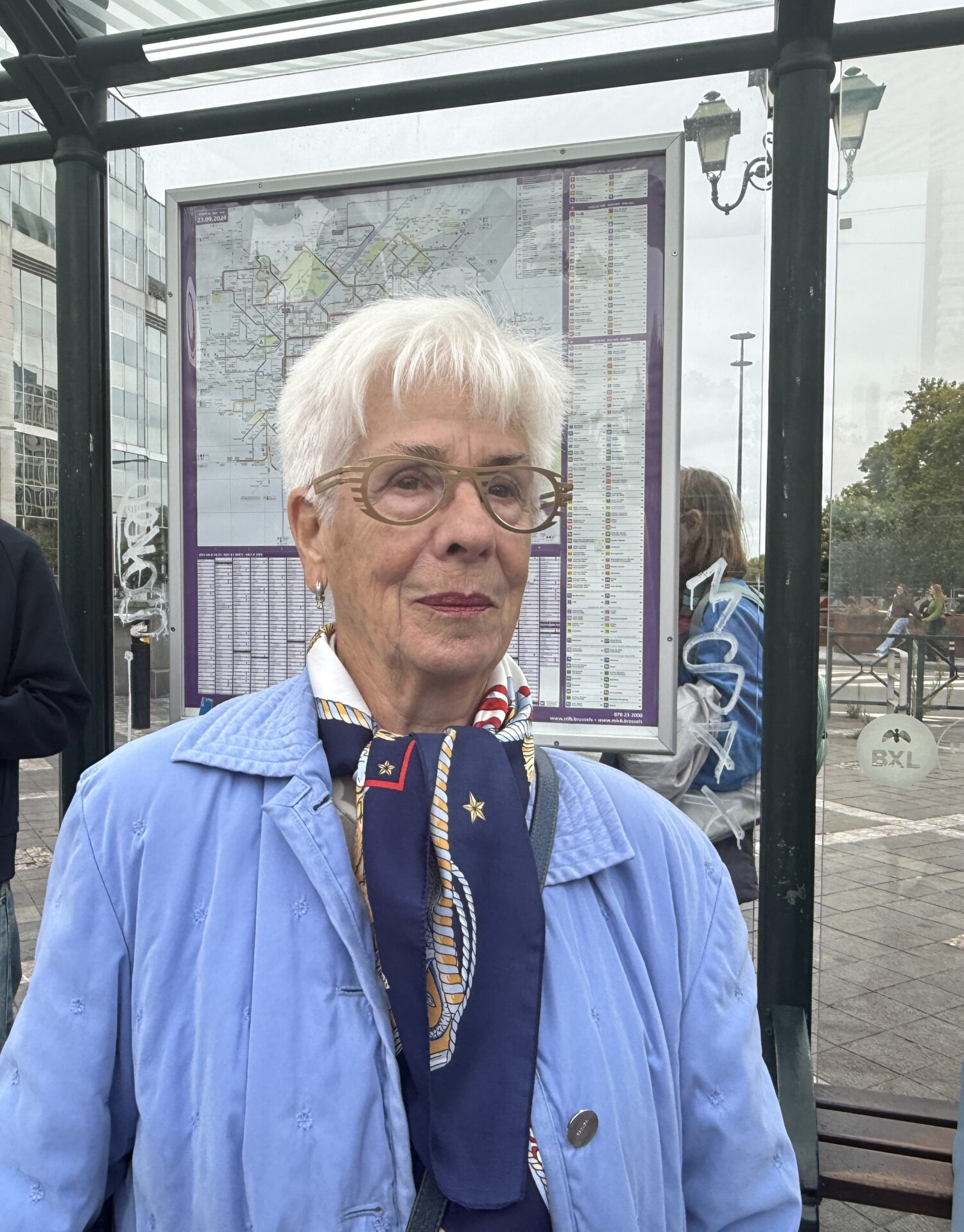
Arlette lives in Molenbeek. Credit: Léa Huppe/The Brussels Times
For motorists, the event is sometimes viewed as a disruption, but not necessarily negatively. “I drive everywhere I go, but I still think Car-Free Sunday is a good idea. It’s a civic-minded initiative, especially if it allows people to bike through the city centre without being disturbed by cars,” says Arton.
Others, like Catherine, have a more mixed view of the initiative: “It’s a good idea," she says. "It should happen more than once a year, maybe a few hours without cars each month. Considering the noise and visual pollution in Brussels, that would be a good thing,” she says.
In the past, Catherine enjoyed biking around the city on Car-Free Sunday, but in recent years she feels it has become chaotic. “People need to be educated about mobility. You see kids riding without helmets and it feels unsafe. Ironically, Car-Free Day is the one day I wouldn’t cycle in Brussels,” she says.
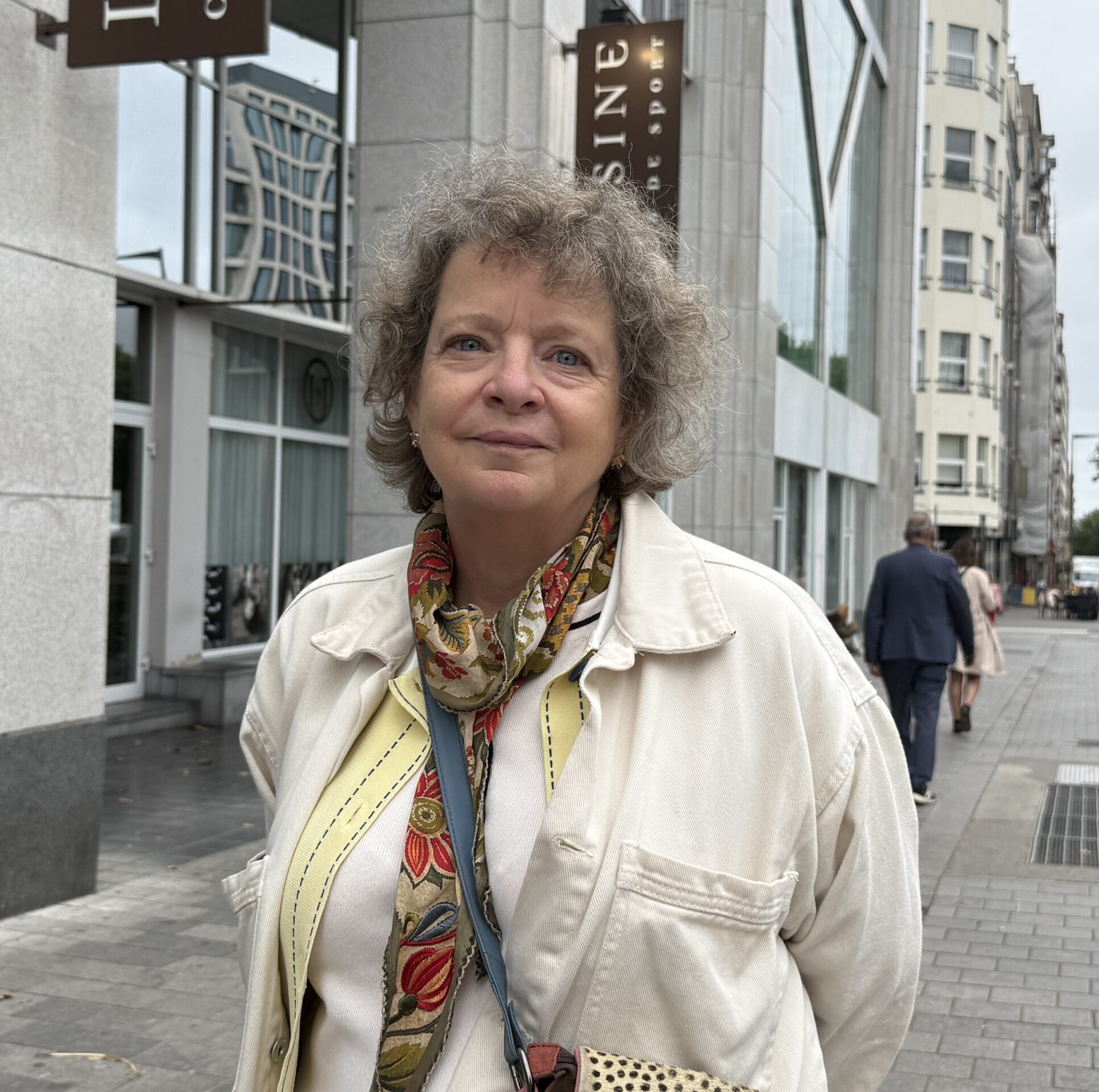
Catherine won't attend Car-Free Sunday this year. Credit: Léa Huppe/The Brussels Times
Beyond the symbolism of the day, the figures reveal a deeper trend. Brussels has the lowest car ownership rates in Belgium, with more than half of households (56%) living without a car, relying instead on public transport, cycling, or walking.
From experiment to tradition
The roots of Brussels’ Car-Free Day stretch back to 1998 in France, under the slogan, “in town without my car” ("en ville sans ma voiture").
The European Commission later extended the initiative, and Brussels embraced it with unusual boldness: in 2002, the region became the first to close its entire territory to motorised traffic.
Today, Car-Free Sunday is the flagship event of European Mobility Week, supported by STIB, which provides free public transport for the occasion.
