
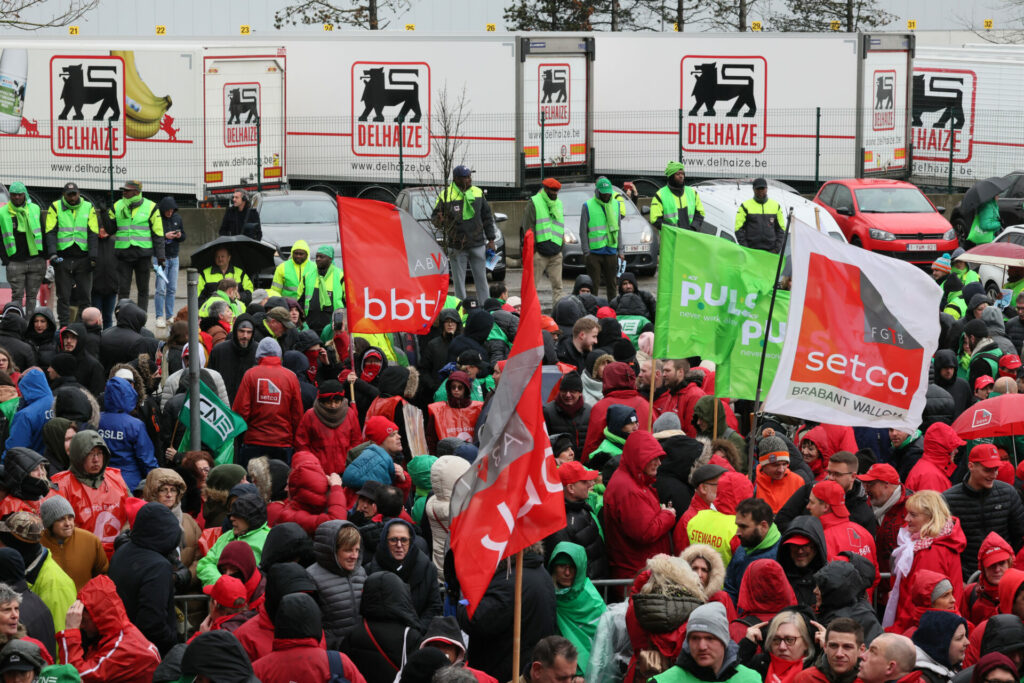
The call for nationwide strikes next Tuesday, 14 October, is growing, with trade unions in Belgium’s retail sector now joining the movement.
In a joint statement on Thursday, unions BBTK, ACV Puls, and ACLVB said they are issuing a "cry for help" over measures proposed by the Federal Government and the stance of retail sector organisations like Comeos.
The unions argue these proposals put the entire retail sector at risk, describing the situation as "serious".
On 14 October, employees of supermarkets, non-food chains – such as fashion retailers and DIY stores – are urged by the unions to leave their workplaces and join the national strike. Customers are also called upon to boycott shopping that day to show solidarity.
The unions cite frustratingly slow negotiations in the sector’s various joint committees as a key issue. They seek the harmonisation of these committees, especially in light of increasing franchise operations, such as those seen at Delhaize, and complex legal structures aimed at bypassing the committees with stronger social protections.
Further concerns include impending government measures on night work, extended opening hours, working on Sundays, and the abolition of compulsory rest days, which unions argue could jeopardise labour conditions and flexibility.
In their appeal, the unions are urging both workers and consumers in the retail industry to mobilise and participate in the strike. Employers are being called upon to find reasonable solutions in the joint committees to address workers’ concerns.
The national trade unions, mobilising for the demonstration on 14 October, are optimistic about seeing mass turnout similar to 2014, when 100,000 people protested an index jump, among other issues.
They are demanding fair wages and equitable pensions while opposing reforms such as increased flexi-jobs, pension changes, and reduced pay for night work.
The demonstration coincides with Prime Minister Bart De Wever’s expected ‘State of the Union’ address in parliament.
Significant disruptions are anticipated that day, particularly affecting public transport and airports.
